
8 June 1949: why Nineteen Eighty-Four still matters

By beehiveweb.co.uk Culture Desk
Published: 8 June 2026
On 8 June 1949, George Orwell’s Nineteen Eighty-Four reached readers in Britain and gave public life a vocabulary it has never quite put down. More than a dystopian novel, it became a reference point for arguments about surveillance, political language, public trust and the limits of state power.
The book is often invoked quickly in modern debate. A new camera network, a data-sharing plan, a political slogan or a dispute over official language can all be called “Orwellian” within minutes. The anniversary is a useful moment to slow that reaction down and ask what the novel actually carried from post-war Britain into the present.
A post-war British novel, not a detached prophecy
Nineteen Eighty-Four was first published in 1949 by Secker & Warburg. Orwell, whose real name was Eric Blair, wrote from the experience of a Europe shaped by war, propaganda, rationing, political extremism and broken trust in public language.
That context matters. The novel was not simply a prediction that a future government would install screens and watch citizens. It was a work of political imagination built from anxieties already visible in the 1940s: bureaucratic power, mass communication, ideological policing and the fragility of private life.
Britain in 1949 was still living with the consequences of the Second World War. The country had endured emergency powers, censorship, shortages and a permanent sense that national survival could require collective discipline. Orwell’s achievement was to take familiar pressures and push them into a total system.
The British Library’s literary context for the novel highlights its concern with surveillance, power and language. Those themes explain why the book travels so easily from the bookshelf into parliamentary argument, newspaper columns and privacy debates.
Surveillance in the book is social as well as technological
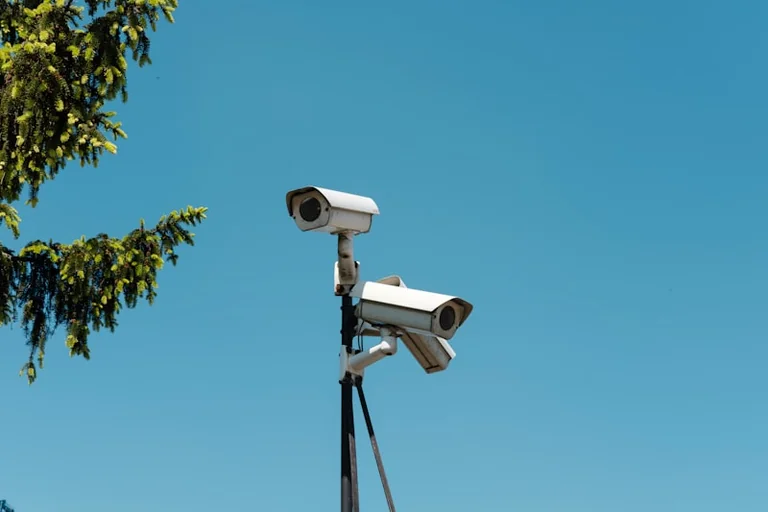
Modern readers often approach Nineteen Eighty-Four through technology. That is understandable. Britain in 2026 is a country of smartphones, CCTV, biometric checks, digital records and constant data trails. The novel’s imagined devices can feel close to contemporary anxieties.
But Orwell’s surveillance is not only about machines. It is also about fear, habit and participation. People monitor themselves because they know they may be watched. They monitor others because public loyalty becomes a survival instinct. Private thought becomes politically dangerous.
That distinction is important for British privacy debates. The novel does not say that every camera, database or security measure is the same as totalitarian rule. It asks a sharper question: when does watching become a system that changes how people speak, gather, dissent and trust one another?
The enduring value of the book is that it connects privacy to citizenship. Surveillance is not treated as a technical inconvenience. It is shown as a force that can narrow the inner life, weaken public honesty and make obedience feel normal.
Why Orwell’s language still enters politics
Few twentieth-century novels supplied so many terms to public debate. “Big Brother”, “Newspeak”, “doublethink”, “Thought Police”, “Room 101” and “Orwellian” have all moved beyond literary discussion.
They are useful because they name recognisable patterns. “Newspeak” points to language designed to shrink thought. “Doublethink” describes the pressure to accept incompatible claims. “Big Brother” has become shorthand for intrusive authority. “Orwellian” is used when official language appears to disguise coercion or reverse plain meaning.
Yet the popularity of these terms creates a problem. When every disliked policy is labelled Orwellian, the word loses force. A clumsy press release is not the same as systematic language control. A security measure is not automatically a total state. A political opponent is not a fictional regime simply because they use slogans.
The novel is strongest when used precisely. It helps readers ask whether power is becoming less accountable, whether language is being emptied of meaning, whether citizens can challenge official claims, and whether private space still exists in practice.
The book’s warning about public trust
Nineteen Eighty-Four remains relevant in Britain because it treats truth as a public structure, not just a private belief. The world of the novel is terrifying partly because records can be altered, memory can be attacked and language can be bent until resistance becomes harder to imagine.
That has obvious resonance in an age of misinformation, institutional distrust and political messaging. The book does not offer a simple instruction manual for modern politics. It offers a test of seriousness: are citizens still able to compare claims with evidence, criticise authority and use language that describes reality clearly?
This is why the novel appears in debates far beyond literature. It sits behind arguments about official transparency, emergency powers, policing, press freedom, data retention and the language used by governments and parties. Its influence comes from the way it links these issues together.
The danger is that the novel can become a loose insult rather than a tool for thought. Calling something Orwellian should raise the standard of the argument, not replace it.
A short timeline of Nineteen Eighty-Four’s public life
- 1949: Nineteen Eighty-Four is first published in Britain.
- 1950: Orwell dies, leaving the novel as one of his defining works.
- Late twentieth century: Terms from the novel become common in political journalism and public debate.
- Twenty-first century: The book returns repeatedly in discussions about surveillance, data, propaganda and trust.
The timeline shows why the anniversary is more than a literary date. The book has become part of the way Britain talks about the relationship between citizens and power.
Reading it carefully in 2026
For readers coming to Nineteen Eighty-Four today, the most useful approach is historical as well as political. It is worth reading the novel as a product of post-war Britain, shaped by Orwell’s concerns about dictatorship, propaganda and the corruption of language.
That does not make the book less relevant. It makes it more useful. The point is not to hunt for one-to-one matches between fiction and the present. The point is to understand how power can become harder to question when surveillance, fear and language work together.
On 8 June, the publication anniversary invites a more careful public habit. Use Orwell’s words when they fit. But use them with evidence, proportion and attention to the history that made the novel endure.
Source: Wikipedia
Context & actions About this article
Source check Historical context
This explainer uses the publication history of Nineteen Eighty-Four and literary context from the British Library to frame its modern relevance.
- Confirmed the novel was first published in 1949.
- Used British Library context for themes of surveillance, power and language.
- Avoided long copyrighted excerpts from the novel.
- Source
- British Library
- Scope
- United Kingdom
- Updated
- 2026-06-25 07:35
Source check
Report a trust issue
Send a clear signal to community moderation if the source, facts or context need review.




Comments