
Festival of Treasure in Stoke-on-Trent to open free
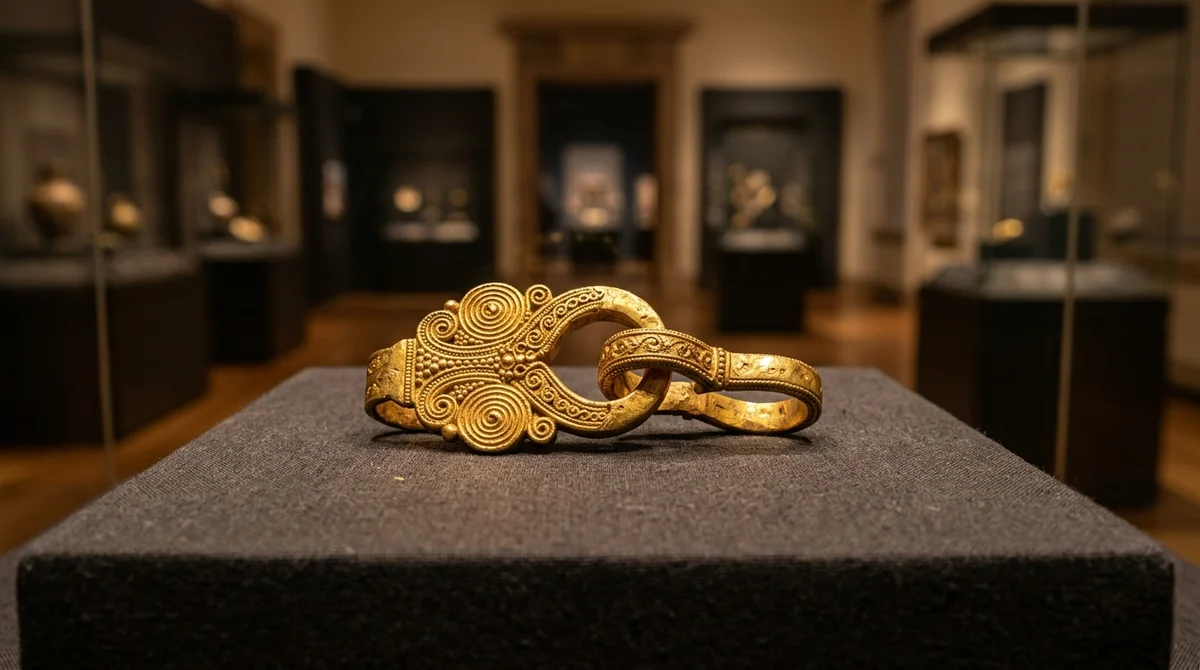
A rare 3,000-year-old gold object found in Staffordshire is set to become a centrepiece of The Potteries Museum & Art Gallery’s return next spring.
The museum in Stoke-on-Trent is planning a free Festival of Treasure from spring 2027 to mark its reopening after a multi-million-pound transformation. The event will include the first public display of a solid gold Bronze Age object, believed to be a dress fastener, which was discovered near Ellastone in 2023.
| Detail | Confirmed information |
|---|---|
| Event | Festival of Treasure |
| Date | From spring 2027; event brief lists 1 March 2027 |
| Time | Not yet stated |
| Venue | The Potteries Museum & Art Gallery, Stoke-on-Trent |
| Cost | Free |
| Audience | General public |
Rare gold find to go on public display
The Festival of Treasure is being planned around the first public display of an artefact described by the museum as nationally significant. The object is made from solid gold and is believed to have been worn as a dress fastener during the Bronze Age.
It was found by a metal detectorist near Ellastone in Staffordshire in 2023 and later declared Treasure. According to Stoke-on-Trent City Council, it is the first object of its kind found in Britain in almost 30 years, with only seven others recorded across England and Wales.
The fastener has now been acquired by The Potteries Museum & Art Gallery after a £150,000 appeal succeeded in keeping it in the county. The appeal was supported by public donations through the Friends of the Potteries Museum & Art Gallery, as well as grants from Art Fund, the Arts Council England/V&A Purchase Grant Fund and The National Lottery Heritage Fund.
Why Staffordshire’s Bronze Age story matters here
The new acquisition will sit alongside the Staffordshire Hoard and the Leekfrith Torcs in the museum’s Treasure collection. Together, those discoveries give the museum a gold archaeology collection spanning thousands of years of local history.
Joe Perry, curator of local history at The Potteries Museum & Art Gallery, said the object would not have been an everyday item. He said pieces like this were worn as visible displays of wealth and status, and that the person who wore it was likely to have belonged to the highest levels of Bronze Age society.
Perry also said the find changes understanding of the region during the Bronze Age, because it is the first of its kind discovered anywhere in Staffordshire.
Councillor Sarah Hill, cabinet member for finance and anti-poverty at Stoke-on-Trent City Council, said the discovery strengthens the museum’s offer while it undergoes its transformation and gives visitors another reason to explore the area’s history.
What visitors can expect before the reopening
Before the fastener goes on display at the reopened museum, the museum team will deliver outreach events and activities supported by National Lottery players. These will help people explore the object and Staffordshire’s Bronze Age past.
Physical and digital replicas of the fastener are also due to be created for events linked to the Festival of Archaeology in July and Heritage Open Days in September.
The main Festival of Treasure is planned for next spring, alongside the full reopening of The Potteries Museum & Art Gallery. The source does not yet give a public start time, end date, booking process or venue address for the festival.
Peter Wilson, chair of the Friends of the Potteries Museum & Art Gallery, said the Friends were pleased the find had been saved for local people and visitors to see and enjoy.
Source: Stoke-on-Trent City Council
Context & actions About this article
Source check Source trail
This preview is based on the Stoke-on-Trent City Council notice and the confirmed event brief details.
- Confirmed the event name, venue and free entry from the event brief.
- Checked that the artefact was discovered near Ellastone in 2023 and declared Treasure.
- Used the source wording for the museum reopening timing and first public display.
- Did not add booking, access, transport or address details because they were not provided.
- Source
- Stoke-on-Trent City Council
- Scope
- Stoke-on-Trent
- Updated
- 2026-06-03 22:53
Source check
Report a trust issue
Send a clear signal to community moderation if the source, facts or context need review.



Comments