
Latvia’s ‘Forest Brothers’: New Memorial Honours Post-War Resistance: what residents need to know
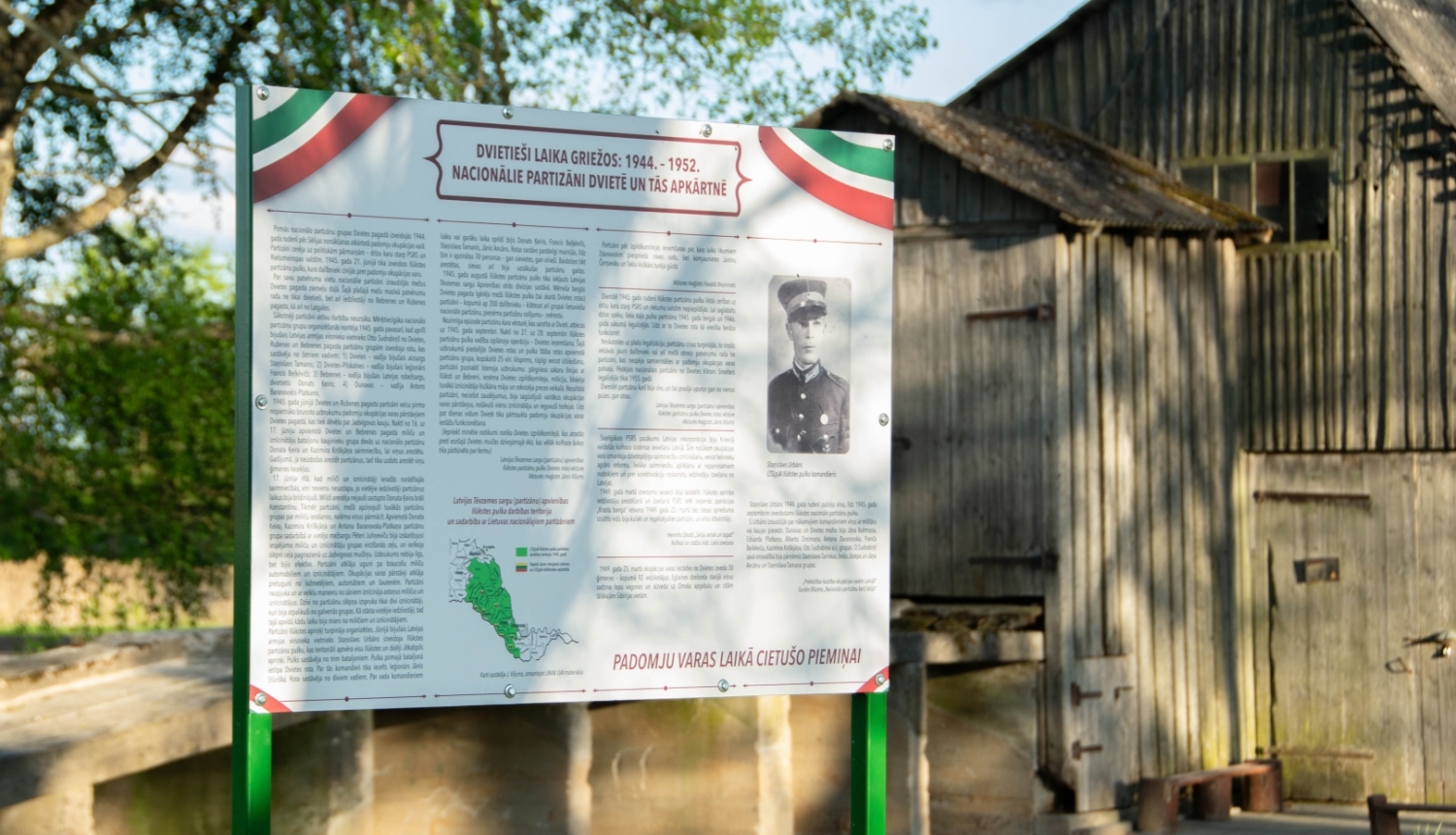
As the evening sun dipped below the horizon in the rural parish of Dviete, the crackle of a bonfire at the local mill provided the backdrop for a significant act of historical reclamation. In this corner of the Augšdaugava region, members of the local community gathered not just to mark the beginning of Latvia’s Museum Night, but to unveil a permanent memorial stand dedicated to the National Partisan movement—a chapter of Baltic history that for decades was suppressed under Soviet rule.
The event served as a prelude to the national Museum Night celebrations, but the focus in Dviete was intensely local and deeply personal. The new information stand chronicles the history of the parish between 1944 and 1952, focusing on the men and women who took to the forests to resist the second Soviet occupation. For many in the Sēlija region, these are not merely academic accounts; they are family stories of displacement, survival, and the high cost of national identity.
The Resistance in the Sēlija Forests
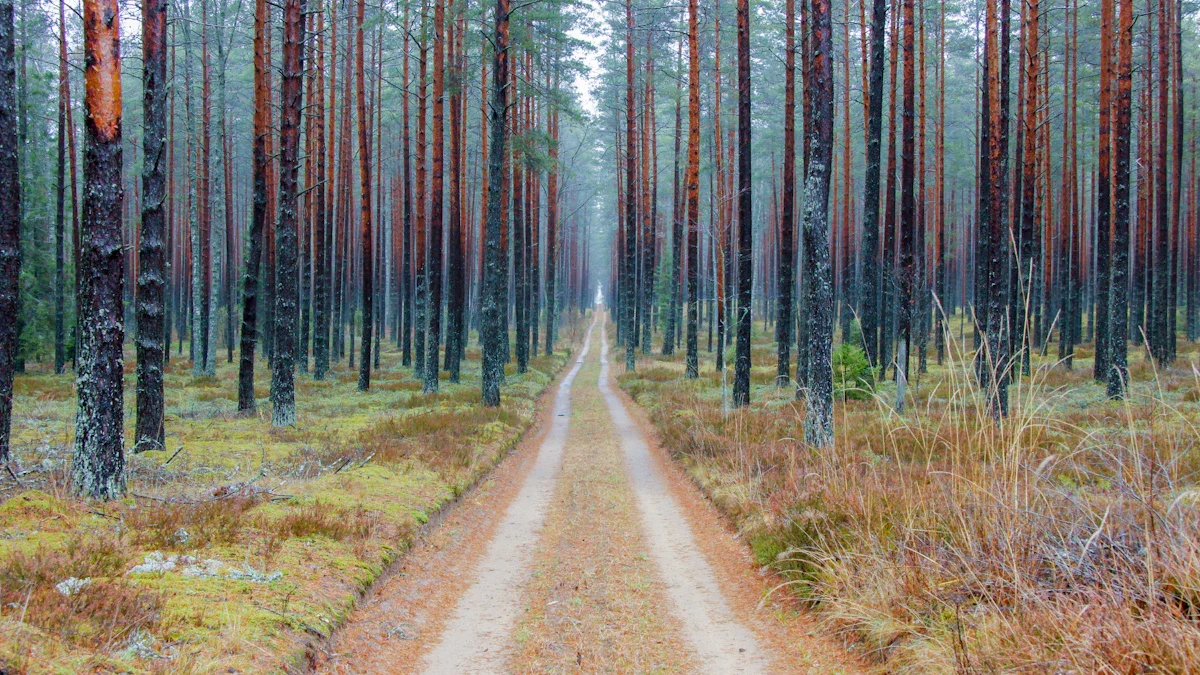
To understand the significance of the Dviete memorial, one must look back to the autumn of 1944. As the front lines of the Second World War shifted and the Soviet Union re-established control over Latvian territory, thousands of Latvians chose a life of clandestine resistance rather than submission to the new regime. These fighters, often referred to as the ‘Forest Brothers,’ operated under the hope that conflict between the USSR and Western powers was imminent—a shift they believed would lead to the restoration of Latvian independence.
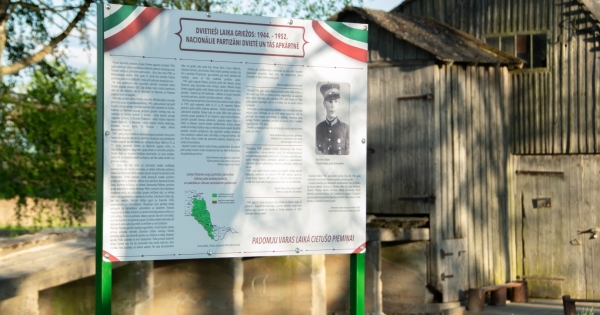
Historian Jānis Viļums, who has spent years researching the post-war chronicles of the Sēlija region, notes that the forests in northern Dviete became a vital sanctuary. The resistance was not a disorganized group of fugitives but a structured military effort. On June 21, 1945, the Ilūkste Partisan Regiment was formed under the command of Staņislavs Urbāns. The Dviete Company, a key unit within this regiment, saw its ranks fluctuate as local residents joined to escape mass arrests and deportations.
So far, researchers have identified 70 individuals—both men and women—who served in the Dviete Company. Led at various times by figures such as Donats Ķeiris and Francis Beļķēvičs, these partisans managed to maintain a presence in the region for years, supported by a network of local farmers and families who risked everything to provide food and intelligence.
From Family Scars to Public Commemoration
The history of the partisan movement in Latvia is often described through the metaphor of ‘dead scars’—wounds that have closed over time but remain sensitive beneath the surface. For decades, the stories of families being torn apart or sent to Siberian gulags for their involvement in the resistance were told only in whispers. The unveiling of the memorial stand in Dviete represents a transition from private grief to public acknowledgement.
During the ceremony, the atmosphere was one of quiet reflection rather than somber mourning. The community’s commitment to preserving this heritage was visible in the participation of local youth. Performances by Kristers Kuoss on piano and Toma Seilis on saxophone, alongside guitar and vocal sets by Lāsma Marcinkeviča and Anhela Gaidamoviča, bridged the gap between the generation that lived through the 1940s and the one tasked with carrying the memory forward.
Preserving Heritage Beyond the Textbook
The initiative in Dviete is part of a broader movement across the Baltic states to ensure that the complexities of the 20th century are not relegated to static pages in history books. By placing the memorial in the heart of the parish, near the Dviete Manor and the local library, the history becomes a tangible part of the landscape.
Visitors to the area can now trace a historical path that includes the Dviete local history collection, the Sacred Heritage exhibition hall, and the garden of the renowned viticulturist Pauls Sukatnieks. These sites collectively illustrate how a small rural parish maintains a rich cultural fabric despite the upheavals of the past century.
As Latvia prepares for its wider Museum Night activities, the new stand in Dviete stands as a reminder that the most powerful historical narratives are often found in the smallest places. It serves as a permanent record of the Ilūkste Partisan Regiment’s struggle and a tribute to the 70 individuals who, for a decade after the end of World War II, continued a war of their own in the forests of Sēlija.
Source: Augšdaugavas novada pašvaldība



Comments