
New mythological mural transforms Leeds city centre gateway
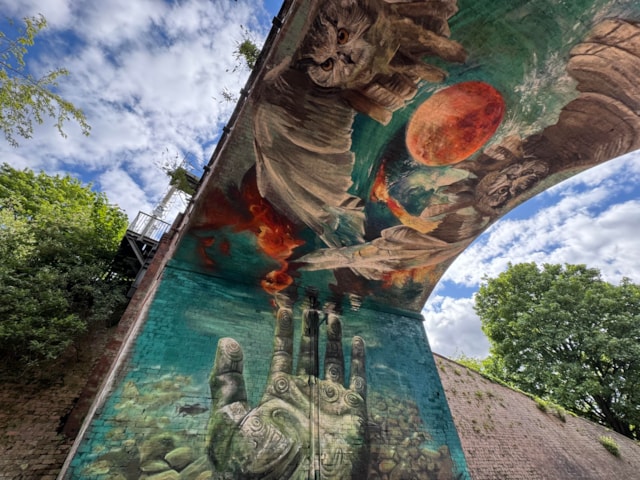
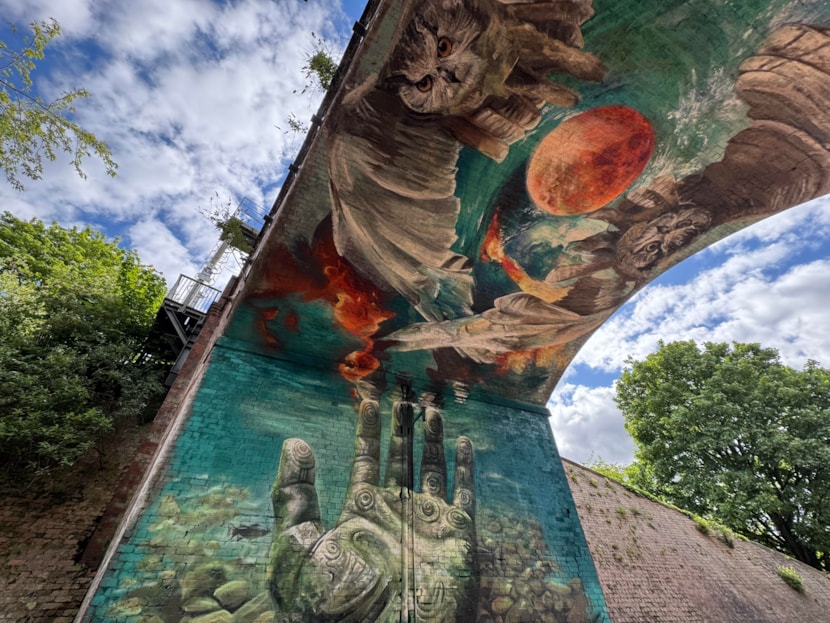
Two giant owls now soar across the brickwork of the railway viaduct on Church Walk, their wings spanning the space where commuters and visitors pass between Leeds Minster and the city centre. This striking visual, accompanied by underwater scenes and a stone face emerging from a rock wall, forms the centrepiece of a new effort to reclaim Penny Pocket Park. The mural is designed to shift the perception of this transit area from a simple walkway into a space defined by local identity.
Designed and painted by the Yorkshire-born multidisciplinary artist Cbloxx, also known as Jay Gilleard, the piece is a deliberate reimagining of urban transit. The artwork incorporates symbols that resonate with the immediate environment, including a water scene that serves as a visual metaphor for the River Aire, which flows just a short distance from the park. The mural also subtly references the industrial heritage of Leeds, acknowledging the city’s manufacturing roots while looking toward a more creative future.
Mythology and memory under the Leeds railway viaduct
The artist’s vision for the project extends beyond mere decoration. Jay Gilleard explained that the work explores how older elements of the landscape continue to exist beneath the modern surface of the city. Even when hidden by concrete and steel, mythology and collective memory continue to shape how people move through and experience urban spaces. By bringing these themes to the surface, the mural invites those passing through to pause and consider the history layered beneath their feet.
This specific location, Penny Pocket Park, serves as a vital gateway for those entering or leaving the city centre. The project is part of a broader, long-term strategy to repurpose the park and make it a more welcoming environment for the thousands of people who live and work in the area. The mural’s placement within the viaduct helps to brighten a traditionally dark and functional space, turning an everyday commute into a cultural experience.
A historic graveyard hidden beneath the city transit route
The park’s history is physically embedded in the landscape, a fact that influenced the mural’s themes of hidden layers. Originally the graveyard for Leeds Parish Church, now known as Leeds Minster, the site underwent a massive transformation in the 1860s. During the construction of the railway line that now carries trains high above the park, engineers had to navigate the existing burial grounds.
Rather than removing the remains, large quantities of soil were placed on top of the graves to create the necessary incline for the tracks. The original gravestones were lifted and then re-laid on the new slopes in their approximate original positions. Today, these stones remain visible on the grassy banks flanking the railway line, serving as a silent reminder of the site’s previous life as a place of rest. The new mural acknowledges this continuity, bridging the gap between the Victorian engineering of the viaduct and the ancient history of the ground below.
Community-led recovery and the future of Penny Pocket Park
The physical transformation of the park has been supported by Getting Clean, a community interest company that provides peer support for individuals in addiction recovery. Members of the group have been active on-site, volunteering their time to plant sunflower seeds and clean the area in preparation for the mural. This involvement provides meaningful opportunities for people to support inclusive change within their own community while gaining experience in environmental stewardship.
The project is a result of collaboration between several local and regional bodies, including Leeds City Council, Groundwork Yorkshire, Wade’s Charity, Leeds Minster, and Leeds Civic Trust. Funding for the mural was provided by the UK Government through the UK Shared Prosperity Fund, administered by the West Yorkshire Combined Authority.
Looking ahead, the city has outlined further plans for the area surrounding Leeds Minster and Penny Pocket Park. Proposed improvements, which remain subject to consultation, include the installation of upgraded lighting to improve safety and visibility, the addition of more public seating, and extensive landscaping works. These steps are part of the Leeds Ambitions roadmap, which aims to revitalise key urban spaces to reach their full potential as safe, welcoming environments for all residents.
Source: Leeds City Council



Comments