
Nottingham residents face a council boundary shake-up
By Beehive Web News Desk
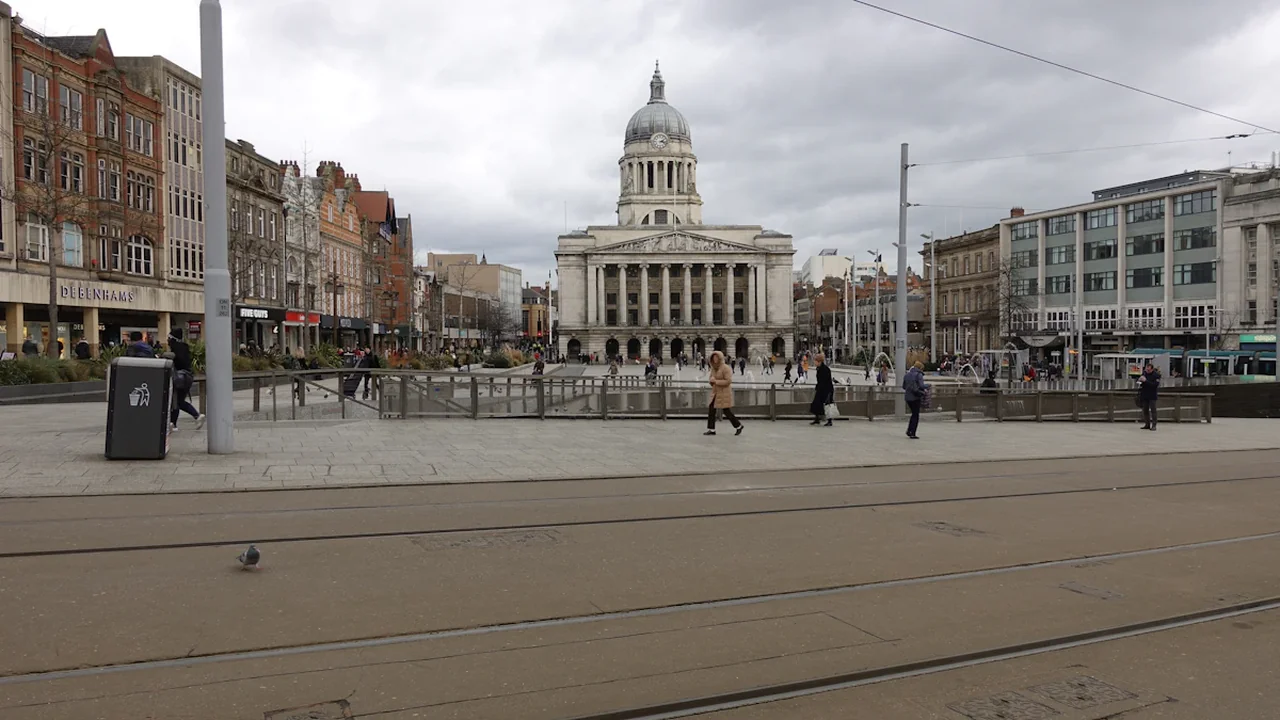
The government has advanced Nottingham City Council’s preferred plan for reorganising local government across Nottingham and Nottinghamshire, opening the way for two new unitary authorities to replace the existing council structure.
Known as Proposal Bii, the model would put Nottingham together with parts of Broxtowe, Gedling and Rushcliffe in a larger urban authority. A second council would serve the more rural areas of Nottinghamshire. Elections are scheduled for May 2027, with both authorities due to begin operating on 1 April 2028.
The decision follows a statutory consultation on three reorganisation options. It confirms which proposal will move into the transition phase, but detailed arrangements for services, staffing and local representation will still have to be developed.
Two councils divided along urban and rural lines
The proposed urban authority would cover the existing Nottingham City area and selected parts of Broxtowe, Gedling and Rushcliffe. Its boundaries are intended to reflect Greater Nottingham as a connected economic and social area rather than preserve the current city boundary.

The second unitary authority would include Ashfield, Bassetlaw, Mansfield, Newark and Sherwood, alongside the remaining parts of Broxtowe, Gedling and Rushcliffe. This council would have a stronger rural and market-town focus.
Broxtowe, Gedling and Rushcliffe are therefore the districts most visibly divided by the proposal. A household’s future authority would depend on its location within those areas, rather than every resident of a current district automatically moving into the same new council.
Nottingham City Council says a postcode map is available through the Local Government Reorganisation Nottinghamshire website. That boundary information will be particularly relevant to residents near the proposed dividing line.
Services and representation will move to new authorities
Unitary councils bring local responsibilities under one authority for each area. For residents, the intended result is a simpler structure with clearer responsibility for decisions and less duplication between councils.
The practical consequences will depend on the transition plans. Existing services will need to be assigned to the new organisations, while budgets, workforces, contracts and democratic arrangements must be prepared before the April 2028 launch. The source announcement does not set out changes to individual services, charges or neighbourhood facilities.
Nottingham City Council argues that two larger authorities would have greater financial resilience and could coordinate services more closely with the way residents travel for employment, education, healthcare, shopping and leisure. It also says a separate rural-focused council would be better placed to respond to the different needs of villages, market towns and less densely populated communities.
Cllr Neghat Khan, leader of Nottingham City Council, described the government’s decision as an endorsement of the case made for Greater Nottingham. She said the proposed boundaries recognise the city’s role as the wider area’s economic, cultural and transport centre while retaining a distinct authority for rural Nottinghamshire.
Those claims represent the city council’s case for Proposal Bii. The performance of the future authorities will depend on the final settlement, transition work and decisions made by their elected members.
Elections will precede the April 2028 launch
The next major public milestone is scheduled for May 2027, when elections for the new arrangements are expected to take place. Shadow authorities will then be created to prepare the councils before they formally assume their responsibilities.
During that period, Nottingham City Council says it will work with neighbouring authorities, the UK Government, residents, businesses and community organisations. The programme will have to establish how the two councils operate while maintaining services through the handover.
The new unitary authorities are scheduled to come into effect on 1 April 2028. Until then, the existing councils remain responsible for their current areas and services while detailed transition arrangements are developed.
Source: Nottingham City Council
Context & actions About this article
Source check Source trail
The report distinguishes the confirmed government decision and published timetable from benefits advocated by Nottingham City Council.
- Checked which of the three consulted proposals was selected to proceed.
- Matched the listed council areas to each proposed unitary authority.
- Verified the stated May 2027 election and 1 April 2028 commencement dates.
- Separated confirmed structural changes from service benefits claimed by the council.
- Source
- Nottingham City Council
- Scope
- Greater Nottingham and Nottinghamshire
- Updated
- 2026-07-16 15:06
Source check
Report a trust issue
Send a clear signal to community moderation if the source, facts or context need review.

Comments