
Vilnius Breaks Ground on Nature-Integrated Kindergarten in Balsiai
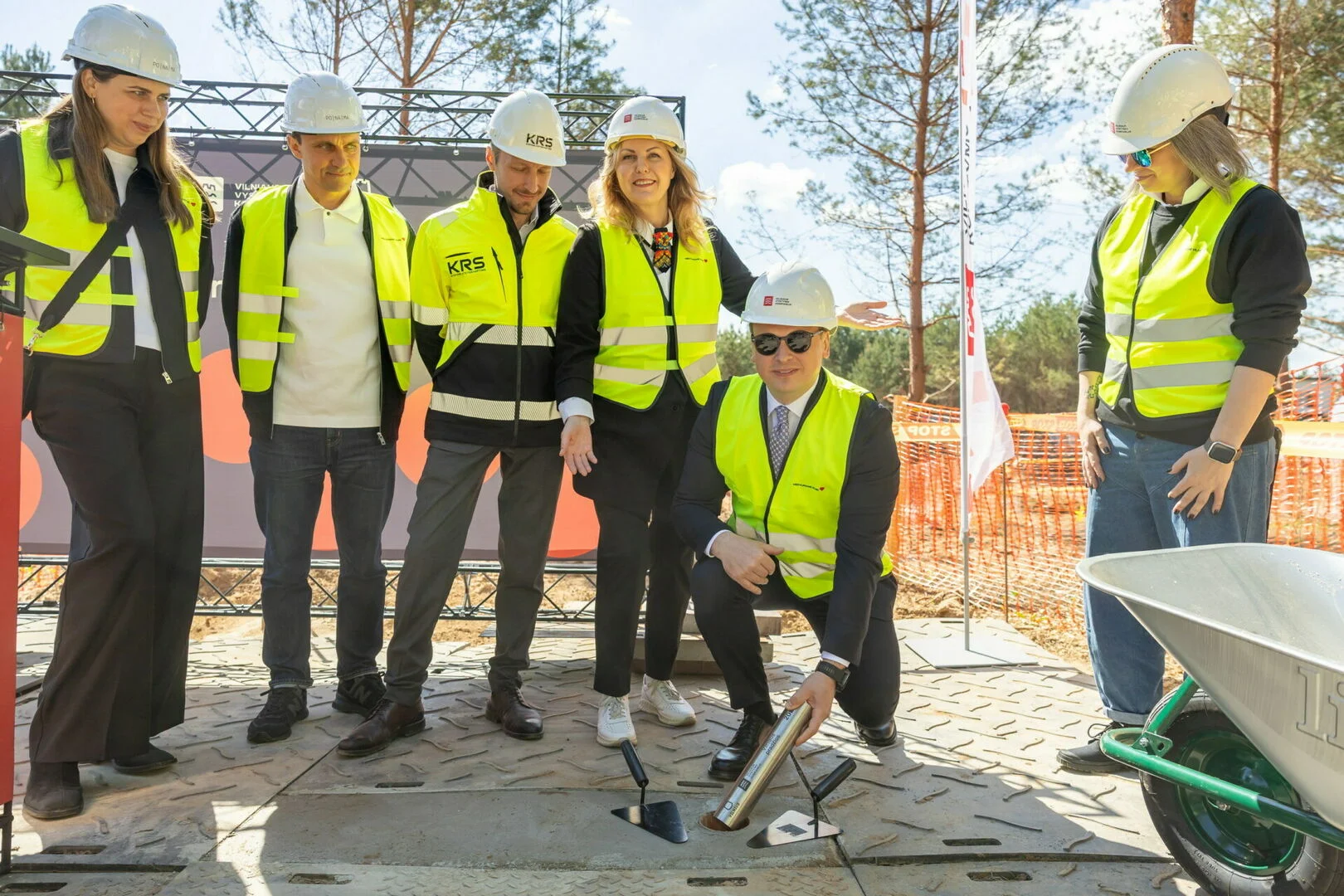
Construction has officially commenced on a landmark educational facility in the Balsiai district of Vilnius, marking a significant shift in how the Lithuanian capital approaches urban childcare. The new kindergarten, located at Aušrinė st. 10A, is designed to be fully integrated into the surrounding pine forest, offering 280 spots for local children in a move to address the growing demand for modern educational infrastructure in the city’s suburbs.
The project was inaugurated with the burial of a time capsule, a ceremony attended by Vilnius Mayor Valdas Benkunskas. The facility is part of an ambitious expansion of the city’s educational network, aimed at improving the quality of life for families in the Verkių eldership. The design prioritizes sustainable architecture and a deep connection with the natural environment, reflecting a broader European trend toward “forest schools” and nature-based learning.
Architectural Harmony with the Pine Forest
The project, managed by the Vilnius Development Company, is characterized by its unique architectural approach. Rather than a monolithic block, the building consists of six distinct volumes: three blocks for classrooms, two central blocks for administration and multi-functional halls, and a dedicated wing for a swimming pool. This modular design is intended to echo the scale of the surrounding residential neighborhood.

Architect Vidmantas Kančiauskas, the project manager from the firm “Ponama,” noted that the primary challenge was minimizing the impact on the existing ecosystem. The goal was to have the building “melt” into the environment rather than dominate it. To achieve this, the pine forest on the site will be preserved and transformed into an active learning space. The facility will feature a nature trail with various activity zones, including swings, climbing frames, and even a greenhouse.
| Project Specification | Details |
|---|---|
| Location | Aušrinė st. 10A, Balsiai, Vilnius |
| Capacity | 280 children (14 groups) |
| Total Investment | €11.72 million (including VAT) |
| Expected Opening | Late 2025 |
| Key Features | Swimming pool, forest trail, integrated sports field |
A Modern Learning Environment
The interior of the kindergarten is designed to be as functional as it is aesthetic. Each of the 14 classroom groups will have its own entrance from the street and direct access to the inner courtyard. The layout includes kitchenettes, activity zones, and rest areas equipped with space-saving fold-away bunk beds.

The outdoor spaces are strategically zoned by age: play areas for younger children are situated closer to the main building, while older children will have access to play zones deeper within the woods. An internal courtyard, nestled under the natural forest canopy, will serve as the primary leisure space, featuring gazebos and diverse plant life. Additionally, an outdoor event space adjacent to the assembly hall can be merged with indoor rooms for larger community gatherings.
Strategic Expansion of Vilnius Education
This project is one of nine new educational institutions currently being developed under a unique financing model created by the Vilnius Development Company. This model allows for the rapid expansion of the city’s infrastructure to keep pace with its growing population. For decades, municipal kindergarten construction in Vilnius was stagnant, with only three such facilities built since Lithuania regained independence.

The Balsiai kindergarten is part of a wave of five new childcare centers planned for the next three years. Similar projects are already underway in Pajautos Street, with future sites identified in Bieliūnų, Kernavės, and Braškių streets. This initiative is complemented by the construction of four new schools across the city, representing a historic level of investment in the capital’s social infrastructure.
Martynas Valančius, director of the construction firm “KRS,” emphasized that the project is more than just a building; it is a community hub designed to foster early childhood discovery and social bonds. With construction now in the foundations phase, the facility is on track to welcome its first students by the third quarter of 2025.
Source: BNS

Comments