
Vilnius District Named Among Lithuania’s Most Family-Friendly Regions: what residents need to know
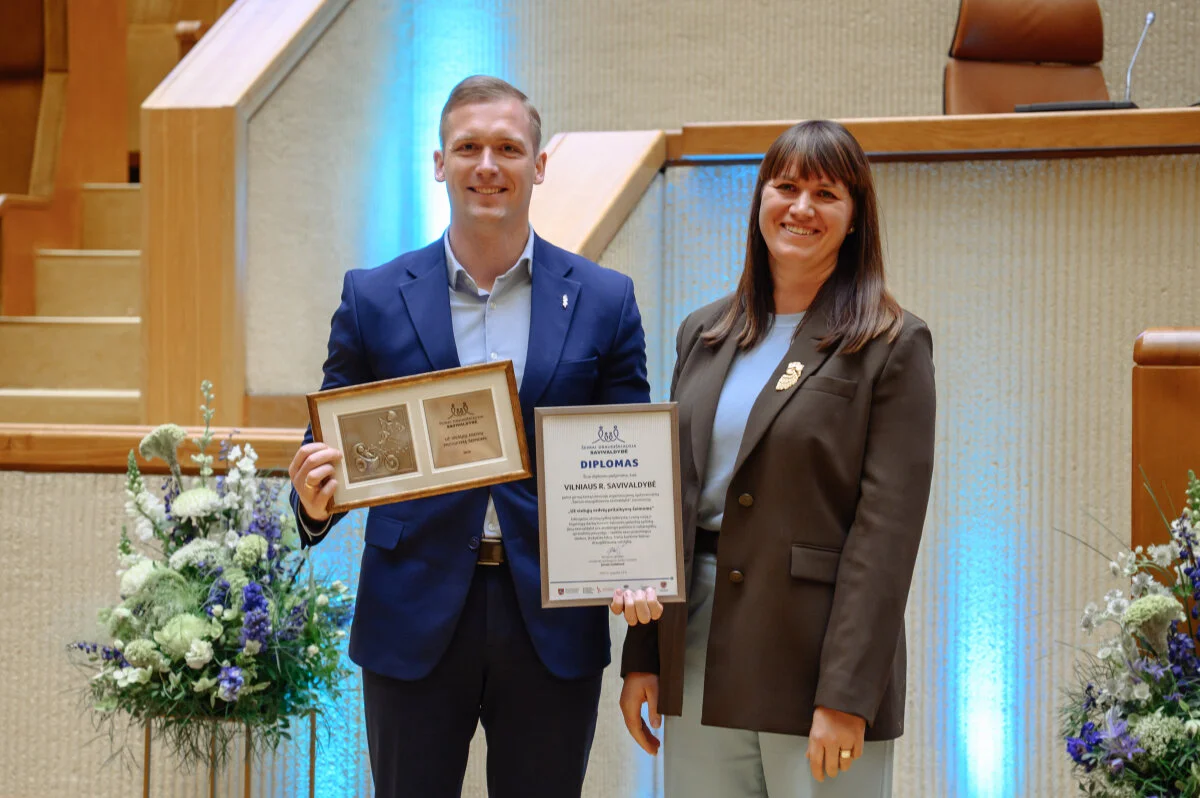
Vilnius District has been officially recognised as one of Lithuania’s leading regions for family-centric urban planning, securing a national award for its commitment to public spaces. The accolade, presented at the Lithuanian Parliament (Seimas), marks the first time in the country’s history that municipalities have been formally evaluated for their dedication to family infrastructure.
The award specifically highlights the district’s success in the category of “Adaptation of Public Spaces for Families,” a nomination established by the Ministry of Environment. Judges cited the region’s systematic expansion of green zones and the creation of high-quality, safe public areas accessible to all age groups as the primary reasons for the recognition.
National Recognition for Public Space Development
Receiving the award on behalf of the municipality, Mayor Robert Duchnevič noted that the recognition reflects a consistent effort to meet the infrastructure needs of a rapidly growing and youthful population. Unlike many regions facing demographic decline, the Vilnius District is experiencing a surge in young residents, particularly those aged 18 to 44 who are moving to the area to start families.
“Local government operates closest to the people; it solves daily problems and knows best what is most relevant to the individual,” Duchnevič stated. He emphasised that building a strong municipality begins with fostering a community where the family serves as the foundation. The award serves as a validation of the district’s strategy to integrate safety, welcoming green spaces, and convenience for every family member, from toddlers to the elderly.
The Challenge of Infrastructure in a Commuter Belt
The Vilnius District presents a unique administrative challenge. It is classified as a “ring municipality,” meaning it surrounds the capital city of Vilnius without including the city centre itself. This geographic layout creates a decentralized population spread across dozens of different settlements rather than a single urban core.
For planners, this means that high-quality services and public spaces cannot be concentrated in one central location. Instead, infrastructure must be duplicated and maintained across numerous villages and townships to ensure equity of access. The Mayor highlighted that creating a cohesive network of parks and community hubs in such a specific environment is significantly more complex than in traditional urban centres.
This “ring” structure is comparable to the commuter belts found around major UK cities like London or Manchester, where local councils must balance the rapid influx of young professionals with the need to maintain green belts and provide local amenities that prevent these areas from becoming mere “dormitory towns.”
Community-Driven Urban Planning and Green Initiatives
The success of the district’s infrastructure strategy was further illustrated on the day of the award ceremony by the official opening of a new community square in the Kalveliai eldership. According to Vytautas Vansavičius, the Director of the Vilnius District Municipal Administration, the timing was a symbolic coincidence that showcased the practical application of their policy.
“It is very symbolic that on the same day we were awarded for public space adaptation, we officially opened a new and cozy square in Kalveliai,” Vansavičius remarked. “This is a place where families and the entire village community can meet and spend quality leisure time together.”
The municipality’s approach involves modernising existing public zones, installing contemporary children’s playgrounds, and expanding sports and recreation areas. Crucially, these developments are paired with improvements to the road network, street lighting, and public order, creating a holistic environment where residents feel safe engaging in cultural and social activities.
A Broader Strategy for Family Wellbeing
The “Family-Friendly Municipality” initiative is a collaborative effort involving several national ministries, including Social Security and Labour, Culture, Health, and Education. The awards were timed to coincide with International Family Day and Children’s Day, highlighting a national shift toward prioritising quality of life as a key metric of regional success.
By involving residents in the planning process and listening to the specific needs of young families, Vilnius District has created a blueprint for how suburban regions can evolve. The focus remains on ensuring that as the population grows, the “green and safe” identity of the district is not lost to overdevelopment, but rather enhanced through thoughtful, community-led design.
Source: Vilniaus rajono savivaldybė


Comments