
Virginia Woolf’s Room Still Defends Personal Space
By the Beehive Web Culture Desk for beehiveweb.co.uk.
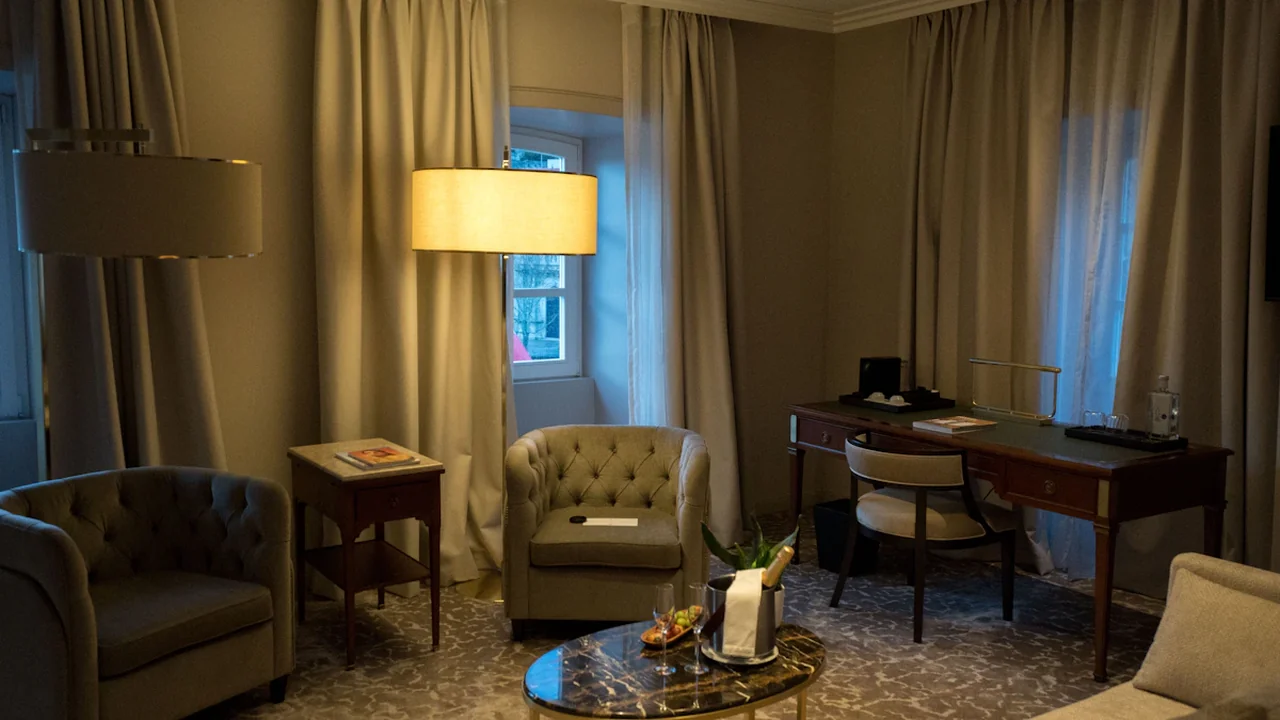
Virginia Woolf’s famous idea of “a room of one’s own” still matters because it names a practical need many people struggle to defend: enough privacy, time and material security to think without constant interruption. In shared homes, remote work and caregiving, the question is not how a room looks. It is what kind of boundary makes attention possible.
Woolf’s room was about independence, not decoration
A Room of One’s Own began as lectures Virginia Woolf delivered to women students in 1928, then published as an extended essay in 1929. Its best-known argument is that a woman needs money and a private room if she is to write fiction.
That line is often softened into a lifestyle slogan, but Woolf’s point was sharper. She was writing about exclusion from education, libraries, income, inheritance and literary authority. Space mattered because it stood for freedom from being watched, summoned, corrected or economically dependent.
The room was physical, but it was also social. It meant a door that could close, a claim on household resources and a recognition that creative work is real work even before it earns approval.
For a modern reader, that makes the idea more demanding than a neat desk or a pretty corner. Woolf was asking who gets uninterrupted time, who is expected to be available and who is allowed to treat their inner life as worth protecting.
Shared homes make boundaries visible
Many people now live, work or care in spaces that were never designed for constant overlap. A kitchen table becomes a workstation. A bedroom becomes a meeting room. A hallway becomes the only place for a private phone call.
Woolf’s argument helps name the strain beneath these arrangements. The problem is not simply noise. It is the feeling that one’s attention is always open to claim.
In a shared home, a room of one’s own may not be a whole room. It may be a repeatable agreement: two hours when one person is not interrupted, a shelf no one else uses, a desk that is not cleared away each evening, or a signal that a closed door really means closed.
The important test is whether the boundary is respected when it is inconvenient. If it disappears the moment someone else needs something, it is not yet a boundary. It is a preference.
The hidden cost of being available
Availability can look generous from the outside. It can also drain the work Woolf cared about most: thinking, imagining, reading, composing, recovering.
A person who is always interruptible may still complete tasks, but deeper work becomes harder. So does rest. The mind begins to anticipate the next demand, and attention breaks before anyone has spoken.
That is why Woolf’s essay remains useful beyond writing. Personal space protects any serious inner activity: study, prayer, planning, grief, repair, art, decision-making or simply the quiet needed to return to oneself.
Remote work has made the room both necessary and contested
Remote work has made Woolf’s question more ordinary and more complicated. Work has entered the home, but the home has not become equally available to everyone inside it.
One person may have a spare room and a door. Another may take calls beside laundry, children, flatmates or relatives needing care. The difference is not only aesthetic. It affects concentration, confidence and how professionally a person is perceived.
A Woolf-informed boundary asks practical questions. Who gets the quietest place? Who absorbs interruptions? Who moves when the household schedule changes? Who pays for the equipment, heating, childcare or transport that makes work possible?
These questions are uncomfortable because they expose the economics behind personal space. Woolf did not separate creativity from money. She argued that freedom to work depends on material conditions, not willpower alone.
That insight matters in 2026 because many people are told to manage attention as a personal habit while the conditions around them make attention fragile. Better discipline cannot fully solve a household where no one has agreed whose time is protected.
Caregiving changes what a boundary can look like
Caregiving can make the phrase “a room of one’s own” sound unrealistic. Parents, carers and people supporting ill or elderly relatives may not be able to close a door for long. Some cannot count on predictable silence at all.
Woolf’s idea should not be used to shame people whose lives do not allow ideal solitude. It can instead help them ask for smaller, more honest forms of protection.
That might mean a regular 30-minute handover, a budget for paid help when possible, a no-interruption hour after bedtime, or one weekly block treated as seriously as an appointment. It might mean asking another adult to carry the mental load of deciding what needs to happen next.
The point is not to romanticise isolation. It is to recognise that caregiving and creative attention both require resources. When one person is expected to provide endless care without protected recovery, the household is spending that person’s attention as if it were limitless.
Prompts for claiming time and space realistically
Woolf’s essay does not offer a simple script for modern life, but it gives readers a clear lens: space, money and independence belong in the same conversation. These prompts can make that conversation more concrete.
- What work or rest do I keep treating as optional, even though it protects my ability to function?
- Where in the week do interruptions do the most damage?
- What boundary would help most: a door, a time block, a budget, a rota, childcare, a desk, silence or permission to be unavailable?
- Who benefits from my constant availability?
- What would need to change for my attention to be treated as a shared household concern rather than a private inconvenience?
- What is the smallest repeatable claim I can make this week without pretending my circumstances are easier than they are?
A useful boundary is specific enough to be kept. “I need more space” may be true, but it is hard for others to act on. “I need Saturday from 9 to 11 for uninterrupted work” is easier to defend and easier to test.
For people without a spare room, the most realistic version may be portable: headphones, a library table, a regular cafe hour, a borrowed office, a locked notes app, or an agreed sign that means do not interrupt unless it is urgent.
The real question is who is allowed to be unavailable
The enduring force of A Room of One’s Own is that Woolf joined the private and the political. She showed that literary freedom was shaped by inheritance, education, domestic expectations and the right to be alone.
That is why the phrase should not be reduced to a decorating idea. A pleasant room can help, but it does not answer Woolf’s deeper question: who has enough security to make something without apologising for the time it takes?
In modern homes, the answer may begin with modest changes. A calendar block respected by others. A household budget that includes creative work. A conversation about noise and care. A refusal to treat one person’s concentration as less important because their work is unpaid, unfinished or not yet visible.
Woolf’s room remains powerful because it is not only about walls. It is about the conditions that let a person think, make and remain inwardly intact.
Source: Editorial research
Context & actions About this article
Source check Literary context
This article uses the published context of A Room of One's Own to discuss modern boundaries without treating Woolf's argument as decor advice.
- The essay grew from lectures delivered in 1928.
- A Room of One's Own was published in 1929.
- The interpretation distinguishes private space from broader economic independence.
- Scope
- International
- Updated
- 2026-06-24 09:51
Source check
Report a trust issue
Send a clear signal to community moderation if the source, facts or context need review.



Comments