
Baltic-Nordic Security Axis Strengthened as Lithuanian President Meets Swedish King
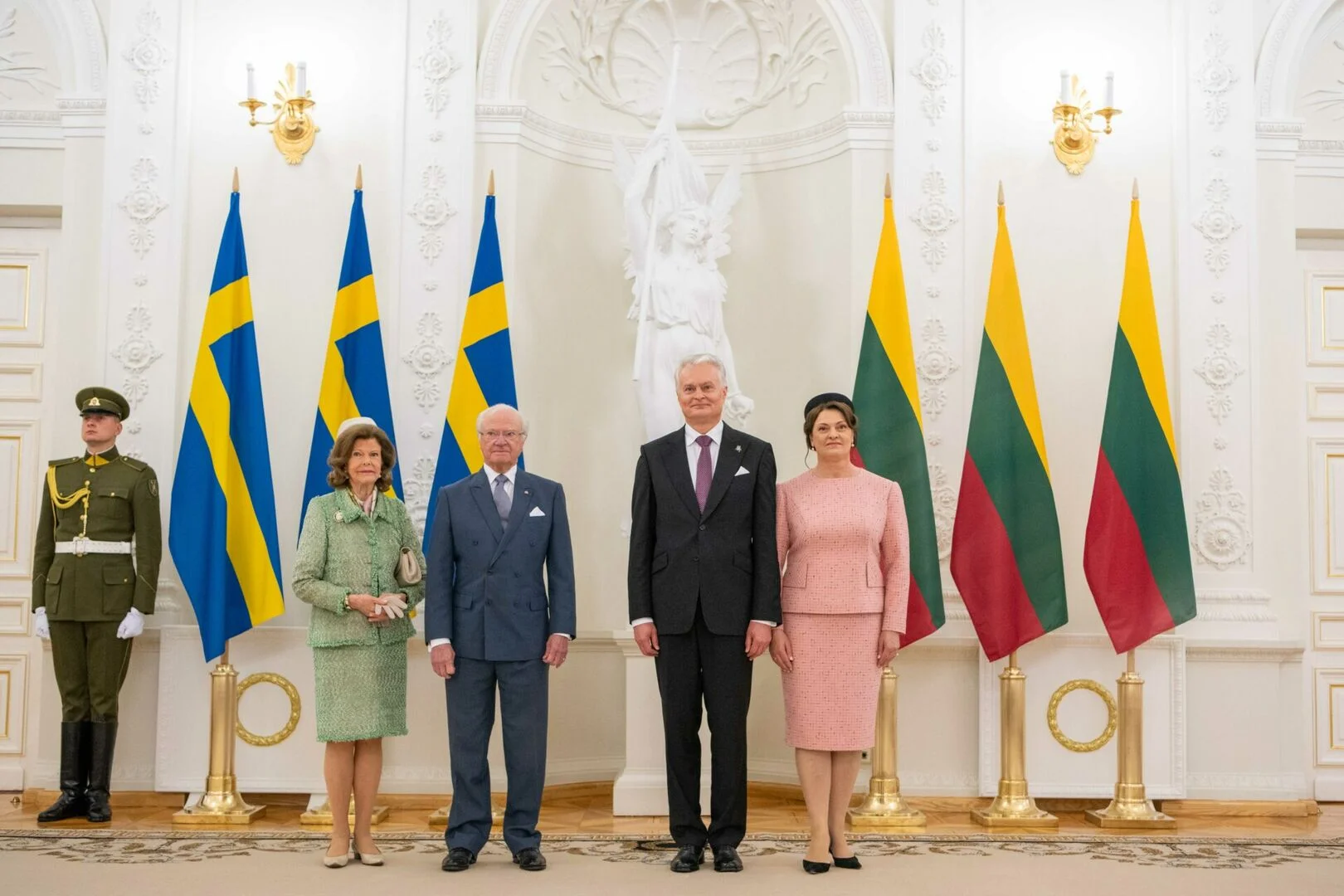
Lithuanian President Gitanas Nausėda and First Lady Diana Nausėdienė met with King Carl XVI Gustaf and Queen Silvia of Sweden on Monday, marking a significant intensification of diplomatic and security ties between the two nations. This meeting, the second between the heads of state in just two weeks, underscores a burgeoning strategic partnership aimed at fortifying the Baltic-Nordic region against escalating regional threats.
During the discussions, President Nausėda emphasized that the frequency of these high-level engagements serves as a testament to the excellent bilateral relations and the necessity of continued cooperation. The dialogue focused heavily on security and defense, energy independence, the protection of critical infrastructure, and economic resilience—areas that have become paramount following Sweden’s recent accession to NATO.
Strengthening Regional Security and NATO’s Eastern Flank
A central theme of the meeting was the indivisibility of security across the Baltic and Nordic regions. President Nausėda articulated that the safety of the Baltic States is inextricably linked to that of their Northern neighbors, forming a unified security foundation for the entire region. This partnership is seen as a critical component of NATO’s broader strategy to secure its eastern flank.
The President drew particular attention to the evolving nature of hybrid threats emanating from Russia and Belarus. Beyond traditional military concerns, the leaders discussed the “instrumentalization” of illegal migration and a series of provocative incidents involving contraband balloons. These balloons, often used for smuggling or harassment, have increasingly posed risks to civil aviation, necessitating a more coordinated regional response to airspace management and border integrity.
To counter these challenges, Nausėda called for a robust transatlantic bond and a sustained commitment to military readiness. He noted that the security of the Baltic Sea—now effectively surrounded by NATO allies—requires constant vigilance and the modernization of critical infrastructure to prevent sabotage or hybrid interference.
Economic Synergy and the Strategic Importance of Ukraine
Beyond defense, the meeting highlighted Sweden’s role as a cornerstone of the Lithuanian economy. Sweden remains one of the largest foreign investors in Lithuania, with deep-seated interests in the financial, telecommunications, and energy sectors. President Nausėda praised this economic partnership, citing significant potential for further growth in high-tech innovations and green energy transitions.
“Sweden is one of Lithuania’s most important economic partners,” the President stated, noting that the two nations are looking to deepen ties in strategic industries that bolster both prosperity and national security. This economic integration is viewed as a buffer against external economic coercion and a means of ensuring regional stability.
The geopolitical conversation also turned toward the ongoing conflict in Ukraine. President Nausėda issued a stern reminder that international attention must not be diverted by other global crises, including recent developments in the Middle East. He argued that Ukraine’s struggle is not merely a local conflict but a fight for the future of European democracy. The leaders agreed on the necessity of maintaining comprehensive support for Kyiv to ensure a decisive victory against Russian aggression.
Historical Ties and the Baltic Identity
The meeting concluded with a reflection on the deep historical and cultural threads that bind Lithuania and Sweden. The Baltic Sea has historically functioned as a bridge for trade and cultural exchange, fostering a shared identity that persists today.
President Nausėda highlighted the active role of the Lithuanian community in Sweden, which acts as a living link between the two societies. He thanked the Swedish Royal Family for their personal contributions to strengthening these people-to-people connections, noting that the shared strategic interests of today are built upon centuries of common history and mutual respect. As the Baltic-Nordic partnership continues to evolve, this blend of cultural affinity and hard-security cooperation is expected to define the region’s geopolitical stance for the foreseeable future.
Source: BNS


Comments