
Julian Assange Wins Right to Appeal US Extradition in High Court Ruling
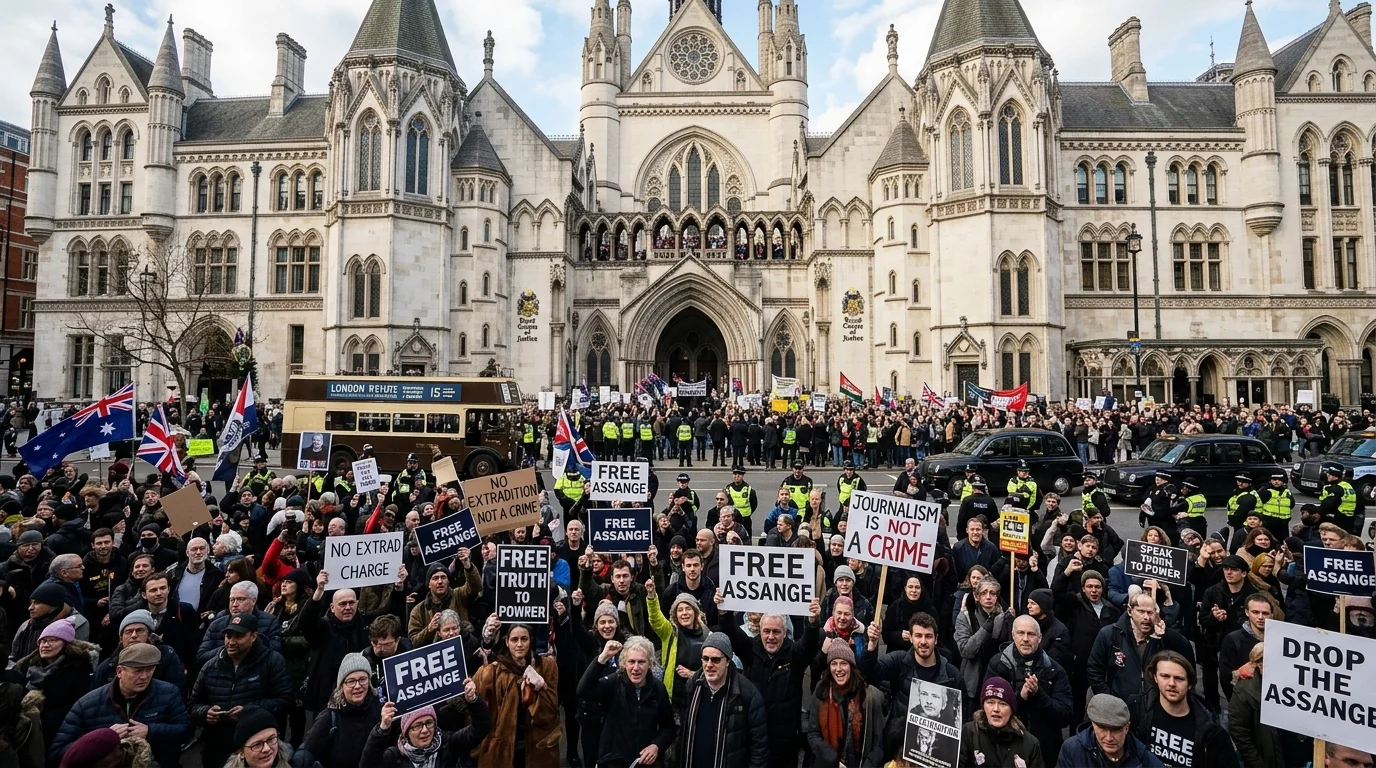
In a significant legal development at the Royal Courts of Justice today, May 20, 2026, two senior judges granted WikiLeaks founder Julian Assange permission to appeal against his extradition to the United States. The ruling halts his immediate transfer and ensures that his case will undergo a full appeal hearing in the United Kingdom’s judicial system.
The High Court’s decision centered on the sufficiency of assurances provided by the United States government regarding Assange’s legal protections. The judges determined that the U.S. government’s guarantees concerning Assange’s First Amendment rights were ‘insufficient.’ Furthermore, the court identified a ‘real prospect’ that Assange could face discrimination during a U.S. trial based on his Australian nationality, a factor that weighed heavily in the decision to allow the appeal to proceed.
Judicial Findings on First Amendment Protections
The core of the High Court’s ruling rests on the potential for the U.S. legal system to deny Assange the free speech protections typically afforded to American citizens. During the proceedings, the judges scrutinized whether Assange, as a non-U.S. citizen, would be permitted to rely on the First Amendment in a federal court. The U.S. Department of Justice had previously offered assurances, but the High Court today found these lacked the necessary legal certainty to prevent a potential breach of rights.
Legal experts noting the decision highlighted that without a firm guarantee that Assange can raise a First Amendment defense, the extradition would remain legally contentious under UK law. The court’s skepticism toward the U.S. position marks a pivotal shift in the long-running legal battle, which has seen various stages of appeals and counter-appeals over several years.
Concerns Regarding Nationality and Discrimination
Beyond the constitutional arguments, the High Court addressed the risk of nationality-based discrimination. Under the Extradition Act, individuals cannot be extradited if they face the prospect of being prejudiced at trial or punished by reason of their nationality. The judges ruled that Assange’s status as an Australian citizen could potentially lead to a different standard of legal treatment in the U.S. than that of a domestic defendant.
This specific point of the ruling addresses the fear that Assange might be barred from certain legal defenses or face harsher sentencing conditions because he is not a U.S. national. By granting the right to appeal on these grounds, the High Court has effectively required a more rigorous examination of how the U.S. Espionage Act would be applied to a foreign publisher.
Current Status at Belmarsh Prison and Health Concerns
Julian Assange remains in custody at HM Prison Belmarsh, where he has been held since 2019. Following the announcement of the ruling, supporters gathered outside the Royal Courts of Justice, emphasizing that the legal victory does not result in his immediate release. Stella Assange, his wife, addressed the media, stating that while the decision is a relief, the prolonged incarceration continues to take a toll on his physical and mental well-being.
Medical reports submitted in previous hearings have consistently highlighted Assange’s deteriorating health. Supporters and human rights organizations continue to advocate for his release on bail pending the full appeal hearing, citing the risk of further decline during the remainder of the UK legal process.
Timeline for the Full Appeal Hearing
The granting of the right to appeal moves the case into a new procedural phase. A full hearing will now be scheduled, where both the defense and the U.S. government will present detailed arguments regarding the First Amendment and nationality issues. This process is expected to take several months, during which Assange will remain in the UK.
The U.S. Department of Justice has yet to issue a formal response to today’s ruling. Should the appeal eventually fail, Assange’s legal team has indicated they would likely seek an intervention from the European Court of Human Rights. However, today’s High Court decision provides a significant domestic hurdle that the U.S. government must overcome if they are to proceed with the prosecution for the 18 charges related to the 2010 release of classified documents.
Source: Reuters




Comments