
Greener streets and city centre living: Nottingham’s new long-term plan

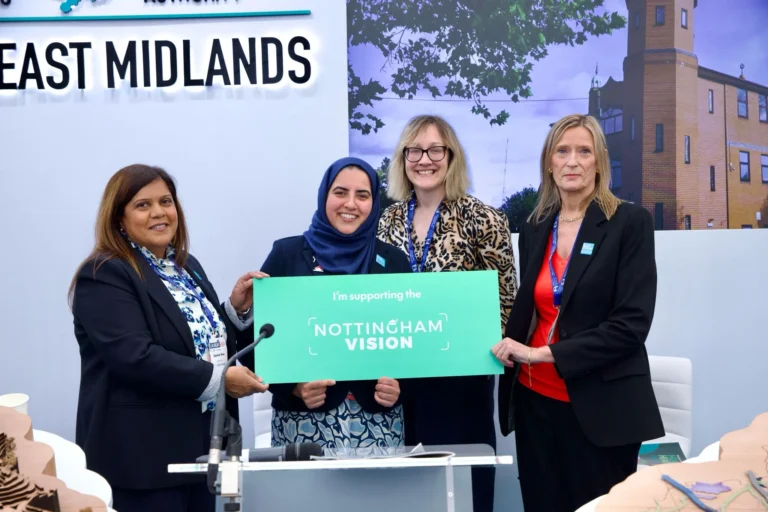
Inside the East Midlands Combined County Authority (EMCCA) Pavilion at the UK Real Estate Investment & Infrastructure Forum (UKREiiF), a blueprint for the next quarter-century of urban development took centre stage. Nottingham leaders presented the City Vision 2050, a strategy co-created with residents and businesses to redefine how people live, work, and move across the city over the next 25 years.
The strategy arrives as the city positions itself to capture a larger share of national investment, moving beyond immediate regeneration to a sustained period of transformation. With over £4 billion already secured for major developments, the new framework provides a roadmap for the next phase of growth.
The essentials
- Three Pillars: The plan is built on ‘Home’ (healthy neighbourhoods), ‘Heart’ (a thriving economy), and ‘Host’ (a welcoming destination for culture and sport).
- Housing Focus: A primary goal is ‘Homes in the Heart’, increasing high-quality residential options within the city centre.
- Green Connectivity: The ‘Green Grid’ initiative will prioritise walking, cycling, and public transport links across all districts.
- Economic Hubs: New Innovation and Commercial Districts are planned to attract research-led businesses and high-quality workspace.
Redefining city living through three core pillars
The Vision 2050 is structured around three defining concepts intended to balance economic growth with quality of life. The ‘Home’ pillar focuses on creating diverse, healthy neighbourhoods where residents can live well at every stage of life. This is paired with the ‘Heart’ pillar, which seeks to cement Nottingham’s role as the primary driver of the regional economy.
Finally, the ‘Host’ pillar aims to enhance the city’s reputation as a destination. This involves strengthening cultural identity and improving facilities for visitors, athletes, and business professionals. These pillars are not standalone goals but serve as the foundation for the broader programme of change that will affect every ward in the city.
Ten projects designed to reshape the local economy
To move from theory to reality, the council identified ten specific initiatives. Among these is the creation of a world-class innovation ecosystem. The proposed ‘Innovation District’ focuses on research, technology, and cross-sector collaboration, aiming to keep high-skilled graduates within the local economy.
Similarly, the ‘Commercial District’ targets the development of modern workspaces to attract international investment. This strategy aligns with existing local improvements, such as the redevelopment of community sports facilities already underway in the city. By clustering these developments, the city hopes to create a more efficient and productive urban core.
Infrastructure and the push for a greener transport network
A significant portion of the 2050 plan focuses on ‘Nottingham’s Green Grid’. This involves a structural shift in how the city handles movement. The goal is to create a seamless network of walking and cycling routes that connect residential areas to employment hubs and leisure sites.
This green infrastructure is designed to reduce reliance on private vehicles while improving air quality. The council intends for these connections to be integrated with existing world-class public transport, ensuring that the city’s growth does not come at the cost of its environmental targets.
Regional backing for the 2050 strategy
Councillor Neghat Khan, Leader of Nottingham City Council, stated that the city is ready to work with partners who match these ambitions. The launch at UKREiiF was intended to signal to global investors that the city has a clear, long-term framework for regeneration.
Mayor of the East Midlands, Claire Ward, supported the vision, noting that the 2050 plan reflects the voices of those who call the city home. The regional authority will play a critical role in delivering the cross-border connectivity and funding required to bring the larger infrastructure projects to fruition. This collaborative approach between the city and the combined authority is expected to be the primary mechanism for securing future government grants and private capital.
Source: Nottingham City Council


Comments