
Lithuania and Sweden Bolster Defense Innovation for Ukraine Support
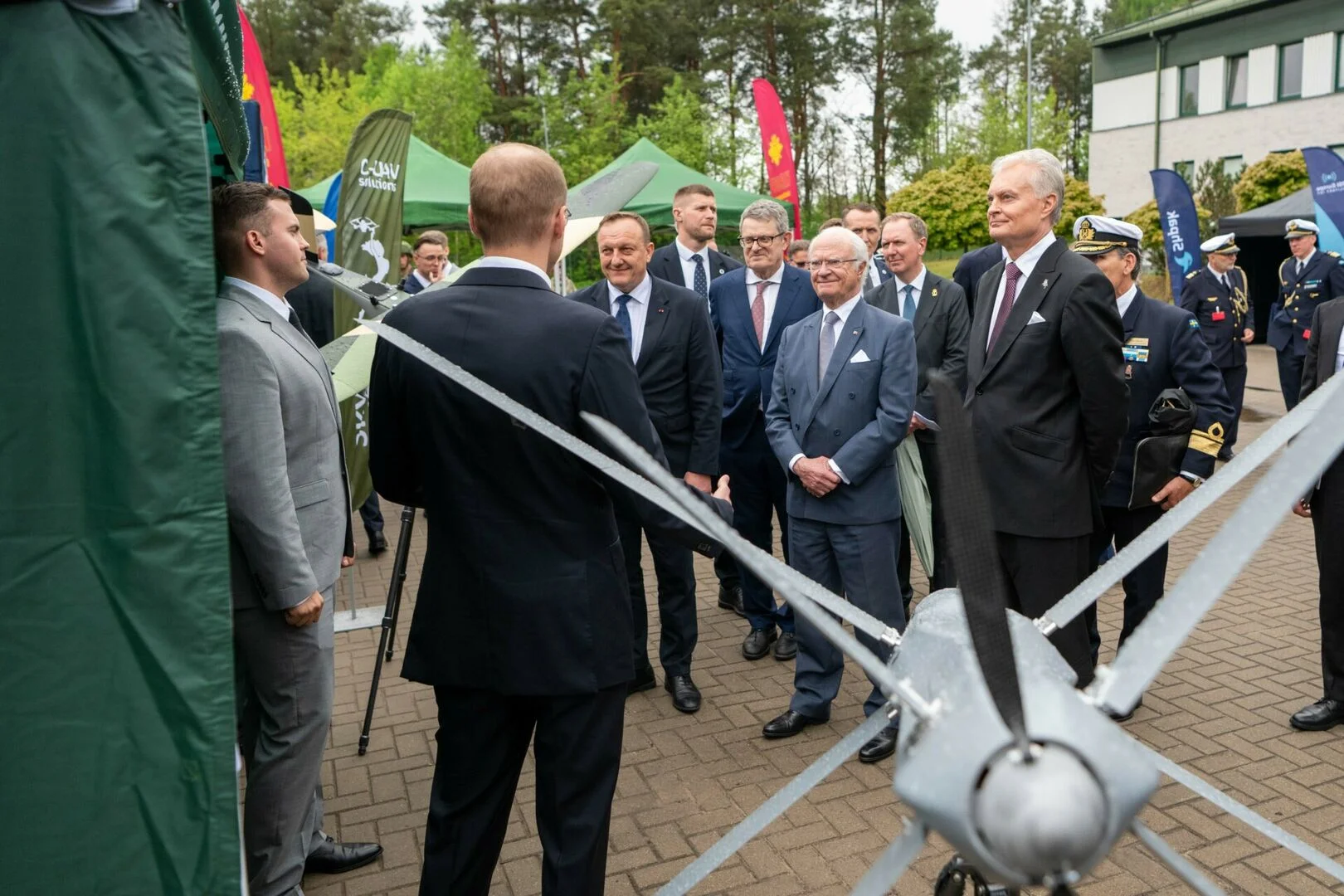
During a strategic visit to the Vilnius Border Guard Team facility in Mickūnai, Lithuanian President Gitanas Nausėda and King Carl XVI Gustaf of Sweden reviewed the latest advancements in Lithuania’s defense industry. The meeting served as a high-level demonstration of the deepening security partnership between the two Baltic Sea nations, focusing on the rapid development of defense technologies and the sustained military support required for Ukraine.
The visit highlighted the entire lifecycle of defense innovation currently being fostered in Lithuania—from initial conceptualization and financing to practical deployment on the battlefield. This ecosystem is characterized by a unique level of cooperation between state institutions, the private sector, the military, and civil society. A notable aspect of this collaboration is the involvement of Swedish-capital financial institutions, which presented new banking credit models specifically designed to fund defense-related innovations within the region.
Strengthening the Baltic Defense Ecosystem
President Nausėda emphasized that the strengthening of the defense industry has become a primary national priority for Lithuania. The country is currently building a modern, innovation-led defense ecosystem that leverages the collective expertise of business, science, and the financial sector. This initiative is not merely a domestic project but a regional security imperative, particularly as Sweden integrates further into NATO’s collective defense structures.
Central to the discussions were the initiatives for military support to Ukraine. The leaders were briefed on the active involvement of non-governmental organizations, volunteers, and the broader public in supporting the Ukrainian resistance. This societal mobilization is paired with industrial output, specifically in the realm of unmanned aerial vehicles (UAVs). Lithuanian companies are currently developing sophisticated drone and anti-drone solutions that are being deployed by both the Lithuanian and Ukrainian armed forces.
Technological Adaptation in Modern Warfare
The ongoing conflict in Ukraine has served as a catalyst for technological shifts in the region. President Nausėda noted that the war has clearly demonstrated the critical importance of technological innovation and a defense industry capable of rapid adaptation. To maintain this momentum, Lithuania has implemented accelerated procedures for defense industry investments, aiming to reduce bureaucratic hurdles and encourage the development of high-value-added security solutions.
The presentation in Mickūnai included a practical demonstration of drone technologies. These systems represent a significant portion of Lithuania’s defense export potential and are considered vital for the security of the Baltic flank. By fostering an environment where innovation can move quickly from the laboratory to the front line, Lithuania aims to provide a blueprint for other medium-sized NATO allies.
Strategic Outlook and Future Cooperation
The collaboration between Lithuania and Sweden signifies a broader trend of Baltic-Nordic integration in the face of persistent regional threats. As Sweden brings its significant industrial and naval capabilities to the NATO alliance, Lithuania’s focus on agile, high-tech defense solutions provides a complementary strength.
Looking forward, the Lithuanian government intends to continue creating favorable conditions for defense growth. This includes further investment in research and development and the expansion of production capacities for anti-drone systems. The visit of King Carl XVI Gustaf underscores the royal and state-level commitment to these shared security goals, ensuring that the partnership between Vilnius and Stockholm remains a cornerstone of stability in Northern Europe.
Source: BNS



Comments