
Lithuania to Localise Ukrainian Arms Production in Strategic Shift
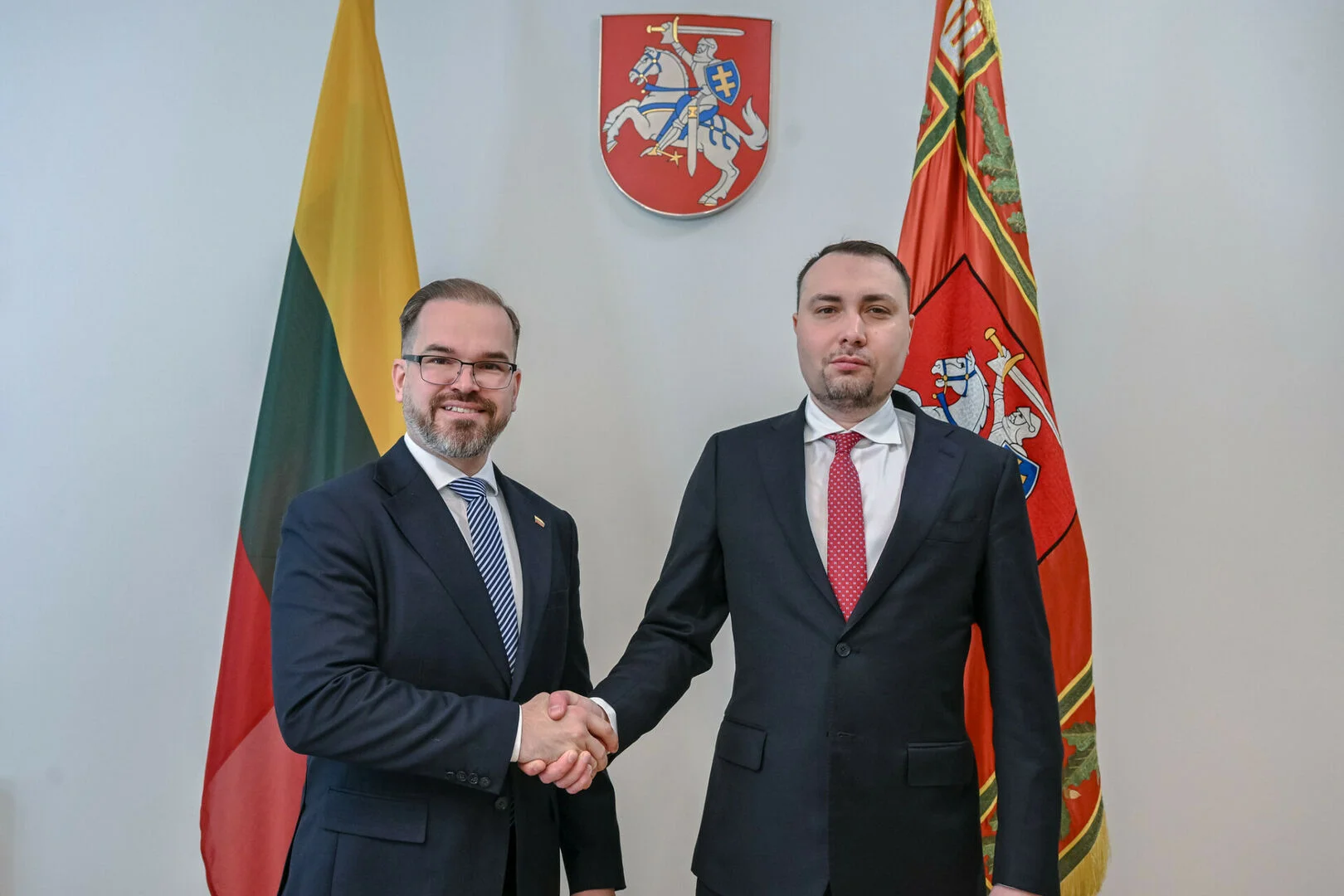
Lithuania is set to integrate Ukrainian wartime innovation directly into its own industrial base, marking a significant evolution in the security partnership between the two nations. Following a high-level meeting in Vilnius between Lithuanian Defense Minister Robertas Kaunas and senior Ukrainian security official Kyrylo Budanov, the Baltic nation confirmed its intention to localise Ukrainian defense manufacturing on Lithuanian soil.
The move represents a transition from traditional military aid to a strategic industrial alliance. By hosting Ukrainian production lines, Lithuania aims to harness the rapid technological advancements born on the battlefields of Ukraine, while providing Kyiv with a secure manufacturing hub within the borders of NATO.
A Partnership Born of Combat Innovation
During the discussions, Minister Kaunas emphasised that the primary goal is to strengthen the defensive capabilities of both nations. The focus is specifically on the “daily lessons of war” and the technologies Ukraine has developed under the pressure of active conflict, particularly in fields such as drone technology, electronic warfare, and modular defense systems.
“The technologies developed by Ukraine and the daily lessons of war are extremely relevant to us,” Minister Kaunas stated. “We aim to localise the Ukrainian defense industry in Lithuania so that it strengthens the defensive capabilities of both Lithuania and Ukraine.”
For Lithuania, this is not merely an economic opportunity but a vital component of its national security strategy. By integrating Ukrainian expertise, the Lithuanian military gains access to battle-tested equipment and the technical know-how required to maintain it, reducing reliance on long-distance supply chains during potential regional crises.
From Theoretical Planning to Total Defense
The meeting also delved into the concept of “total defense,” a policy Lithuania has been aggressively pursuing. This strategy is based on the readiness of the entire state—including its civil society and private sector—to utilise all available resources in the event of an invasion.
Minister Kaunas noted that the focus of Baltic security is shifting away from theoretical NATO planning toward the practical ability to operate under real-world crisis conditions. This includes a heavy emphasis on civil-military integration, ensuring that civilian institutions are coordinated with the armed forces to maintain state functions during wartime.
Kyrylo Budanov provided practical insights from Ukraine’s experience in protecting critical infrastructure. As Russia has consistently targeted Ukraine’s energy grid and public services, Budanov’s expertise in defensive measures and rapid-response repairs offers a blueprint for Lithuania as it seeks to harden its own national assets against hybrid and conventional threats.
Securing the Eastern Flank
The localisation of industry is expected to involve the manufacturing of equipment that meets the immediate needs of the Ukrainian Armed Forces, while also replenishing Lithuanian stockpiles. This dual-purpose approach ensures that Lithuanian support remains sustainable over the long term.
As the security situation on NATO’s eastern flank remains volatile, the integration of Ukrainian defense firms into the Lithuanian economy serves as a deterrent. It signals a permanent commitment to military readiness and a move toward a more self-sufficient regional defense ecosystem. The specific support packages provided by Lithuania will continue to be shaped by the most urgent requirements of the Ukrainian front lines, ensuring that the industrial partnership remains responsive to the evolving nature of the conflict.
Original reporting by: bns
Source: BNS


Comments