
Oak Apple Day: why 29 May still echoes in UK customs
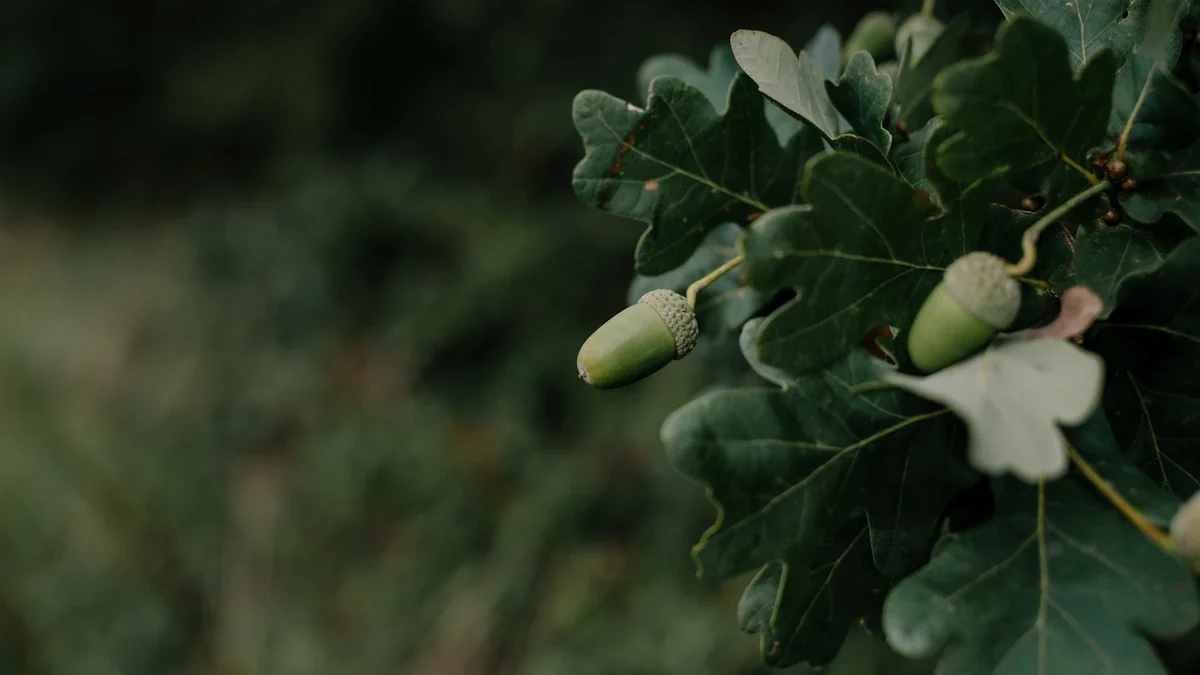
A pub sign, a village noticeboard or a local heritage walk may be where many people first meet the phrase Oak Apple Day. The date behind it is 29 May 1660, when the Restoration brought Charles II back to the throne after years of civil war, republican government and political upheaval across England, Scotland and Ireland.
Oak Apple Day is not a modern instruction to celebrate monarchy, nor is it observed in the same way everywhere. It is better understood as cultural history: a once-official calendar day whose symbols survived unevenly in local customs, place memory, pub names and seasonal folklore.
Why Oak Apple Day falls on 29 May
Oak Apple Day is associated with the Restoration of Charles II, whose return marked the end of the Interregnum and the re-establishment of monarchy in 1660. The Royal Family’s historical account of Charles II places him at the centre of this Restoration story, while UK Parliament’s history of parliamentary authority sets the period in the wider struggle between Crown, Parliament and political settlement.
The date matters because 29 May became linked with Charles II’s return and with his birthday. In later memory, the day was commonly called Oak Apple Day, Royal Oak Day or Restoration Day, depending on locality and source.
The “oak” reference points to one of the best-known stories attached to Charles II: after defeat at the Battle of Worcester in 1651, he was said to have hidden in an oak tree while escaping parliamentary forces. Whether encountered as schoolroom history, pub-sign imagery or local folklore, that story helped make oak leaves and oak apples a shorthand for loyalty to the restored king.
The Restoration context behind the custom
The Restoration did not arrive in a political vacuum. The English Civil War had resulted in the execution of Charles I in 1649, the abolition of monarchy and the rise of a republican regime under the Commonwealth and Protectorate. By 1660, the political settlement had shifted again, and Charles II returned from exile.
UK Parliament’s historical material on the evolution of parliamentary authority is useful here because it shows that the Restoration sits inside a longer constitutional story, not simply a royal biography. The monarchy returned, but the crises of the seventeenth century left lasting questions about sovereignty, religion, taxation, military power and the relationship between Parliament and the Crown.
That is why Oak Apple Day can be misunderstood if it is treated only as a quaint celebration. It began as a politically charged public commemoration in a society that had recently lived through war, execution, exile and regime change. Over time, however, many of its surviving traces moved away from direct political meaning and into the softer territory of local custom and historical reference.
What oak apples and oak leaves symbolised
An oak apple is not an apple in the orchard sense. It is a rounded gall that forms on oak trees, usually caused by gall wasps. In popular tradition, these galls and oak leaves became wearable signs connected with the day.
In some places, people wore oak leaves, sprigs or oak apples on 29 May. Local accounts often describe playful sanctions for those who did not wear them, though the details vary and should not be assumed to apply everywhere. The same date could be remembered seriously, jokingly, ceremonially or barely at all, depending on place and period.
The symbolism worked because oak already carried several meanings: endurance, English woodland, royal escape, survival and restored order. The “Royal Oak” became a compact image with enough story behind it to suit inns, signs, regimental associations, local legends and public memory.

That endurance is important. Many readers today may not know Oak Apple Day as a living annual observance, but they may recognise the phrase through a pub called The Royal Oak, a heritage panel, a school local-history lesson or a May custom mentioned in a parish history.
Why the phrase survives in pub names and local heritage
Pub names are one of the clearest ways old political and cultural references remain visible long after their original urgency has faded. A name such as The Royal Oak can point back to the Charles II escape story, to Restoration loyalty, to local landownership, or simply to a traditional naming pattern that became familiar and marketable over generations.
This does not mean every Royal Oak pub has a direct, documented link to Charles II or to Oak Apple Day. Some names may have been chosen because they sounded respectable, rural or historically rooted. Others may preserve a more specific local association. The safest reading is that the name belongs to a wider Restoration-era and post-Restoration symbolic world, unless a particular pub or village has its own documented history.
Local customs also vary. In some communities, Oak Apple Day has been marked by processions, garlands, church or civic references, or the wearing of oak. In others, it has disappeared except in archives and place names. The phrase can therefore be both historically national and practically local: the date has a recognised national association, but the customs are not uniform across the UK.
How to read Oak Apple Day in 2026
For modern readers, Oak Apple Day is best approached as a layered cultural reference. It tells us about the Restoration, about how political events enter popular custom, and about how symbols can outlive the circumstances that created them.
It also shows how public memory changes. A seventeenth-century commemoration that once carried clear political loyalty may now appear as a pub sign, an oak sprig in a local ceremony, a heritage trail note or a question in a history quiz. The meaning has not vanished, but it has become more indirect.
That distinction matters because cultural history is not the same as present-day political instruction. Explaining Oak Apple Day does not require readers to adopt the loyalties of 1660. It requires attention to how people at the time used symbols, how institutions later remembered the Restoration, and how local communities preserved or adapted fragments of that memory.
A short timeline of the story
- 1649: Charles I was executed and monarchy was abolished in England.
- 1651: Charles II fled after the Battle of Worcester; the Royal Oak escape story became part of his legend.
- 1660: Charles II returned during the Restoration, with 29 May becoming the key date associated with his return.
- Later centuries: Oak leaves, oak apples, Royal Oak names and local observances kept parts of the tradition alive.
- Today: Many people encounter the phrase mainly through pub names, local customs and heritage references.
The useful way to explain it
If someone asks what Oak Apple Day is, the simplest answer is this: it is a Restoration-related date on 29 May, linked to Charles II and the oak-tree story, once marked by wearing oak leaves or oak apples in some places.
The more careful answer adds that customs vary by locality, that many traces are now historical rather than widely practised, and that pub names or heritage references may preserve the symbol without proving a direct local ceremony.
That is why the phrase still has value. It opens a small door into a larger story: civil war, monarchy, Parliament, memory, folklore and the way old symbols keep appearing in ordinary places long after the politics around them have changed.
Source: The Royal Family
Context & actions About this article
Source check Historical context
This explainer uses Royal Family and UK Parliament historical material to place Oak Apple Day in its Restoration context.
- Checked the Charles II historical context against The Royal Family's published biography m...
- Used UK Parliament's history of parliamentary authority for the wider Restoration setting.
- Separated national historical association from locality-specific customs.
- Avoided treating a historic commemoration as a present-day political instruction.
- Source
- The Royal Family: Charles II
- Scope
- United Kingdom
- Updated
- 2026-05-29 07:18
Source check
Report a trust issue
Send a clear signal to community moderation if the source, facts or context need review.




Comments