
Orpington joint patients gain robotic surgical support
By the Beehive Web editorial team | Published 31 July 2026
Patients undergoing planned hip and knee replacements at Orpington Hospital may now have their operations supported by a robotic-arm system when clinicians consider it appropriate. The hospital has become the first NHS centre in South East London to introduce the technology, with faster rehabilitation and shorter hospital stays among the intended benefits.
The service was announced by King’s College Hospital NHS Foundation Trust on 31 July 2026. Around 100 procedures a year are expected to use the new system at Orpington Hospital’s Elective Orthopaedic Centre.
A live map helps surgeons track the joint
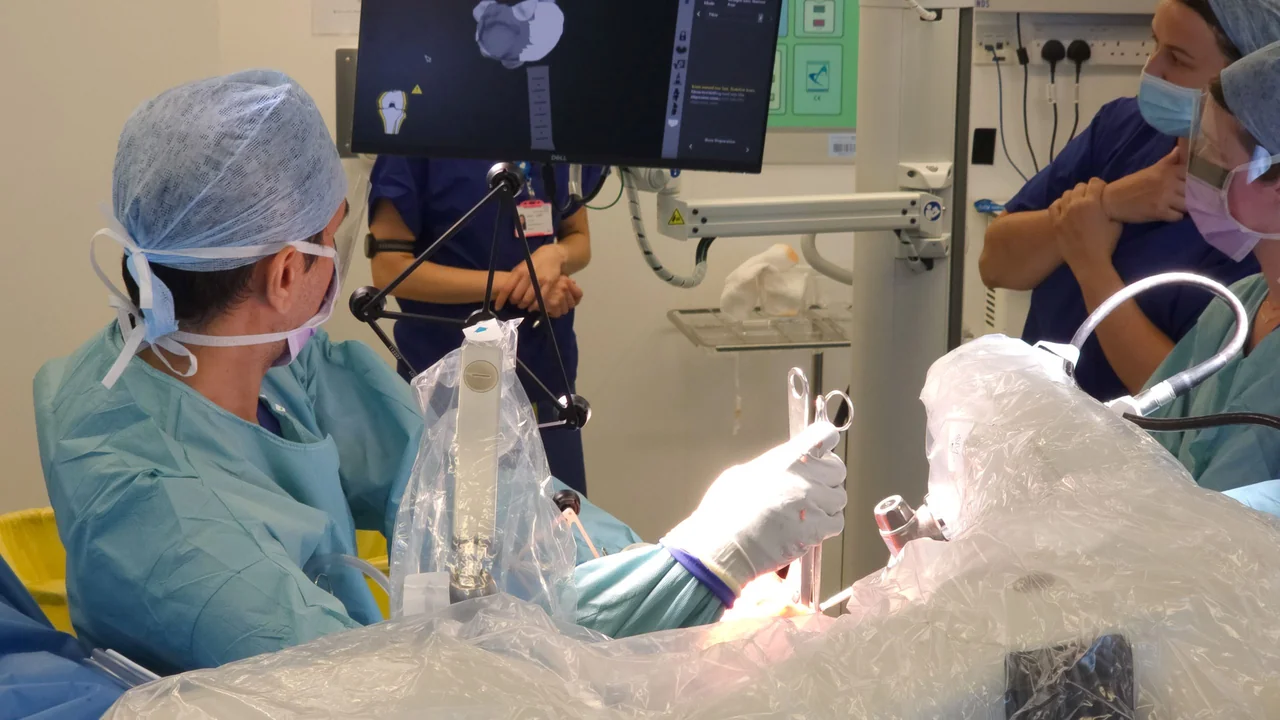
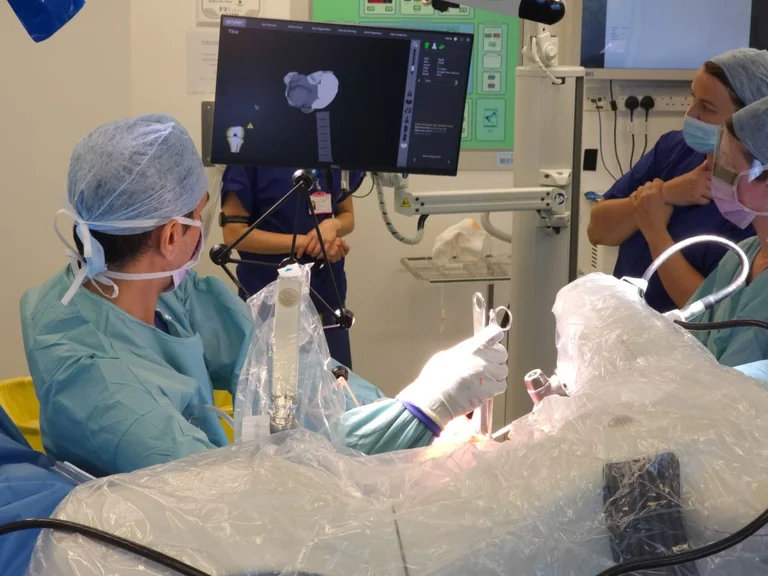
The Stryker Mako system uses a scan taken before surgery to map the patient’s joint and establish the planned position of the implant. During the operation, the surgeon removes damaged bone with assistance from the robotic arm and receives tactile feedback intended to help protect healthy tissue.
The system’s cameras also respond when the patient moves during surgery. They adjust to those live changes so the computer can continue tracking the position of the bone and help the surgical team maintain accuracy.
The procedure remains surgeon-led: the source describes the robotic arm as an assistive system used while the surgeon performs the operation. It does not independently decide which tissue to remove or carry out a replacement without the clinical team.
Hip and knee replacements will use the system first
The technology is designed for total hip replacements, total knee replacements and partial knee replacements. These procedures will form the initial focus while more clinical teams complete the training needed to use the equipment.
Mr Abhinav Gulihar, Clinical Director of Orthopaedics at the trust, said team members had been preparing to work with the technology for years. He added that the service could eventually cover all patients undergoing joint replacement, also known as arthroplasty, where robotic assistance is clinically appropriate.
The NHS announcement does not set out separate patient eligibility criteria or explain how individual cases will be selected. That decision will therefore depend on clinical assessment rather than the presence of a hip or knee replacement on a patient’s treatment plan alone.
Reduced pain and quicker rehabilitation are the aims
Orpington Hospital is a purpose-built centre for planned inpatient and day-case bone and joint surgery. The new system is intended to support more precise implant positioning and bone preparation, which clinicians hope will help patients recover their movement after an operation.
Dr Anneliese Rigby, a consultant anaesthetist at King’s College Hospital NHS Foundation Trust, said the team aims to get patients moving again and returning to everyday life. She said robotic surgery could help reduce post-operative pain and potentially accelerate recovery.
Those benefits are stated as clinical aims rather than guaranteed outcomes for every patient. The announcement does not include recovery data from Orpington patients, so the effect on pain, rehabilitation time and length of stay will depend on individual cases and the results recorded as the programme develops.
Staff training will shape the wider rollout
The Elective Orthopaedic Centre plans to build the service gradually as additional staff complete their training. Matthew Trainer, chief executive of the trust, said the programme would also be used to educate the next generation of specialists in robot-assisted orthopaedic surgery.
For now, the confirmed rollout centres on approximately 100 hip and knee replacement procedures each year, with any expansion tied to staff readiness and whether robotic assistance is suitable for the patient.
Source: King's College Hospital News
Context & actions About this article
Source check Source trail
The article reflects the procedures, operating method and qualified recovery claims published by King’s College Hospital NHS Foundation Trust.
- Matched the eligible procedures to the source: total hip, total knee and partial knee repl...
- Confirmed that the surgeon performs the operation with assistance from the robotic arm.
- Checked the planned volume of around 100 robot-assisted procedures each year.
- Preserved the source’s qualified language about pain, rehabilitation and hospital stays.
- Source
- King’s College Hospital News
- Scope
- Orpington
- Updated
- 2026-07-31 13:15
Source check
Report a trust issue
Send a clear signal to community moderation if the source, facts or context need review.




Comments