
Ten UK ‘defibrillator deserts’ targeted for free devices
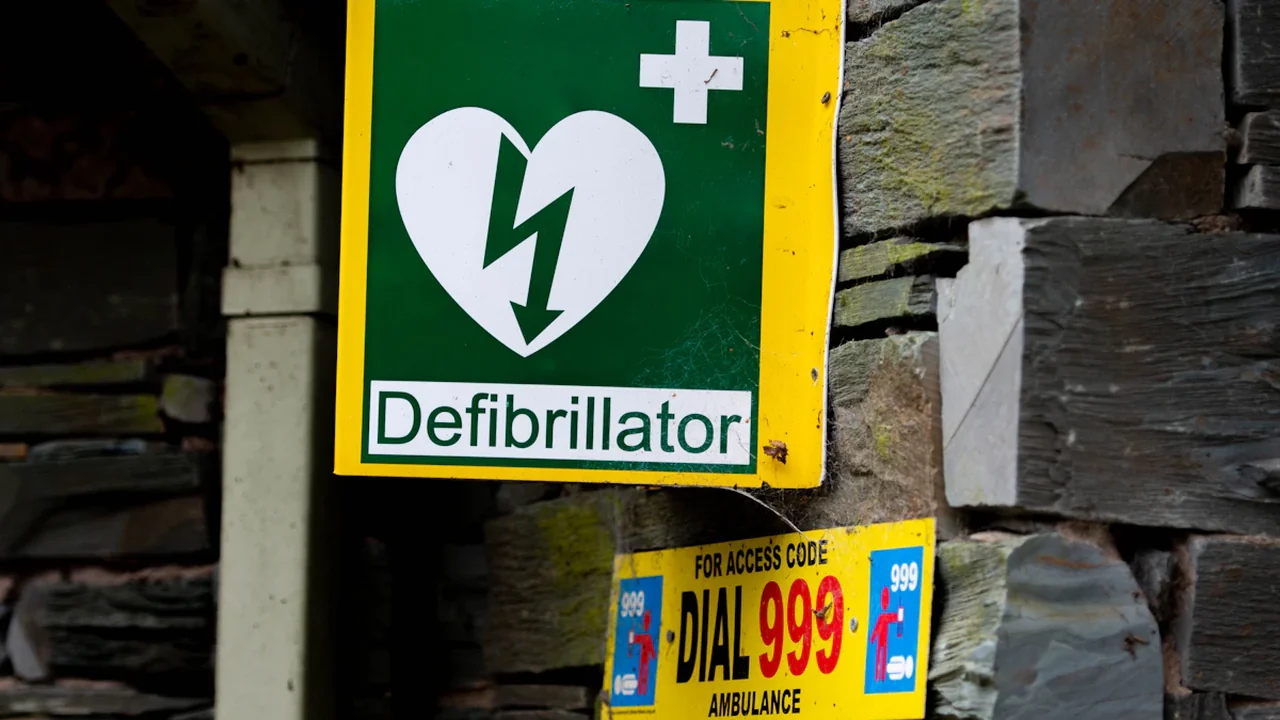
Ten parts of the UK have been identified as priorities for better access to public defibrillators, with 400 free packages available through the British Heart Foundation’s Community Defibrillator Funding Programme.
Community group leaders in the affected areas can apply now. The announcement does not give a closing date, and the charity says applications from places with the greatest need will be prioritised.
The findings were published by British Heart Foundation News on 22 July 2026 in a report by Emily Hickey-Baird.
The ten areas identified across the UK
The BHF selected the areas using a combination of long defibrillator retrieval times, high population density and deprivation. The locations are grouped across all four UK nations:
| Nation | Priority areas |
|---|---|
| England | Barking and Dagenham; Liverpool; Southampton; Nottingham |
| Wales | Wrexham; Newport |
| Scotland | Airdrie, Hamilton and Motherwell; Bonnybridge, Croy and Cumbernauld |
| Northern Ireland | West Tyrone; Cusher |
Rural West Tyrone has an average defibrillator retrieval time of 19 minutes and 20 seconds. The BHF did not publish comparable retrieval figures for every area, so the list should not be treated as a local risk ranking.
Liverpool is also covered by a separate cardiac safety initiative across the city’s schools, involving defibrillators and CPR training.
Delayed defibrillation sharply reduces survival chances
More than 40,000 out-of-hospital cardiac arrests occur in the UK each year, according to the BHF, but fewer than one in ten people survive. Early CPR and defibrillation can more than double a person’s chance of survival.
For every minute without CPR and defibrillation, the chance of survival can fall by as much as 10%. Retrieval time therefore reflects more than the number of devices in an area: a defibrillator must also be close enough to reach quickly during an emergency.
More than 120,000 devices are registered on The Circuit, the national defibrillator network used to help emergency services locate them. Their distribution remains uneven. The charity says deprived communities often combine higher rates of cardiovascular disease and cardiac-arrest deaths with fewer available devices, partly because of equipment and installation costs.

Free packages include installation and long-term parts
Successful applicants will receive a defibrillator and cabinet. Installation will be arranged where required, while replacement parts will remain free for up to ten years when they expire or are used during an emergency.
Every awarded device will be registered on The Circuit. The programme has already placed 1,000 community defibrillators, and a further 400 packages are available in this funding round with support from Royal Mail, Sky Bet and Omaze.
Sam Kennard said rapid access to a defibrillator gives someone the best possible chance of surviving before emergency help arrives. He added that some of the UK’s most deprived communities remain too far from the nearest device.
A newly installed device saved Adrian Millard
The practical value of local access was demonstrated in Plymouth on Christmas Day 2025. Adrian Millard went into cardiac arrest shortly after arriving at a pub with his son-in-law.

Three people began CPR while a friend collected a community defibrillator from a church across the road. The device had been installed only two months earlier, in October 2025. It delivered two shocks, and Millard was conscious and breathing before paramedics arrived.
He later underwent surgery to receive an implantable cardioverter defibrillator on New Year’s Eve. Millard said the local campaign that secured the community device was probably the reason he survived.
Community leaders can apply now
Leaders of community groups in Barking and Dagenham, Liverpool, Southampton, Nottingham, Wrexham, Newport, the two named Scottish clusters, West Tyrone and Cusher can seek support through the Community Defibrillator Funding Programme.
The ten locations are immediate priorities, but they are not the only places with limited coverage: the BHF says hundreds of UK communities still lack adequate access. The announcement promises priority for the greatest need rather than a device for every applicant.
Source: British Heart Foundation News
Context & actions About this article
Source check Source trail
The locations, statistics and funding terms were checked against the British Heart Foundation report published on 22 July 2026.
- Matched the report’s publication date and Emily Hickey-Baird byline.
- Checked all ten listed areas across England, Wales, Scotland and Northern Ireland.
- Confirmed the figures for 400 available packages, 1,000 previously placed devices and more...
- Checked the package contents, installation provision and ten-year replacement-parts commit...
- Source
- British Heart Foundation News
- Scope
- United Kingdom
- Updated
- 2026-07-22 16:14
Source check
Report a trust issue
Send a clear signal to community moderation if the source, facts or context need review.




Comments