
Westminster residents face Oxford Street access fight: what residents need to know

Westminster City Council says a judicial review against plans to pedestrianise Oxford Street is unlikely to succeed, but the authority is still looking at other legal and procedural routes to influence the scheme.
The council said all Westminster councillors have raised long-running concerns about the proposal, with accessibility and bus routes singled out as major issues for residents, visitors and businesses. The statement follows additional legal advice sought under the instruction of the council’s new leader, Paul Swaddle.
That advice found that a judicial review would be unlikely to succeed and that a late claim would probably be refused. Westminster has not accepted that as the end of its role, saying it will continue to examine the levers available to it as the future of one of London’s best-known shopping streets is decided.
Accessibility and bus routes remain central concerns
Oxford Street is not only a retail destination. It is also a route used by workers, shoppers, disabled visitors, local residents, delivery operators and people changing between buses, taxis, the Underground and nearby streets.
For Westminster residents, the practical questions are likely to be less about the headline idea of pedestrianisation and more about how the street functions once traffic patterns change. Bus diversions, step-free access, blue badge provision, taxi access, servicing arrangements and crowd management can determine whether a pedestrian-first scheme works for people who cannot simply walk longer distances.
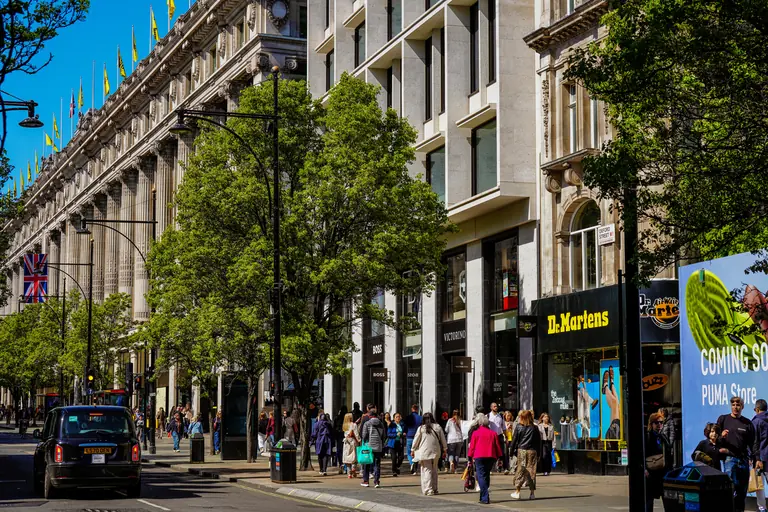
The council’s statement puts accessibility and bus routes at the front of its objections. Those issues are especially sensitive in the West End, where small changes to traffic management can move pressure onto neighbouring roads and affect people living close to the retail core.
Businesses will also be watching the detail. Pedestrianisation can support footfall and public realm improvements, but retailers, hospitality venues and offices still depend on deliveries, staff journeys, waste collection and emergency access. Westminster’s position is that local voices need to remain part of those decisions rather than being treated as a late-stage consultation issue.
Legal advice weakens the judicial review route
The usual legal route for challenging a public decision of this kind would be a judicial review. That process does not ask a court to decide whether a policy is popular or unpopular. It examines whether the decision-making process was lawful, rational and procedurally fair.
Westminster City Council said the legal advice it received was that such a challenge would be unlikely to succeed. It also said that submitting a late claim would be expected to result in refusal.

That matters because judicial review deadlines are tight. Once a public body decides not to pursue that route, the focus often shifts from litigation to negotiation, procedural scrutiny and political pressure. Westminster’s statement indicates that this is now the council’s direction, even as it keeps other options under review.
The wording is carefully framed. The council is not saying it supports the plans as currently shaped. It is saying the most direct court challenge is not, on present advice, a strong path.
Paul Swaddle seeks meeting with the Mayor of London
Council leader Paul Swaddle has written to the Mayor of London requesting a meeting. The aim, according to the council, is to raise Westminster’s concerns directly and push for better outcomes for residents and businesses.
That meeting request is now the clearest next step. If it takes place, the council is likely to press for detail on transport changes, access protections and the role Westminster will have in shaping the final plan.
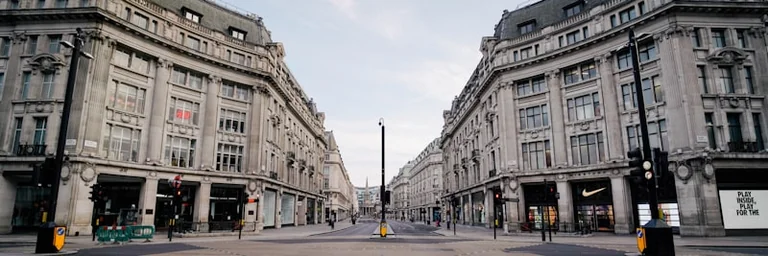
The Mayor of London’s involvement is central because Oxford Street is a citywide transport and economic corridor as well as a local street. Decisions about buses, traffic flows and the West End’s public realm can affect Londoners beyond Westminster, while the daily disruption and long-term trade-offs are felt most directly by the borough’s residents and businesses.
The council said Oxford Street is in the heart of the city, home to residents and a street it fought to revive after the Covid lockdown. That post-pandemic context is important: the West End has spent years trying to rebuild footfall, office traffic and visitor confidence, while also facing pressure to improve the quality and safety of public spaces.
Westminster’s role moves from court challenge to negotiation
The council says this is not the end of the road. It is considering other legal and procedural options, though it has not set out which specific mechanisms may still be available.
In practice, Westminster’s influence could now depend on how effectively it can secure changes to the scheme before final implementation. That may include pushing for clearer accessibility commitments, workable bus arrangements, protections for nearby streets and formal channels for local businesses and residents to respond to detailed plans.
The key issue for residents is whether the final design treats access as a core requirement rather than an adjustment after the main decision has been made. For businesses, the concern is whether Oxford Street can be improved without making day-to-day operations harder.
Westminster City Council said residents should be assured it will use all available levers to ensure the voice of local people and businesses is clearly heard.
Source: Westminster City Council
Context & actions About this article
Source check Source trail
This report is based on Westminster City Council’s statement about Oxford Street and its stated legal position.
- Confirmed the council’s position that a judicial review is considered unlikely to succeed.
- Checked that the statement names accessibility and bus routes as key concerns.
- Verified that Paul Swaddle has requested a meeting with the Mayor of London.
- Separated confirmed council claims from broader context about transport and local access i...
- Source
- Westminster City Council
- Scope
- Westminster
- Updated
- 2026-05-29 15:53
Source check
Report a trust issue
Send a clear signal to community moderation if the source, facts or context need review.




Comments