
Whitby’s whale-bone arch is set for a lasting change
By the Beehive Web editorial team
Published 31 July 2026
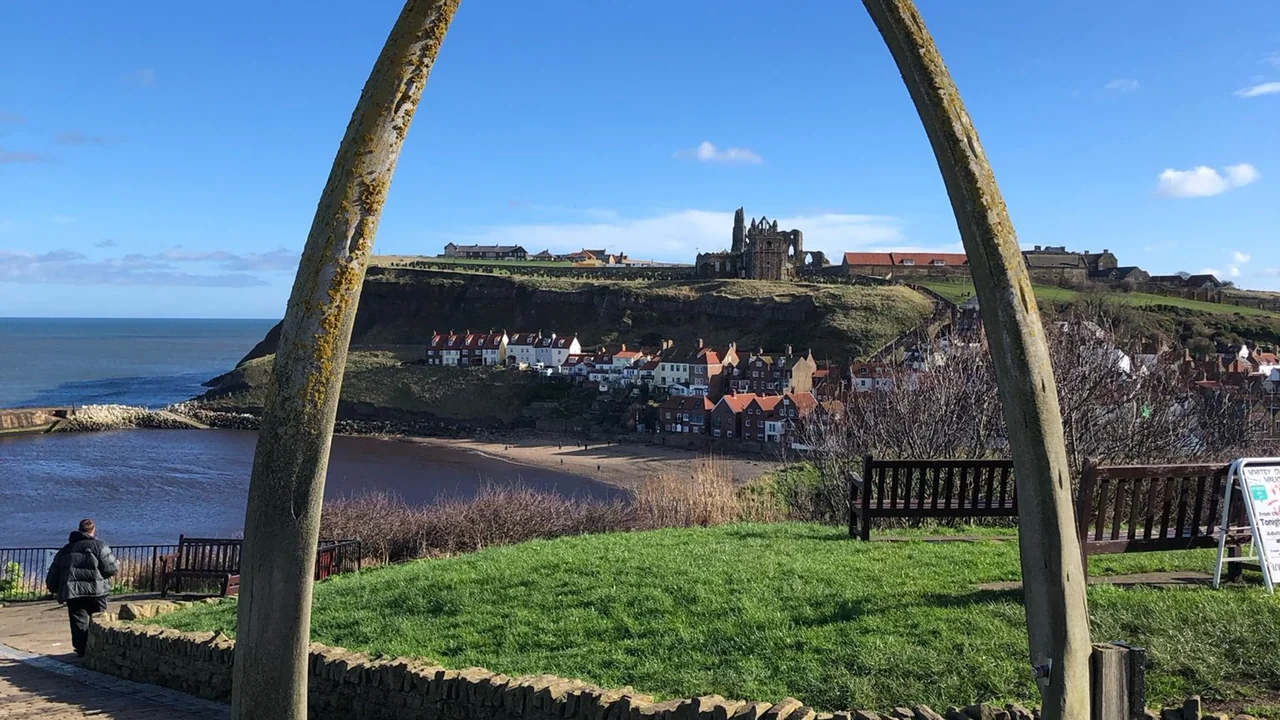
On Whitby’s West Cliff, the whale-bone arch frames one of the town’s best-known views towards Whitby Abbey. The real bones currently forming that familiar outline will be carefully removed in September 2026 after years of coastal weather caused significant deterioration.
North Yorkshire Council has selected a £70,000 bronze replacement designed to reproduce the appearance and scale of the existing arch. The new structure is expected to be installed in early 2027, leaving the landmark temporarily absent while moulding and manufacturing work takes place.
For residents and returning visitors, the principal visual change will be the material rather than the form. The council says bronze offers a longer-lasting way to retain the arch’s distinctive silhouette in an exposed seafront location.
Coastal weather has taken its toll since 2002
The present bones were installed in 2002 after being gifted by Whitby’s twin town of Barrow, Alaska. More than two decades of exposure on West Cliff have since left them in a condition that requires replacement, according to the council’s 2026 announcement.
Officials considered a range of options before choosing bronze. Feedback gathered from residents and visitors also identified a bronze replica as the most fitting approach for preserving the arch’s connection with Whitby’s maritime identity.
Councillor Mark Crane, North Yorkshire Council’s executive member whose responsibilities include harbours, said the material would preserve the landmark’s character while providing a structure capable of enduring for decades.
Moulds will preserve the bones’ familiar shape
Producing the replacement will involve taking moulds from the existing bones and creating a bespoke internal framework. That process is intended to carry the contours of the real bones into the cast-bronze structure rather than replace them with a newly interpreted design.
Bronze was chosen for its strength, longevity and ability to withstand conditions on West Cliff. Its surface will develop a natural patina over time, but the council says the overall form associated with Whitby’s seafront will remain recognisable.
The direct moulding process also gives the current bones a role in determining the appearance of their successor. The £70,000 cost covers the creation of the new bronze arch, including the specialised framework and manufacturing involved.
An Alaska gift became a Whitby maritime symbol
Although the present arch dates from 2002, it has become an internationally recognised image of the town. Its position draws thousands of visitors and frames the view towards the Abbey, placing Whitby’s maritime history within one of its most photographed coastal scenes.
That maritime identity is also reflected in local events, including the town’s harbour heritage celebrations. The arch provides a permanent focal point for the same connections with seafaring, fishing traditions and the coast.
Whitby Town Mayor Sandra Turner said it was sad to see the current bones reach the end of their life, while describing the replacement as a way to keep the landmark on West Cliff for future generations.
Removal begins in September ahead of an early 2027 return
The existing bones are due to be dismantled carefully in September 2026 so moulds and the internal structure can be prepared. Installation is expected early in 2027, although the council has not provided an exact completion date.
The original bones will not be discarded. Most will be gifted to the University of York for academic and educational research, while a section will remain in Whitby and be displayed at Whitby Museum beside bones from an earlier arch that once stood on West Cliff.
Source: North Yorkshire Council
Context & actions About this article
Source check Source trail
The timetable, cost, design process and future location of the original bones were checked against North Yorkshire Council’s 2026 announcement.
- Confirmed that the existing bones are scheduled for removal in September 2026.
- Confirmed the stated £70,000 cost and expected installation in early 2027.
- Checked that moulds from the existing bones and a bespoke internal framework will be used.
- Confirmed that the bones will go to the University of York and Whitby Museum.
- Source
- North Yorkshire Council
- Scope
- Whitby
- Updated
- 2026-07-31 10:44
Source check
Report a trust issue
Send a clear signal to community moderation if the source, facts or context need review.


Comments