
Dunkirk on 3 June: Britain’s Memory of Crisis
By Beehive Web History Desk
On 3 June 1940, the Dunkirk evacuation was entering its final stretch. Operation Dynamo had begun on 26 May and would end on 4 June, after more than 338,000 Allied troops had been evacuated from the beaches and harbour around Dunkirk, according to Imperial War Museums.
That date matters because Dunkirk is not only a military episode. In Britain, it became a shorthand for endurance under pressure, civilian improvisation and national survival. Yet the phrase “Dunkirk spirit” can flatten a complicated event into a simple comfort story. The history is stronger, and more useful, when it keeps the rescue, the danger, the losses and the modern governance shifts that followed in view at the same time.
What was happening at Dunkirk by 3 June 1940
Operation Dynamo was the evacuation of Allied troops from Dunkirk in northern France during the Second World War. British, French and other Allied forces had been pushed back by Germany’s advance in western Europe and became trapped around the port and nearby beaches.
The evacuation ran from 26 May to 4 June 1940. The aim was urgent and practical: move as many soldiers as possible across the English Channel before German forces could close the pocket completely. Imperial War Museums records that more than 338,000 Allied troops were evacuated.
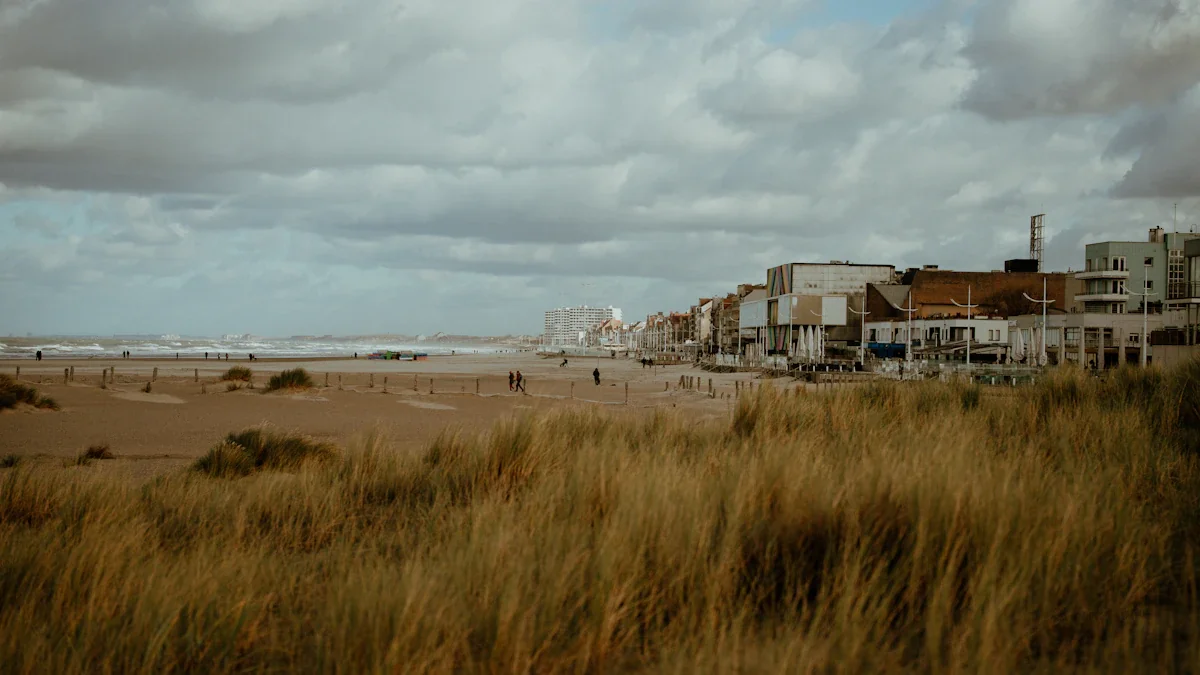
By 3 June, the operation had already taken on the character that later made it so memorable: a race against time, carried out under military pressure, with the Channel as both barrier and route to survival. The harbour at Dunkirk was vital, but the beaches also mattered because large numbers of men had to wait in exposed conditions before they could be taken off.
The image most often remembered in Britain is of the “little ships” crossing to help. That part of the story is real, but it is only one part. The evacuation also depended on naval planning, larger vessels, military discipline, air and sea conditions, and decisions made under extreme pressure. Treating the small boats as the whole story risks turning a major Allied operation into a single sentimental symbol.
Why Dunkirk became central to British wartime memory
Dunkirk entered British memory because it sat at a turning point. The evacuation did not mean victory in France. It followed a severe Allied reverse and left Britain facing a much more dangerous phase of the war. But the return of so many troops meant that the British Army was not destroyed in 1940.
That distinction matters. Dunkirk was not a battlefield triumph in the usual sense. It was a rescue from a military crisis. Its emotional force came from the combination of danger and survival: a disaster avoided, not a war won.
In public memory, the event also carried a democratic quality. The idea that civilian vessels helped rescue soldiers suited a wider wartime story about ordinary people contributing to national defence. It fitted the mood of a country preparing for invasion fears, bombing and prolonged war.
The phrase “Dunkirk spirit” later came to mean calm determination in a crisis. It has been used far beyond the Second World War, often when Britain faces disruption, shortages, emergencies or uncertainty. That continued use shows how powerful the memory became. It also shows why the phrase needs careful handling.
The difference between history and myth
A myth is not always a lie. Sometimes it is a shortened story that becomes easier to repeat than the full history. Dunkirk is a clear example: the memory of rescue is true, but the popular version can leave out the scale of defeat, the role of Allied soldiers who did not fit the later British story, and the cost paid by those who remained in danger.
A careful account should keep several facts together:
- Operation Dynamo was a response to a grave military crisis.
- The evacuation saved more than 338,000 Allied troops.
- The operation involved Allied forces, not only Britain.
- Civilian vessels mattered, but they worked within a wider military operation.
- Survival at Dunkirk did not end Britain’s danger in 1940.
This is why 3 June is a useful date for remembering Dunkirk. It sits close enough to the end of the operation to show the scale of what had been achieved, but it also reminds readers that the outcome was still unfolding. The rescue was not tidy or inevitable. It was a pressured operation whose later meaning was shaped after the event.
Why simplified memory can still feel powerful
The popular version of Dunkirk endured because it offers a usable crisis story. It says that when institutions are under strain, people can still act with discipline, courage and practical purpose. That message is easy to understand, and in some settings it can be meaningful.
But history becomes less honest when the usable lesson replaces the record. If Dunkirk is remembered only as a morale tale, it becomes harder to see the soldiers’ vulnerability, the Allied scale of the evacuation and the strategic reality of 1940.
The better approach is not to discard the memory, but to make it more accurate. Dunkirk can be remembered as a remarkable evacuation and as a warning against turning survival into triumphalism.
How families can approach Dunkirk service history respectfully
Many families in Britain and elsewhere have stories connected to the Second World War. Some are detailed and documented. Others survive as a few names, dates, photographs or fragments repeated across generations. Dunkirk can appear in family memory even when the evidence is uncertain.
A respectful approach begins with modest claims. If a relative is said to have been “at Dunkirk”, that could mean several things: they may have been evacuated from the area, served on a ship, supported the operation elsewhere, belonged to a unit connected with the campaign, or simply served during the same wider period.
Start with what can be checked:
- Full name, date of birth and service number if known.
- Regiment, ship, unit or branch of service.
- Any letters, medals, photographs, pay books or discharge papers.
- Family stories written down with who told them and when.
- War diaries, service records or museum guidance that can place a unit in context.
Families should also allow for silence. Some veterans did not describe their experiences in detail. Others changed how they spoke about the war over time. A missing story is not evidence that nothing happened; it may reflect trauma, privacy, loss of records or the ordinary difficulty of describing extreme events.
The most careful family history separates evidence from interpretation. It is fair to say, “family tradition says he was connected to Dunkirk,” if that is what is known. It is stronger to say, “his unit was evacuated from Dunkirk on these dates,” only when documents support it.
What Dunkirk still teaches about crisis language
Dunkirk remains part of Britain’s crisis vocabulary because it turns a frightening moment into a story of collective effort. That is why politicians, commentators and communities still reach for the phrase. It offers a familiar frame when events feel uncertain.
The risk is that the phrase can become too easy. Modern crises are not automatically like Dunkirk. Some require patience rather than speed, international coordination rather than national mythology, or technical solutions rather than heroic imagery. Calling every difficult moment a “Dunkirk” can blur more than it clarifies.
Used carefully, the anniversary can do something better. It can remind readers that public memory is built from real events, but also from later choices about what to emphasise. On 3 June, the strongest reading of Dunkirk is not that crisis automatically produces greatness. It is that survival in crisis depends on preparation, coordination, luck, courage and a willingness to remember the full record, not only the comforting part.
Source: Imperial War Museums
Context & actions About this article
Source check Source context
This article uses Imperial War Museums' account of Operation Dynamo for the core dates and evacuation figure.
- Operation Dynamo dates checked against Imperial War Museums.
- Evacuation total stated as more than 338,000 Allied troops.
- Interpretation separates documented events from later public memory.
- Source
- Imperial War Museums
- Scope
- United Kingdom
- Updated
- 2026-06-09 09:21
Source check
Report a trust issue
Send a clear signal to community moderation if the source, facts or context need review.



Comments