
Ealing residents face the trade-offs of two data centres
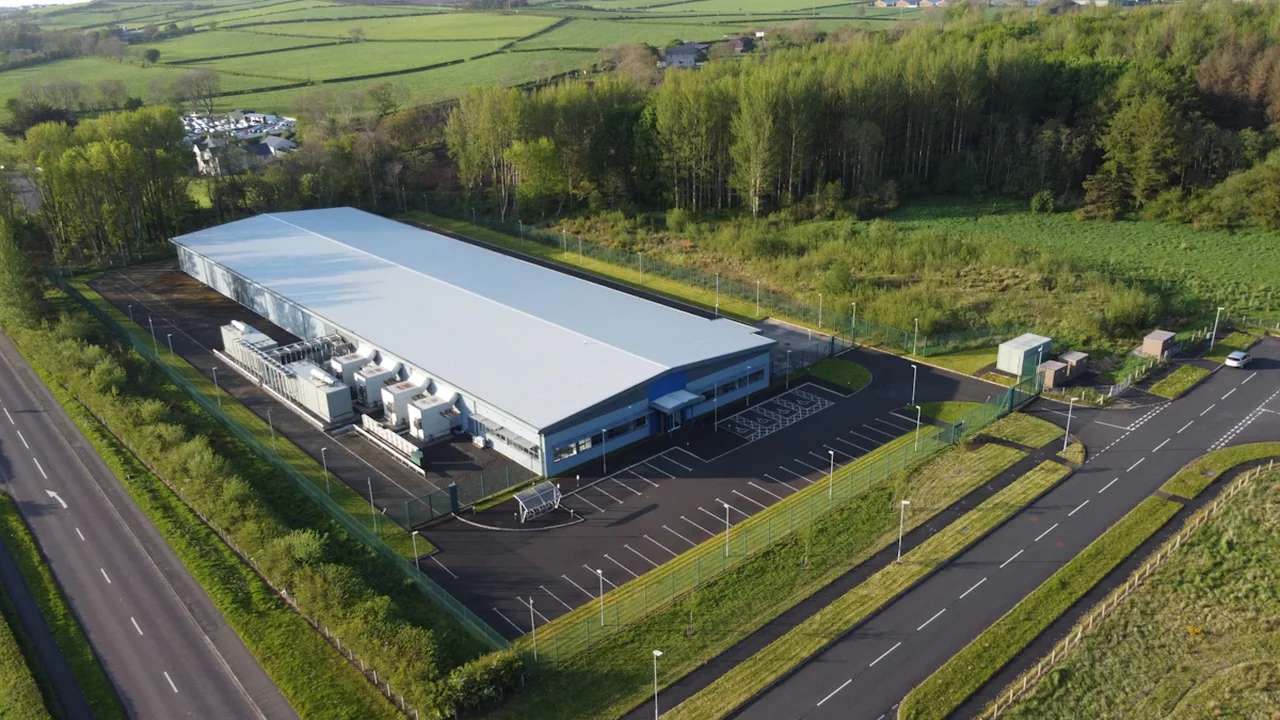
Two approved Southall data-centre schemes represent £2.4 billion of proposed investment and could support more than 1,650 permanent jobs once operational. Those figures combine the developers’ estimates, however, and do not make the jobs automatic: both projects still face planning conditions, legal agreements and referral to the Mayor of London.
Ealing Council approved separate applications from Global Technical Realty (GTR) and CyrusOne after assessing electricity demand, sustainability, transport, design and community impact. The large-scale facilities would house infrastructure used by services such as online banking, public services and business systems.
Figures and commitments in this report come from Ealing Council’s published account of the approvals and the planning obligations attached to each development.
Two industrial sites would be rebuilt in Southall
GTR plans to redevelop the entire International Trading Estate in Trident Way. The existing site contains warehouses and industrial buildings, some described by the council as vacant or in poor condition.
CyrusOne’s development would occupy the former Honey Monster factory site in Bridge Road. Cereal production took place there from 1937 until 2016, the factory buildings were demolished in 2022, and the land has remained vacant since.
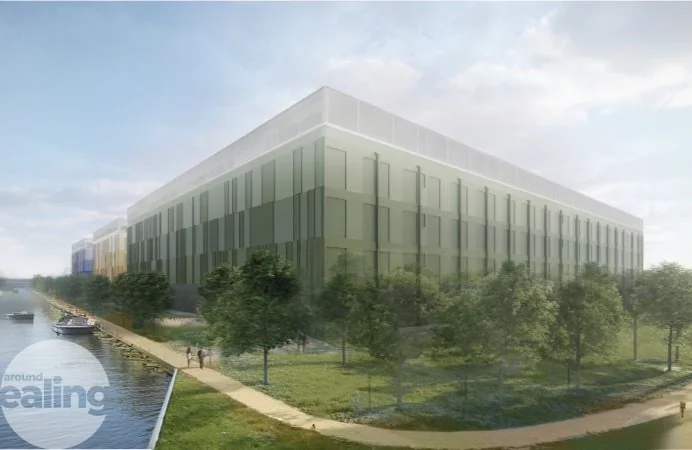
Both applications concern existing industrial land, but the council assessed them separately rather than treating them as one combined programme.
Permanent roles and construction work carry different estimates
GTR’s £1 billion project is expected to create more than 1,000 permanent full-time jobs, including about 775 skilled roles. During construction, it is projected to support 460 full-time jobs in each year of the building programme.
The £1.4 billion CyrusOne scheme is expected to support more than 1,100 construction jobs before providing around 650 permanent roles when operational. Its employment commitments also include 25 apprenticeships and a learning hub.
Those construction estimates are not directly comparable: GTR’s figure is expressed as an annual level, while the council describes CyrusOne’s figure across the construction period. Adding them together would therefore give a misleading total.

Both developments would reserve affordable workspace for small businesses, local start-ups, makers and freelancers. Ealing Council has also prepared a data-centre skills and training strategy intended to help residents qualify for jobs in the sector.
Nearly £38 million is linked to local programmes
GTR would contribute approximately £20 million through a Section 106 agreement, a legal mechanism requiring a developer to fund measures connected with a project’s local effects. The package includes £6 million for skills training, flood-prevention work and 150 new trees.
CyrusOne’s stated community contribution is approximately £17.8 million. That comprises about £9.85 million in Section 106 obligations and an anticipated £7.9 million Community Infrastructure Levy payment.
The CyrusOne funding is intended to support employment and skills programmes, canal-side walking routes, transport improvements, air-quality measures and carbon-reduction projects. The precise delivery of these benefits remains tied to the final planning agreements and project progress.

Power demand remains the central resident concern
Large data centres require substantial electricity and cooling. Residents raised concerns about energy demand, resource use and environmental effects while the applications were being considered.
According to Ealing Council, the developments will not draw the electricity they require from existing local grid capacity. The developers must identify and reserve their power supplies separately so that current capacity is not taken from nearby homes and businesses.
Both sites include space for an energy centre that could eventually feed captured waste heat into a district heating network for nearby buildings. This is a future possibility rather than a confirmed heating service.
Councillor Dominic Moffitt, cabinet member for climate action, said the planning process had secured commitments covering renewable energy, lower-impact cooling technology and better use of waste heat. Councillor Monica Hamidi, cabinet member for good growth, said developments must satisfy requirements on power, design, employment, sustainability and their effects on local people.
Construction cannot begin until final safeguards are cleared
The approvals remain subject to standard planning conditions, completion of the Section 106 agreements and referral to the Mayor of London. These stages can determine whether the schemes proceed under the commitments described by the council.
If the remaining requirements are cleared, work at GTR’s International Trading Estate site is expected to begin later in 2026, with its first phase scheduled for completion by 2030.
Source: Ealing Council
Context & actions About this article
Source check Source trail
Project figures, safeguards and next steps were checked against Ealing Council’s account of the two planning approvals.
- Investment and employment estimates were attributed to the relevant developer.
- Annual and whole-project construction figures were kept separate.
- Section 106 obligations were distinguished from the anticipated Community Infrastructure L...
- Outstanding planning conditions, legal agreements and mayoral referral were clearly identi...
- Source
- Ealing Council
- Scope
- London Borough of Ealing
- Updated
- 2026-07-31 10:41
Source check
Report a trust issue
Send a clear signal to community moderation if the source, facts or context need review.



Comments