
How Ealing street names help homes, post and 999 crews
By the Beehiveweb.co.uk editorial team
Published: 2026
A street name can look like a small civic detail until an ambulance is trying to find a front door, Royal Mail is sorting a new postcode, or a family is registering a newly built home.
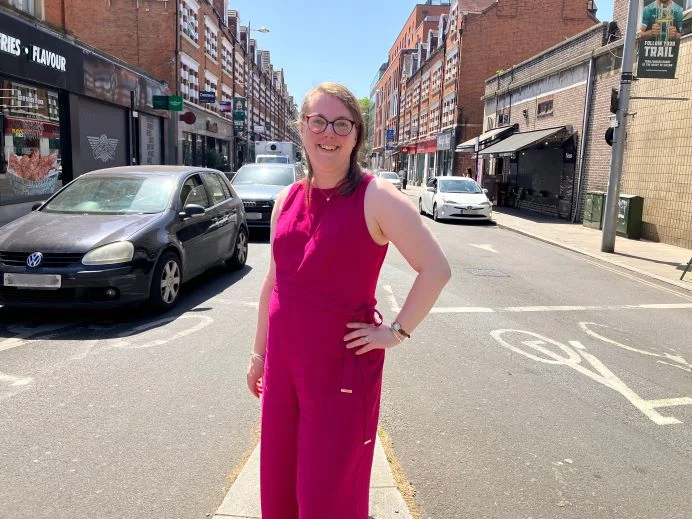
In Ealing, the job of approving new street names and building addresses sits with Samantha Steggles, Ealing Council’s corporate data and street naming and numbering officer. Her work connects planning, local history, emergency response, postal delivery and the everyday way residents describe where they live.
The process applies when developers, organisations or individuals create new streets, new homes or buildings that need formal addresses. It is not just a matter of picking a name that sounds pleasant. Proposed names are checked against policy, local geography, historic links and the risk of confusion.
Developers must suggest names with reasons
When a new street is being created in the borough, the applicant is normally asked to put forward at least three possible names. Those suggestions need to come with reasons, because Ealing Council is looking for more than a label on a road sign.
A strong proposal may draw on the area’s past, nearby landmarks, former land uses, local wildlife, nature or people with a proven connection to the site. Samantha Steggles can also help shape suggestions where local history or environmental references offer a better fit.
Once names are proposed, they are checked against the council’s street naming policy. The council consults bodies that depend on reliable address data, including emergency services and Royal Mail, as well as local councillors.
The aim is to create addresses that can be used safely and consistently by residents, public services, utility companies, delivery firms and mapping systems.
Similar-sounding names can be refused
One of the clearest rules is that a new name cannot sound too much like an existing one in the same area. Ealing Council gives the example that Birch Hill Road would not be suitable where Churchill Road already exists nearby, because spoken directions could be misunderstood.
That rule matters most in time-sensitive situations. If an address is unclear during a medical emergency, a fire callout or a police response, the problem is no longer cosmetic. It can slow down people who need to get to the correct location quickly.
There are also restrictions on names that may cause offence, be easily altered, or be misinterpreted. Names must work in ordinary speech, on forms, in databases and on street signs.
Commercial promotion is not allowed. A street cannot normally be named to advertise a current company, service or product. A business name may only be considered if the company no longer exists and there is a historical connection with the area.
Royal names have another layer of control. Official permission from the Lord Chamberlain’s office is required before a street can be named after a member of the royal family.
Roads are not named after living people
Residents often ask whether a road can be named after them. Samantha Steggles’ answer is direct: not while they are alive.
Ealing’s approach is that a road can only be named after a person who has been deceased for more than 40 years and who had a strong connection to the site. The waiting period is designed to reduce the risk of later controversies or sensitive information making a name unsuitable.
There is a narrow exception. The 40-year rule may not apply where someone died while serving in the military or as part of an emergency blue light response.

That distinction keeps commemorative naming tied to public service and local connection rather than personal requests or short-term popularity.
New addresses enter national systems
Once a street name is agreed, it is formally recorded in Ealing’s official address system. The council also allocates house or building numbers along the street.
The information is then shared with organisations that rely on accurate addressing, including Royal Mail, emergency services and utility companies. The new street name and addresses are also added to the national address database maintained through Ordnance Survey and GeoPlace, which contains more than 42 million addresses.
This is why the process is tied to data quality as much as local identity. A new road name has to work for residents, but it also has to work across software systems, maps, dispatch tools and public-service records.
Ealing Council recently received a gold award for street data at the GeoPlace Exemplar Awards. The award recognised the council’s work maintaining high-quality address and street data.
House names still need formal checks
People building an individual property may also want to name it. The council says that still requires an application through the street naming and numbering process.
Applicants are advised to provide three distinctly different names. Samantha Steggles gave examples such as Clovelly Cottage, Puddle Duck Barn and Kingfisher House.
The reason for asking for several options is practical. A name may already be in use, may be too similar to another nearby address, or may create avoidable confusion once it enters postal and emergency service systems.
A house name can add character, but it cannot sit outside the official address process if the property needs to be found, recorded and served properly.
Local history shapes many Ealing names
Street names often preserve details of local history that would otherwise disappear from daily view.
In West Ealing, the Australian-themed Adelaide, Brisbane and Sydney Roads and Melbourne Avenue are thought to be linked to landowner Charles Steel, who had a fruit business and frequently travelled to Australia.
Bramley Road in Ealing is named after the cooking apple, reflecting a period when the area had orchards supplying London markets. In Southall, Allenby Road was once known as Muddy Road until 1930, while Popes Lane was formerly Folly Lane.
Some older names have vanished altogether, including Thieving Lane and Love Lane. Their disappearance shows how street names change as places are rebuilt, renamed or brought into modern address systems.
The borough now has 2,906 roads, of which 2,237 are public roads.
Recent Ealing street names show the range
Since joining Ealing Council in 2023, Samantha Steggles has been involved in naming streets including Rathbone Terrace, Aviator Crescent and Coneybury Close in Northolt; Burslem Close in Southall; Oakwood Drive and Heritage Drive in Park Royal; and Darjeeling Close in Hanwell.
From 2024 to 2025, she created 3,500 addresses in the borough.
For residents, that work becomes visible as a street sign, a house number or a postcode that works without argument. For the council, it is a system that has to be accurate before anyone moves in.
Samantha Steggles said her role is about helping people move through the borough and creating a sense of community through an address: “If I’ve done my job correctly, nobody should know that I’ve done it because there won’t be any confusion about an address or street name and goods, services and people will get to where they need to be.”
Frequently Asked Questions
Why do street names and house numbers matter so much in Ealing?
Street names are part of the borough’s safety and service infrastructure. A clear, unique address helps 999 crews find a property quickly, lets Royal Mail allocate and sort post correctly, and gives utilities, delivery firms, mapping services and council systems one reliable location to use. The aim is not just to choose a pleasant name, but to create an address that works in real life.
How do developers or property owners apply for a new street name or address in Ealing?
Start the street naming and numbering process before homes or buildings are occupied. Applicants should normally provide site plans, plot or entrance details, and at least three suggested street names with reasons. Strong suggestions are usually linked to local history, geography, landmarks, wildlife, former land use or people with a proven connection to the site. Avoid names that are difficult to spell, too similar to nearby streets, promotional, or likely to confuse emergency services.
What can go wrong if a new Ealing address is not officially approved?
Using an unofficial address can cause practical problems: missed post, delayed deliveries, difficulty setting up utilities or broadband, problems with banking and insurance checks, mapping errors, and slower emergency response. Buyers, tenants and businesses should ask the developer or landlord for confirmation that the address has been formally approved before relying on it for registrations, marketing or customer directions.
Can residents suggest or challenge a new street name in Ealing?
Residents can have the strongest influence when they act early and make evidence-based suggestions. A useful proposal should explain the local connection, such as a historic site use, nearby landmark, natural feature or community figure. If a proposed name could be confused with an existing street, is hard to pronounce, or feels poorly linked to the area, residents should raise that concern through the relevant planning or council contact route rather than waiting until signs are installed.
Where should I check the official next steps for an Ealing street name or address?
Use Ealing Council’s street naming and numbering information as the official starting point. Once an address is approved, allow time for connected systems such as Royal Mail, utilities, mapping providers and public databases to update. If a postcode, flat number or building name appears differently across services, keep the council approval details handy and report the mismatch to the relevant organisation using the official address wording.
Source: Ealing Council
Context & actions About this article
Source check Source trail
This explainer is based on Ealing Council's published account of its street naming and numbering process.
- Confirmed Samantha Steggles' named role in street naming and numbering.
- Checked the stated consultation bodies: emergency services, Royal Mail and councillors.
- Kept the naming restrictions to those described in the source material.
- Preserved the local street examples and address totals given by Ealing Council.
- Source
- Ealing Council
- Scope
- Ealing
- Updated
- 2026-05-29 07:35
Source check
Report a trust issue
Send a clear signal to community moderation if the source, facts or context need review.




Comments