
Klaipėda Skyline: St. John’s Church Tower Moves Toward Restoration
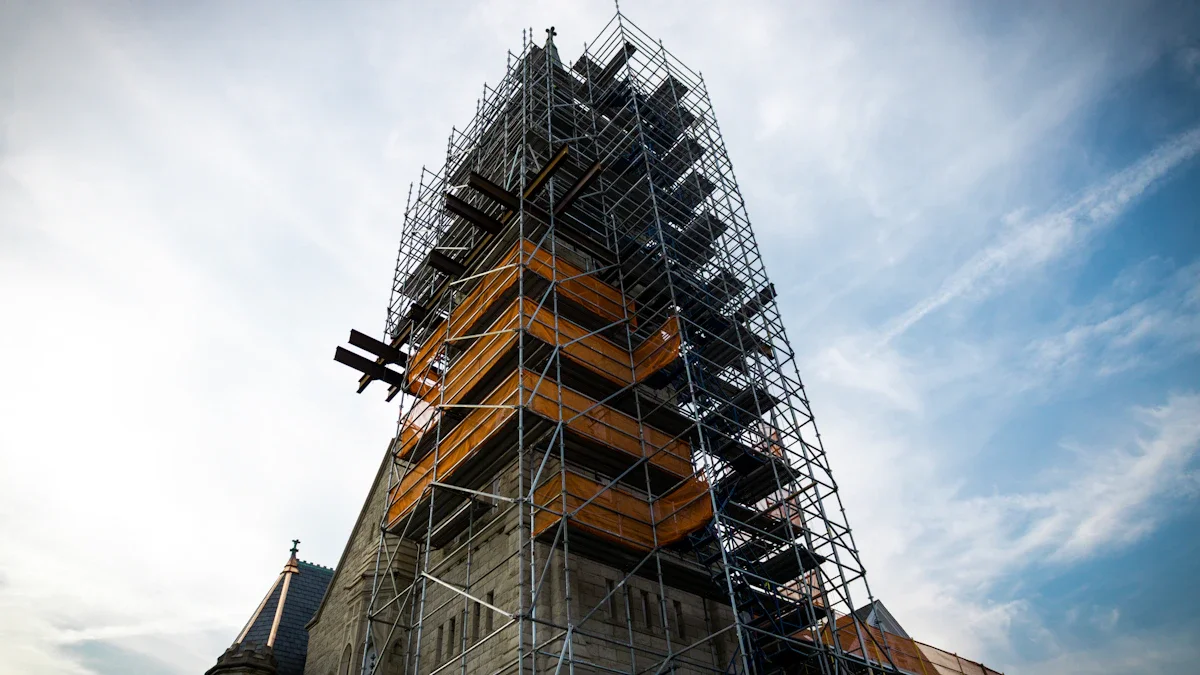
The skyline of Klaipėda, Lithuania’s historic port city, is one step closer to regaining its most iconic landmark. The local municipality has officially submitted revised technical designs for the reconstruction of St. John’s Church tower to the national ‘Infostatyba’ information system. This move marks a critical transition from theoretical planning to the verge of physical construction for a project that aims to heal a 75-year-old architectural wound.
For decades, the site on Turgaus Street has remained a void in the city’s urban fabric. The submission of these updated plans follows a public consultation period held last year, where residents and heritage experts provided feedback that has now been integrated into the final permit application. Once the building permit is secured, the project will move into the detailed engineering phase, paving the way for the first stones to be laid.
A Lost Landmark Reborn
St. John’s Church was once the architectural heart of the city formerly known as Memel. Its history is a testament to the resilience of the Baltic coast; originally built in 1696 and consecrated in 1706, the church was a victim of the Great Fire of 1854. It was subsequently rebuilt, only to be devastated again during the firestorms of 1944. Unlike many European landmarks that were restored immediately after World War II, the remains of St. John’s were systematically demolished by Soviet authorities between 1947 and 1949.
The restoration project is not merely an act of nostalgia but a strategic move to return the city’s ‘architectural dominant.’ Historically reaching a height of 75 metres, the tower served as a navigational beacon and a symbol of civic identity. The new structure will be an authentic reconstruction based on extensive archaeological research, historical blueprints, and surviving iconography.
| Project Specification | Detail |
|---|---|
| Target Height | 75 Metres |
| Estimated Budget | €6 Million |
| Original Construction | 1696 (Consecrated 1706) |
| Destruction Period | 1944 (Fire) / 1947–1949 (Demolition) |
| Key Modern Features | High-speed lift, observation deck, tourism hub |
Modern Utility Meets Historical Authenticity
While the exterior will mirror the 19th-century aesthetic—complete with an octagonal tower section, four clocks, and a traditional weather vane—the interior is designed for 21st-century tourism. The tower will be fully accessible, featuring a lift and hoist system to transport visitors through several layers of history.
The basement level will serve as a museum space, showcasing the original foundations of the tower. In a poignant nod to the site’s sacred history, part of this underground space may be used as a crypt to house remains discovered during archaeological excavations. The first floor is slated to become a primary tourism information hub, while the second through fifth floors will house exhibitions detailing the evolution of Klaipėda. The crowning jewel for visitors will be the observation decks on the sixth and seventh floors, offering a panoramic view of the Curonian Lagoon and the Baltic Sea.
Funding and International Cooperation
Klaipėda Mayor Arvydas Vaitkus has emphasised that the project is now a priority within the current national government’s implementation plan. However, the €6 million price tag requires a multi-faceted funding strategy. The city is currently in consultations with the Ministry of Culture and the Ministry of Economy and Innovation to secure state support.
There is also a significant international dimension to the project. Given the city’s deep historical ties to Germany, the Lithuanian embassy in Berlin is being engaged to help attract private sponsors and heritage grants from German organisations. This reflects a broader European trend of ‘reconstructive architecture,’ similar to the rebuilding of the Frauenkirche in Dresden, where international contributions helped restore a lost piece of cultural heritage.
The immediate next milestone for the project is the approval of the building permit. Once the ‘Infostatyba’ system clears the plans, the city will begin the search for contractors capable of handling such a sensitive heritage site. Beyond the tower itself, the surrounding area will be repaved with traditional granite, maintaining the historical ‘unformed square’ concept that allows the space to remain flexible for public gatherings and cultural events.
Source: Klaipėdos miesto savivaldybė



Comments