
Lithuania Cuts Road ‘Black Spots’ as Safety Infrastructure Improves

Lithuania is making measurable progress in its mission to eliminate the most dangerous sections of its national road network. According to the latest data from the Transport Competence Agency (TKA), the number of identified ‘black spots’—road segments with a high frequency of serious accidents—has decreased by 10% over the last year. While the trend is positive, safety experts warn that nearly half of these hazardous locations remain unchanged from previous years, highlighting the persistent nature of certain infrastructure flaws.
In the 2026 reporting period, officials identified 27 black spots across the country’s state-significance roads, down from 30 in the previous year. For international observers and road safety advocates, these figures represent more than just statistics; they are a benchmark for the effectiveness of targeted infrastructure investment. However, the data also reveals a sobering reality: 122 recorded accidents occurred within these 27 zones, resulting in 162 injuries and three fatalities.
Defining the Danger: What is a ‘Black Spot’?
In the context of Lithuanian road management, a ‘black spot’ is not a subjective term. It is a strictly defined technical designation. A road section or intersection is classified as a black spot if, within a four-year period, at least four traffic accidents resulting in injury or death have occurred there. This data-driven approach allows the government to prioritize funding for the most lethal stretches of tarmac.
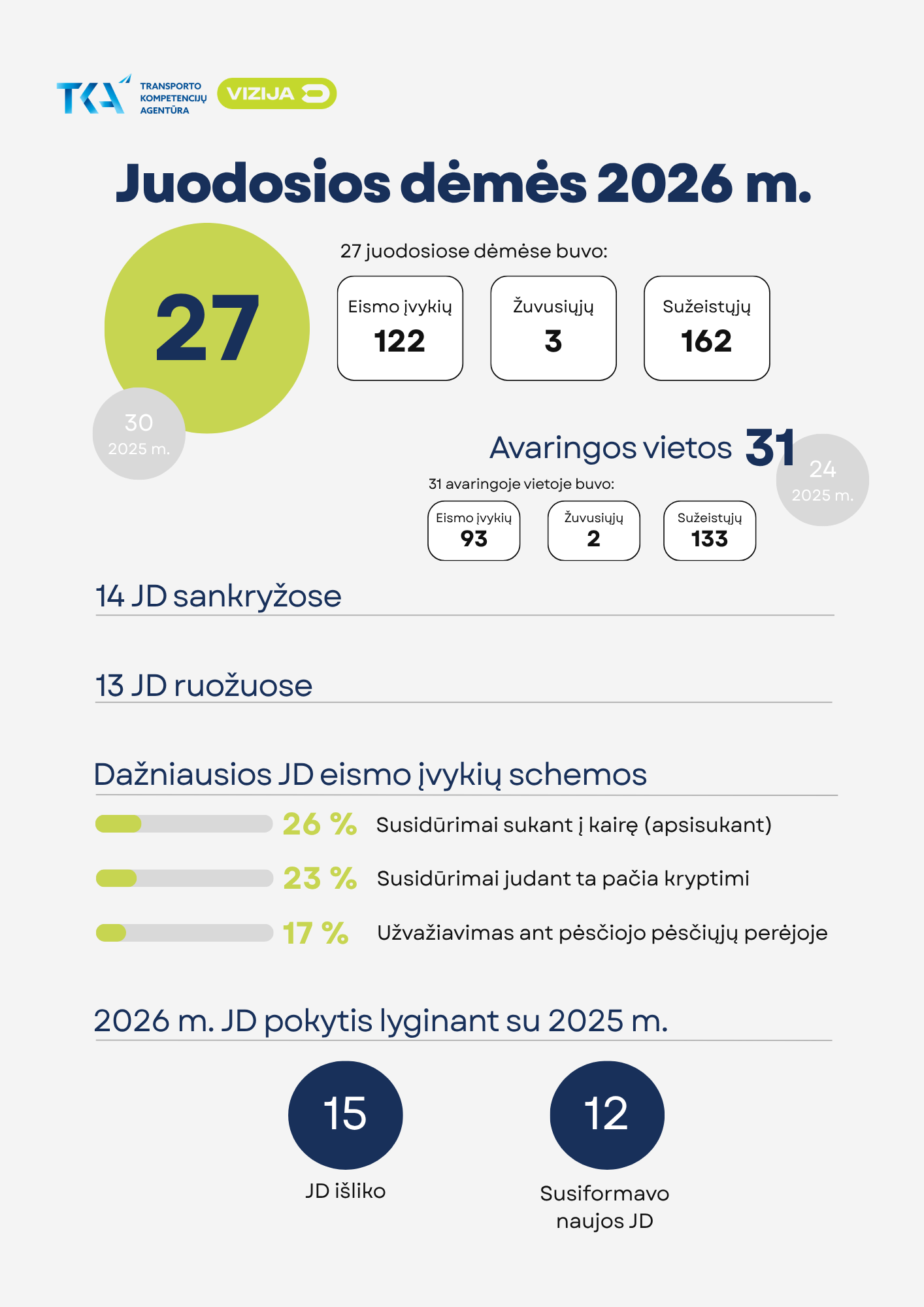
| Metric | 2026 Reporting Year |
|---|---|
| Identified Black Spots | 27 |
| High-Accident Locations | 31 |
| Total Accidents in Spots | 122 |
| Injuries Recorded | 162 |
| Fatalities Recorded | 3 |
| Persistent Spots from 2025 | 15 |
The fact that 15 of these locations have appeared on the list for multiple years suggests that while some areas are easily fixed with better signage or lighting, others require more complex engineering solutions. These persistent spots are often found where major motorways intersect with local traffic, or where high-speed limits meet pedestrian activity.
Infrastructure Flaws: Left Turns and Pedestrian Risk
The TKA’s investigation into these 27 locations identified several recurring themes. The most frequent infrastructure issues involve unsafe left-hand turns and inadequate pedestrian crossings. Specifically, crossings that span more than two lanes of traffic or those lacking dedicated directional lighting are primary contributors to the ‘black spot’ tally.

To combat these risks, the Lithuanian Ministry of Transport and Communications has proposed a suite of modernizations. These include the conversion of traditional intersections into roundabouts, the installation of safety islands for pedestrians, and the implementation of ‘directional lighting’ to ensure walkers are visible to drivers at night. There is also a push to optimize traffic light phases to reduce the risk of collisions during left-turn maneuvers, which accounted for 26% of all accidents in these high-risk zones.
Deputy Minister of Transport Dovilė Sujetaitė emphasized that the government’s current goal is to fix 500 unsafe pedestrian crossings and eventually halve the total number of black spots nationwide. The focus is currently heaviest on the A12 motorway near Tauragė, which currently holds the highest concentration of these dangerous sections.

The Human Element in Road Safety
While infrastructure is a critical pillar of the ‘Vision Zero’ philosophy, the Lithuanian data highlights a secondary, more difficult challenge: driver behavior. The TKA report found that five of the 27 identified black spots were formed not because of poor road design, but due to illegal actions by road users. These include driving under the influence of alcohol, driving without a valid license, or fleeing the scene of an accident.
This suggests that even the safest road designs can be undermined by reckless behavior. Consequently, the national strategy is shifting toward a dual approach: combining physical infrastructure improvements with stricter enforcement and public education campaigns. The goal is to create a ‘forgiving’ road system where a minor human error doesn’t result in a fatality, while simultaneously reducing the frequency of those errors through social responsibility.
As Lithuania continues to update its national ‘Black Spot Map’ with municipal data, the focus remains on long-term results. Every removed spot on the map represents a tangible reduction in risk for the thousands of drivers and pedestrians who navigate these routes daily. For the UK reader, this serves as a reminder that road safety is a constant battle between engineering, enforcement, and the unpredictable nature of human behavior.
Source: ELTA


Comments