
Lithuania’s €2.3bn High-Tech Pivot: The Klaipėda Investment Roadmap
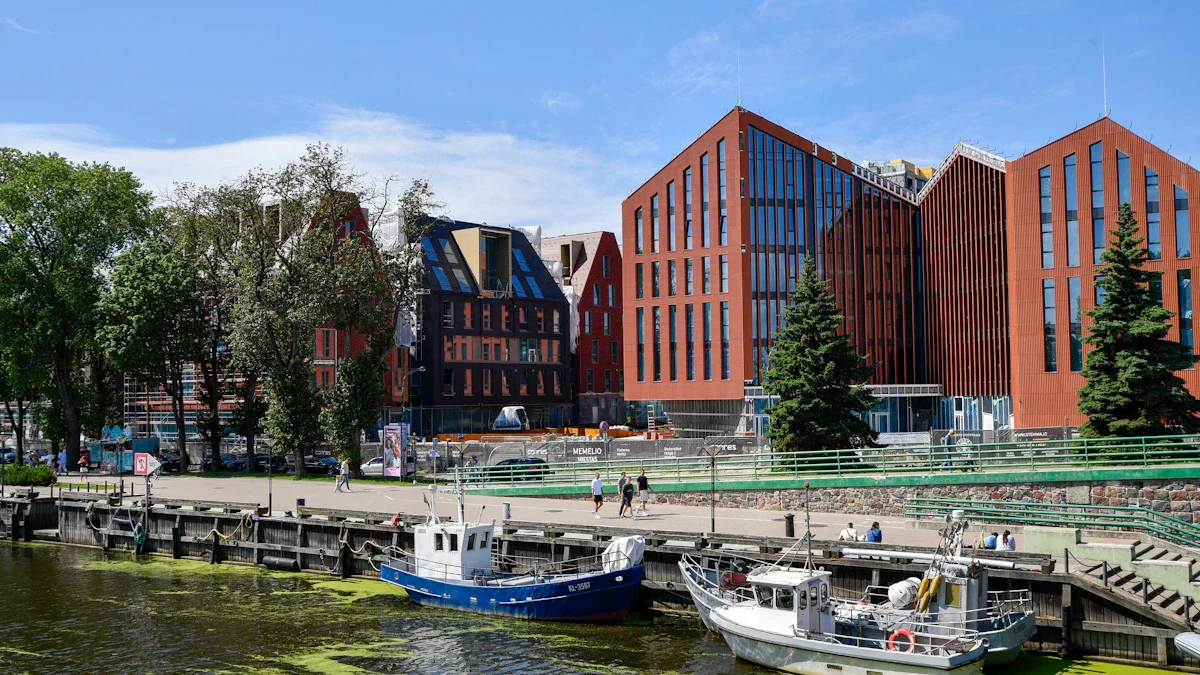
Lithuania is positioning its coastal gateway, the Klaipėda region, as a central pillar in a national strategy to transition from a logistics-heavy economy to a high-value industrial hub. Finance Minister Kristupas Vaitiekūnas recently confirmed that the region is at the forefront of a massive €2.3 billion financial injection via the national development bank ILTE, alongside hundreds of millions in dedicated EU structural funds. The move signals a shift in Baltic economic policy, prioritizing defense, renewable energy, and high-tech manufacturing over traditional transit and tourism.
While Klaipėda has long relied on its deep-water port—the northernmost ice-free port on the eastern Baltic coast—government officials argue that the region’s future depends on its ability to attract “high added value” investments. This term refers to sectors that require advanced research and development, such as biotechnology, green hydrogen, and defense technology, rather than the lower-margin processing and transport sectors that have historically dominated the area.
Breaking Down the €2.3 Billion Financial Framework
The scale of the investment is substantial for a Baltic economy. The €2.3 billion pool managed by ILTE is designed to act as a catalyst for private investment, offering favorable financing for projects that align with national security and environmental goals. For the Klaipėda region specifically, the financial roadmap is divided between immediate social infrastructure and long-term industrial modernization.
| Investment Stream / Sector | Allocated Amount / Scope |
|---|---|
| Total National ILTE Instruments | €2.3 Billion |
| Dedicated Klaipėda EU Regional Funds | €335 Million |
| Social, Health, and Education Infrastructure | €159.7 Million |
| Green Transition (Cycling, Parks, Water) | €77.5 Million |
| Active Regional Projects | 282 Ongoing |
Minister Vaitiekūnas emphasized that these funds are not merely for maintenance but for structural change. The focus on defense and security projects is particularly telling, reflecting the broader geopolitical shift in the region as Lithuania seeks to bolster its domestic military-industrial capacity. By utilizing a mix of EU grants, state budget allocations, and national development bank loans, the government aims to de-risk high-tech ventures that might otherwise struggle to find traditional commercial banking support.

Transforming the Coastal Corridor
The regional impact of this funding is already visible. Currently, 282 projects are under implementation across the Klaipėda district. While the largest single block of funding—nearly €160 million—is earmarked for social stability (housing, healthcare, and schools), the strategic “teeth” of the plan lie in the development of Free Economic Zones (FEZ).
By modernizing industrial zones in surrounding areas like Skuodas and Kretinga, the government hopes to prevent economic overheating in Klaipėda city while spreading high-paying technical jobs across the wider region. This decentralization strategy is intended to make the entire coastal belt attractive to international firms looking for a foothold in the EU market with access to both maritime logistics and a modern industrial workforce.
However, a significant caveat remains: the transition to a high-value economy requires more than just capital. It requires a workforce capable of operating in these specialized sectors. While the investment in school and preschool infrastructure is a step toward long-term human capital development, the immediate challenge for Klaipėda will be bridging the talent gap to meet the needs of the defense and renewable energy sectors.

Infrastructure and Industrial Modernization
Looking ahead, the roadmap includes specific maritime and inland waterway upgrades. This includes the modernization of the inland port in Juodkrantė and the installation of public tourism infrastructure at the Šventoji seaport. These projects are designed to complement the industrial push by ensuring the region remains a premier destination for high-end tourism and recreation, which in turn helps attract and retain the skilled professionals required by high-tech industries.
The success of this €2.3 billion initiative will likely be measured by how many “greenfield” investments—entirely new industrial projects—are attracted to the newly modernized zones in the coming three to five years. For UK and international investors, the Klaipėda region is being marketed not just as a port, but as a subsidized, high-tech hub with direct access to the European single market and a strategic focus on the technologies of tomorrow.
Source: BNS


Comments