
North East teens found their scene in dance halls and cafés

Beamish Museum’s oral histories, clothes and archive photographs offer a close-up of teenage life in the North East during the late 1950s. Assistant Curator Anna Robson draws on material gathered through the Remaking Beamish project to trace how fashion, music and local meeting places helped young people find their place in a changing culture.
Clothes signalled belonging
Teen fashion could be distinctive, but it did not follow one uniform. Veronica Summers, who grew up in Wallsend, recalled the “Bobby Soxer” look of white socks and colourful sand shoes, though she did not wear the hair ribbons and full skirts associated with the style. Other girls wore net petticoats to hold out their skirts, with belts and fitted tops.
Summers said girls and their mothers often made clothes themselves. She remembered feminine dresses with shawl collars, and pointed shoes and stilettos becoming fashionable around 1956. Beamish’s collection includes a dress with a petticoat, belt and bolero that reflects those silhouettes.
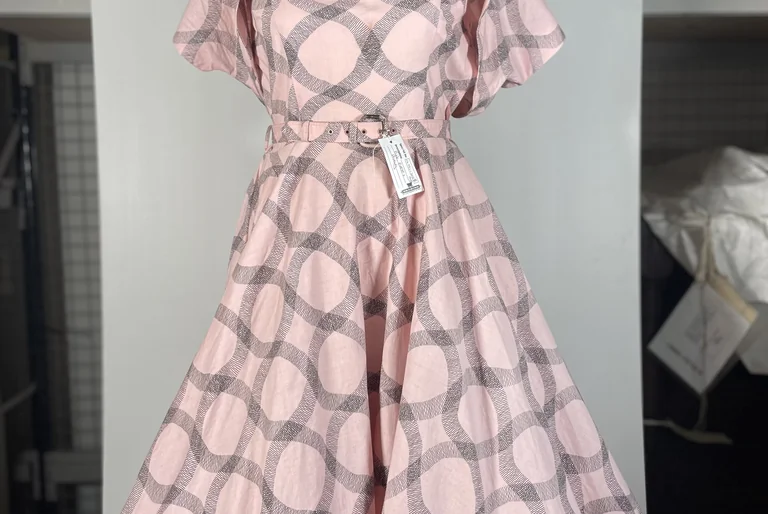
For boys, some adopted the Teddy Boy look: long jackets with velvet collars, narrow “drainpipe” trousers and thick-soled shoes. Summers recalled that the style did not last long; Mods began to appear alongside Teddy Boys before becoming more prominent in the late 1950s and early 1960s.
Dance halls, cinemas and ice cream shops
Social life often centred on places close to home. Beamish’s 1950s Town includes a café, fish shop, hairdresser, record shop and cinema, reflecting the kinds of businesses where young people spent time. In oral histories, Jean McEwan remembers dances at Castles Ballroom near Annfield Plain and fish and chips afterwards.
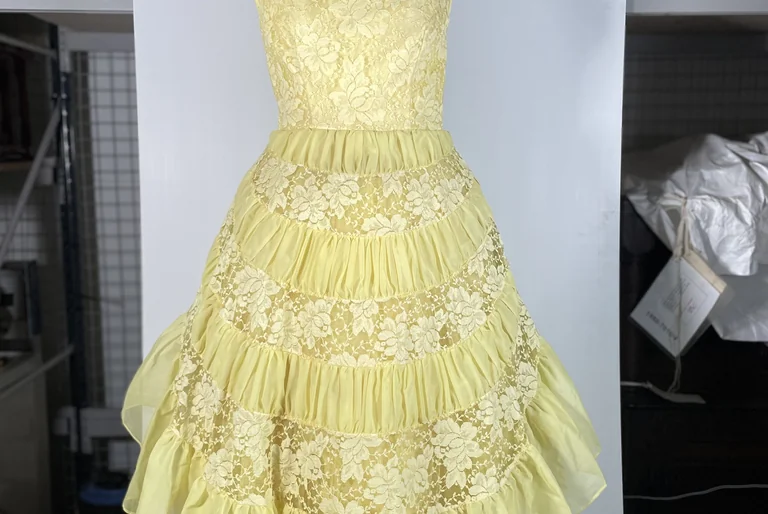
Going out came with family rules. McEwan was first allowed to attend a Monday dance from 7pm to 10pm, provided she caught the quarter-past-ten bus home. Summers recalled younger teenagers leaving dances at nine, while older ones could stay later. Clothes could also be chosen by parents when teenagers were still young.
Cinemas were another regular meeting place. McEwan recalled three in Stanley: the Solado, the Pavilion and the Albert. Neli Graham, whose Italian family ran an ice cream shop, remembered young people meeting there for ice cream, coffee or an Oxo drink.

Rock ’n’ roll reached local halls
Live bands played at dances, and oral histories describe a shift towards rock ’n’ roll in the late 1950s. Garry Huntington, who grew up in Shildon, remembered seeing Rock Around the Clock when it opened in Bishop Auckland. Bill Haley and His Comets were among the artists associated with the new sound.
Televisions, radios and gramophones were also becoming more sophisticated, Summers recalled, while jukeboxes brought popular records into local venues. Together, the memories preserved by Beamish show how young people in the region made new music and styles their own while navigating curfews, family expectations and the familiar places of their towns.
Source: Beamish Museum News
Context & actions About this article
Source check Source notes
This feature draws on Beamish Museum’s account of oral histories, costume collection and archive photographs about teenage life in the late 1950s.
- Kept personal recollections attributed to the named oral history participants.
- Checked the fashion and social details against the supplied Beamish Museum account.
- Retained the regional focus on communities including Wallsend, Stanley, Annfield Plain and...
- Source
- Beamish Museum News
- Scope
- North East England
- Updated
- 2026-10-12 12:53
Source check
Report a trust issue
Send a clear signal to community moderation if the source, facts or context need review.




Comments