
River Adur recovery could reshape habitats near Shoreham

A proposed restoration programme could improve wildlife habitats and help manage flooding and drought across 760 hectares of the Adur Valley, from Shoreham to Knepp. The government has indicated it is willing to allocate £42 million to the project through Defra’s Landscape Recovery scheme, but the funding has not yet been confirmed. The work is therefore still at the planning stage, rather than in delivery.
The Adur River Recovery project brings together farms, estates, conservation organisations and local councils. Its plans cover floodplains, wetlands and saltmarsh, with the aim of reconnecting habitats and creating a more resilient landscape across the valley. If the funding is secured and an implementation agreement is reached, the programme is intended to run for nine years.
Proposed work spans the river and estuary
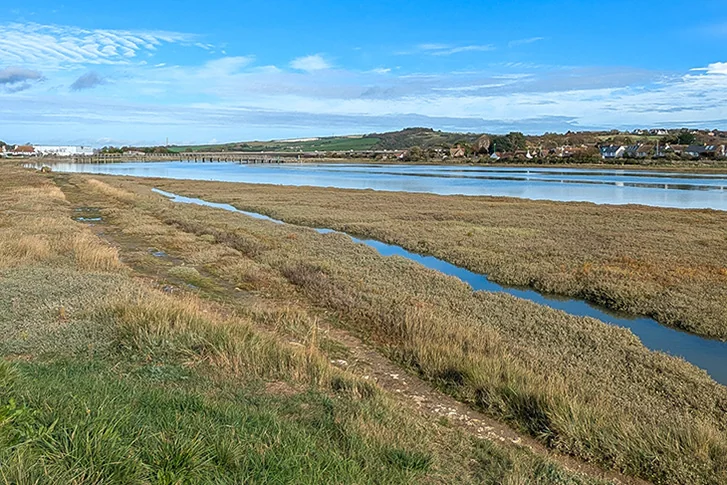
At Pad Farm, a council-owned site on the River Adur’s western bank just north of the A27, the project proposes creating about 56 hectares of coastal saltmarsh. This would add habitat around the estuary and contribute to the wider effort to connect natural areas along the river.
Other proposals include removing four major weirs to improve fish passage and creating a 900-metre channel around a structure that currently obstructs fish migration. New woodland and hedgerows are also planned to link habitats across the valley, helping wildlife move between areas to find food, shelter and mates.

Together, the proposed measures are projected to improve water quality, support nature and help mitigate flooding and drought. These are expected benefits of the planned programme, not results already achieved. The source does not set out detailed construction locations or a timetable for individual works.
Estuary habitats support birds throughout the year
The Adur Estuary forms the river’s southern stretch around Shoreham and is designated as a Site of Special Scientific Interest. Its saltmarsh and mudflats provide feeding and sheltering habitat for wading birds and wildfowl.
At low tide, oystercatchers, little egrets, ringed plovers and lapwings forage across the exposed mudflats. At high tide, grey herons, snipe, redshanks and linnets can shelter among the saltmarsh. The project’s wider aim is to strengthen links between habitats along the river and estuary, which could support wildlife moving through the landscape.
Funding and delivery remain conditional
The £42 million figure is an indication of government willingness to allocate funding through Defra’s Landscape Recovery scheme; it is not a confirmed award. The project is now working towards an implementation agreement with government, and delivery depends on that agreement and the funding process.
Works are intended to start in Spring 2027, subject to those steps, and are planned to take place over nine years. The next milestone is securing the implementation agreement and confirmation of funding; until then, the proposed restoration remains a plan rather than a committed programme of works.
Source: Adur and Worthing Councils News
Context & actions About this article
Source check Source and checks
This report follows the Adur and Worthing Councils update and distinguishes the government’s funding indication from a confirmed award.
- Checked the stated £42 million against the source’s conditional wording.
- Compared the project area, from Shoreham to Knepp, with the stated 760 hectares.
- Retained the proposed saltmarsh, weir and channel works as plans rather than completed wor...
- Source
- Adur and Worthing Councils News
- Scope
- Adur Valley
- Updated
- 2026-10-28 16:32
Source check
Report a trust issue
Send a clear signal to community moderation if the source, facts or context need review.



Comments