
Harlow residents face a new era of street surveillance
By the Beehiveweb News Desk
Source announcement published: 29 June 2026
People using Harlow’s town centre, Civic Centre and Town Park will be among the first covered by a new integrated surveillance system combining high-definition cameras with artificial intelligence, vehicle tracking and facial recognition technology.
Harlow Council is investing nearly £500,000 in the CCTV network, which it says will help operators detect suspicious activity sooner and coordinate faster responses to crime and antisocial behaviour. Installation work is already under way ahead of this year’s Town Show, although a completion date for the wider rollout has not been disclosed.
The public-safety case is clear, but the scale of the technology also raises questions about how residents’ images and vehicle movements will be collected, searched and retained. The council’s announcement does not identify the system supplier or provide detailed privacy, accuracy and oversight policies.
Nearly £500,000 for a single monitoring platform
The project will replace separate CCTV and security equipment with one centrally managed platform. Cameras, alarms, intercoms and building access controls are intended to give operators a real-time view of incidents across council-managed locations.
Of the total investment, £200,000 is being provided by Essex Police, Fire and Crime Commissioner Roger Hirst. Harlow Council will fund the remaining amount, but its announcement does not break down spending on cameras, software, installation, maintenance or staff training.
Council leader Dan Swords described the investment as a shift from recording offences after they happen towards detecting risks earlier. He cited the fire that destroyed the Town Park bandstand as an incident that might have been identified sooner with automated monitoring in place.
AI, number-plate searches and facial recognition
The council says artificial intelligence will help distinguish potential threats from movement caused by weather, shadows or other environmental conditions. Its stated aim is to reduce false alarms so operators can concentrate on events judged to require attention.
Automatic Number Plate Recognition, commonly known as ANPR, will allow authorised teams to search for vehicles linked to suspected offences. Advanced mapping and video-search functions are also expected to help operators locate and review recorded incidents more quickly.
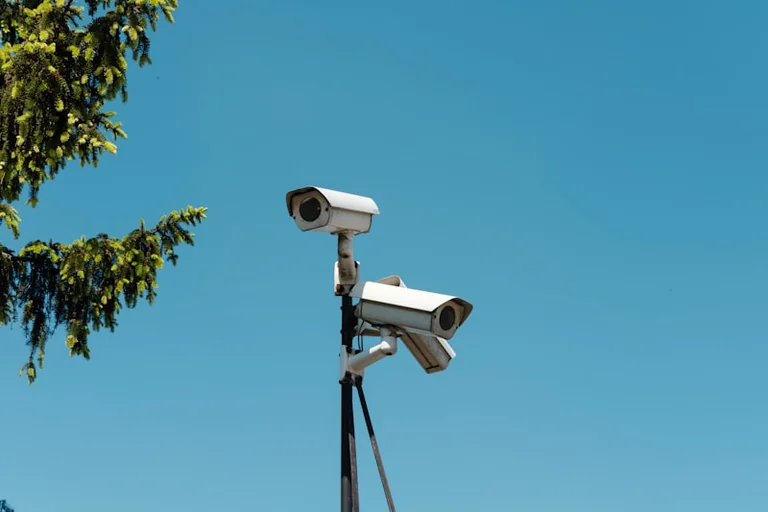
Facial recognition is among the planned capabilities, but the announcement does not say whether it will be used for live identification, retrospective searches of recordings, or both. It also does not explain which watchlists could be used, how matches would be verified or whether a human operator would have to approve action following an alert.
Other councils have also expanded surveillance and patrol measures in response to safety concerns, including additional CCTV security in Redbridge. Harlow’s proposal goes further by placing several monitoring technologies within one system.
Faster evidence and broader town coverage
Cabinet member Danielle Brown said the network could support responses to antisocial behaviour in blocks of flats, theft, shoplifting and fly-tipping. It is also intended to help monitor crowds at large events and provide police with higher-quality evidence.
The initial cameras are being installed in the town centre, Civic Centre and Town Park. The council says coverage will expand across Harlow, although it has not published a site-by-site map, installation schedule or definition of what “every corner” of the town will mean in practice.
The system may improve the speed at which footage is found and shared, but the announcement provides no independently tested estimate of how much crime it could prevent. Any assessment of its effect will require published measures such as alert accuracy, response times, investigative outcomes and the number of false matches.
Privacy rules residents should expect to see
A network processing faces and vehicle registrations needs publicly accessible rules covering its purpose, legal basis, access controls and retention periods. Residents should also be told when facial recognition is active, which organisations can search the data and how they can challenge an incorrect identification.
For technology carrying a risk of false or unequal matches, accountability should include an impact assessment, accuracy testing under real operating conditions, audit logs and meaningful human review. Clear signage and a route for privacy complaints would allow residents to understand where monitoring takes place and whom to contact about their information.
Harlow Council has not yet disclosed its facial-recognition policy, data-protection assessment, watchlist rules, supplier contract or arrangements for independent scrutiny. Publication of those documents before the more intrusive functions are activated would show residents the limits placed on a system designed to observe them in public space.
Source: Harlow Council News
Context & actions About this article
Source check How this report was checked
The funding, planned locations and stated capabilities were checked against Harlow Council’s published account, while unconfirmed performance claims and missing privacy details were identified.
- Confirmed the source publication date as 29 June 2026.
- Checked that £200,000 comes from the Essex Police, Fire and Crime Commissioner and the rem...
- Separated the council’s claims about detection and crime prevention from independently dem...
- Checked the announcement for privacy, retention, accuracy and oversight details that have...
- Source
- Harlow Council News
- Scope
- Harlow
- Updated
- 2026-07-21 10:03
Source check
Report a trust issue
Send a clear signal to community moderation if the source, facts or context need review.



Comments