
Lithuania’s €1.8 Billion Green Shift: A Blueprint for EU Funding
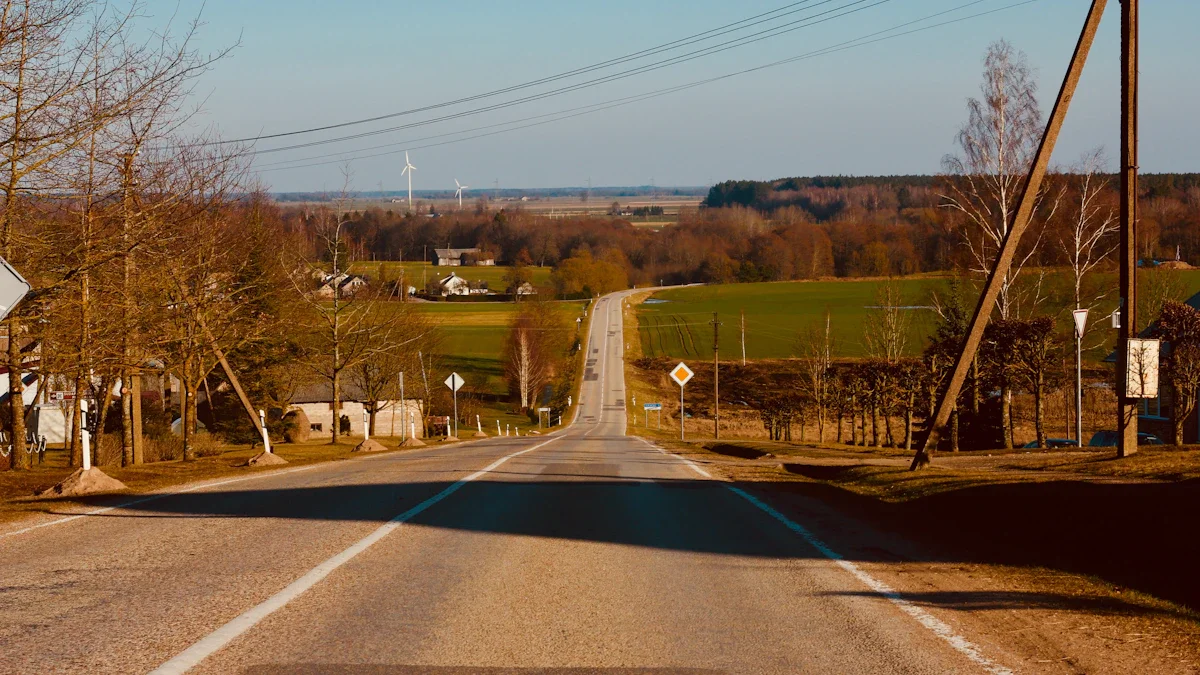
Lithuania is currently undergoing a massive structural transformation, backed by more than €1.8 billion in European Union investment funds. This financial surge, part of the 2021–2027 EU Investment Program, is specifically targeted at two pillars of modern living: environmental sustainability and urban mobility. While the headline figures are substantial, the real story lies in how these funds are being distributed to change the daily lives of residents, from the warmth of their apartments to the way they cross their city’s rivers.
As of the latest reporting period, the Lithuanian government has issued calls for projects worth over €1.8 billion. Of this, contracts valued at €1.27 billion have already been signed, and nearly €470 million has been physically paid out to developers, municipalities, and homeowners. This tiered rollout reflects the administrative reality of large-scale public works—there is often a significant lag between the promise of funding and the completion of the project.
Modernising the Soviet-Era Housing Stock
The single largest slice of this investment pie—approximately €223 million—has been directed toward the Modernisation Fund for multi-apartment buildings. For many in Lithuania, this is the most tangible aspect of the green transition. Much of the country’s urban population resides in aging, energy-inefficient apartment blocks.
By utilizing the European Regional Development Fund, the state aims to help homeowners renovate these structures to increase energy efficiency. The goal is twofold: to reduce the national carbon footprint and to provide immediate relief to residents facing high heating costs. This initiative is complemented by a €120 million allocation specifically for individual homeowners to replace old fossil-fuel boilers with modern, renewable heat-generation technologies, such as heat pumps.
Decentralising Energy: Solar Power for the People
Beyond insulation and heating, the investment program is pushing for a fundamental shift in how electricity is generated. Approximately €42 million has been earmarked for private individuals to install solar power plants on their own properties. This move toward ‘prosumerism’—where residents both consume and produce energy—is designed to bolster Lithuania’s energy independence.
By reducing reliance on external energy grids and fossil fuels, the government hopes to create a more resilient economic landscape. For the average household, this represents a long-term reduction in utility bills, though the initial uptake requires navigating the bureaucratic process of grant applications and technical installations.

Reshaping Urban Mobility: Pedestrians Over Petrol
In the transport sector, the focus has shifted from expanding road networks to enhancing ‘soft’ mobility—walking and cycling. Two specific projects highlight this localized impact:
| Project Location | Investment Amount | Primary Objective |
|---|---|---|
| Kaunas (Nemunas Island to Aleksotas) | €8.8 Million | Construction of a pedestrian and bicycle bridge to link key city districts. |
| Kėdainiai City | €8.4 Million | Infrastructure improvements for cycling and pedestrian paths to reduce urban pollution. |
These projects are not merely about leisure; they are strategic attempts to reduce traffic congestion and lower urban CO2 levels. By making it physically easier to navigate a city without a car, Lithuania is attempting to match the urban planning standards seen in Nordic and Western European neighbors.
The Path Ahead: Implementation Challenges
While the volume of calls for funding—exceeding €6.4 billion across all sectors—suggests a high level of ambition, the challenge remains in the execution. Finance Vice-Minister Neringa Rinkevičiūtė-Laurinaitienė has emphasized that these investments are critical for the country’s “energy resilience” and “quality of life.” However, the gap between the €1.8 billion in green calls and the €470 million actually paid out indicates that many projects are still in the early construction or planning phases.
For residents and businesses, the current window is a period of high opportunity. Active calls for funding remain open on the national investment portal, inviting further participation in building renovations and renewable energy adoption. As these projects move from the balance sheet to the street level, the success of this €1.8 billion experiment will be measured not in euros, but in the measurable reduction of smog and the lowering of winter heating bills.
Source: BNS
Comments