
Vilnius Infrastructure: 46% of Residents to Avoid Hot Water Outages
For decades, the arrival of spring in the Lithuanian capital has been synonymous with a dreaded urban ritual: the “cold shower” week. As the city’s district heating operator, Gijos, begins its annual pipeline diagnostics, there is a significant shift in the narrative for 2024. Thanks to aggressive infrastructure investment and legislative changes, nearly 46% of Vilnius residents will entirely avoid the temporary loss of hot water this year.
This improvement marks a milestone in the city’s efforts to modernize its Soviet-era energy ecosystem. By transitioning toward a more resilient “ring network” and implementing automated fault detection, the utility provider has managed to bypass the need for disruptive hydraulic testing in nearly half of the city’s residential zones. For those living in the affected areas, the traditional week of boiling kettles for a bath may finally be a thing of the past.
The Neighborhoods Staying Warm this Season
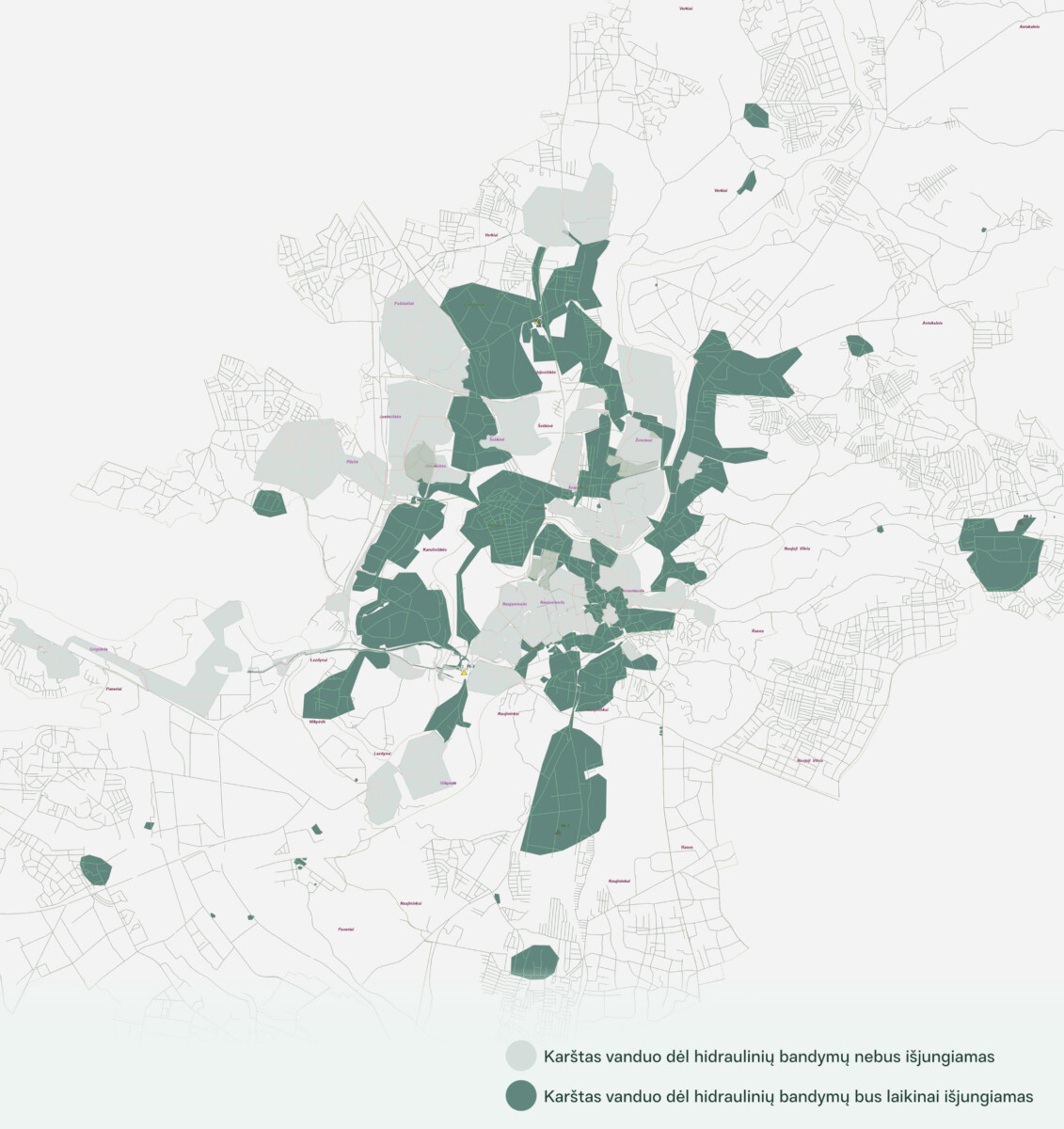
The reduction in service interruptions is not distributed randomly but is the result of targeted grid reconstructions. According to the latest data from Gijos, the majority of residents in the following districts will not experience hot water shut-offs due to standard hydraulic testing this year:
- Pilaitė and Justiniškės
- The Old Town (Senamiestis) and Paupys
- Naujamiestis and Šnipiškės
- Pašilaičiai, Visoriai, and Žirmūnai
- Vilkpėdė
However, the utility company cautions that while standard diagnostic testing is being skipped in these areas, localized outages may still occur. These are typically linked to specific building-level pipe reconstructions or the connection of new developments to the central grid. Residents are encouraged to distinguish between city-wide maintenance and specific local upgrades that might still necessitate a brief pause in service.
Why the Shutdowns Are Technically Necessary
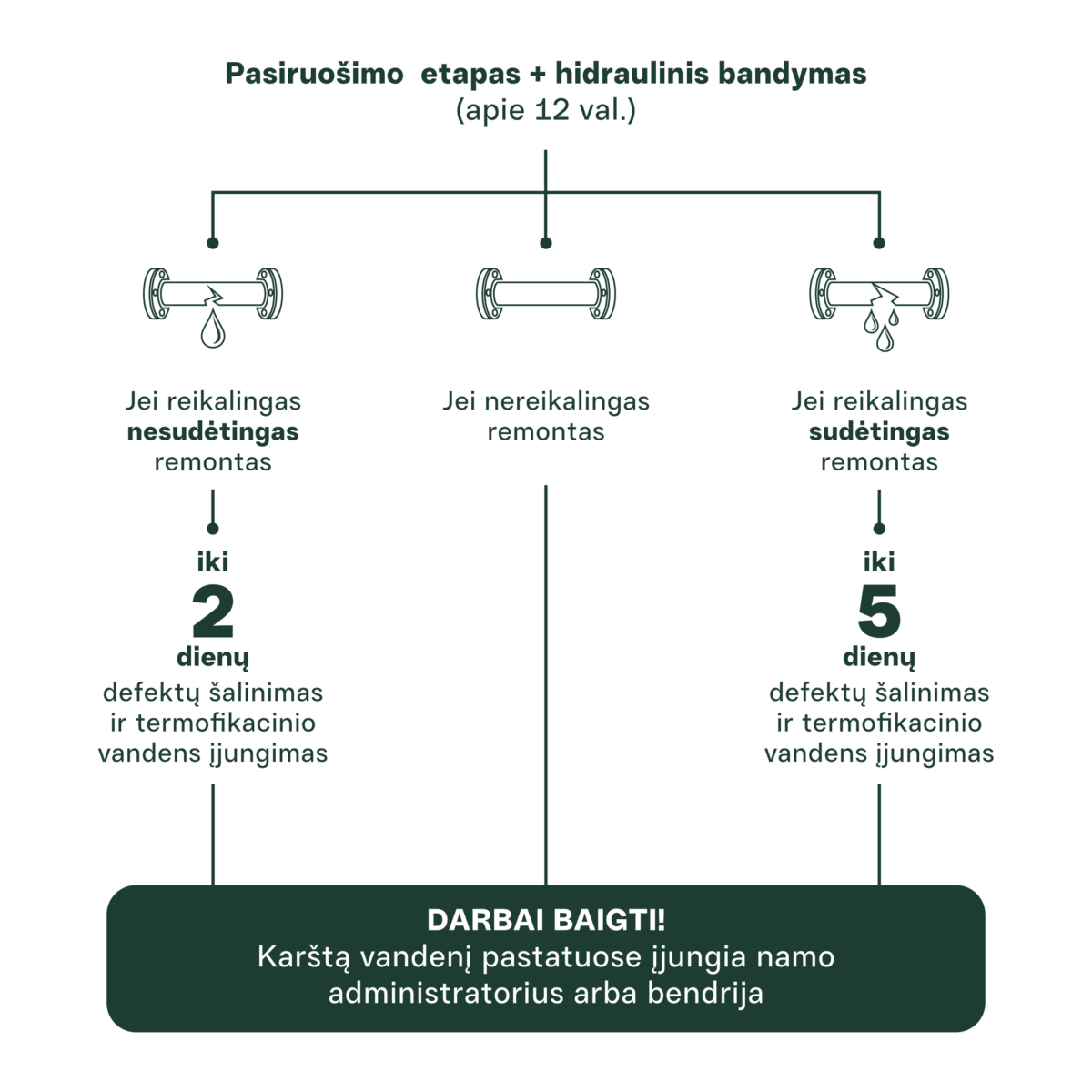
To understand why the other 54% of the city must still endure temporary outages, one must look at the physics of district heating. In a centralized system, water is circulated at high temperatures and pressures. To ensure the system doesn’t fail during the harsh Baltic winter, technicians perform “hydraulic tests” during the warmer months, pumping water through the pipes at significantly higher pressures than normal to identify weak points or micro-cracks.
The reason hot water must be turned off during these tests is protective. The heat exchangers located in the basements of individual apartment blocks are not designed to withstand the extreme pressure used during diagnostics. If they were not disconnected, the internal plumbing of the buildings could suffer catastrophic failure.
Andrius Agintas, Head of the Infrastructure Team at Gijos, explains that the duration of an outage depends entirely on the health of the pipes. “If no cracks are detected during the hydraulic test, hot water is usually restored within 24 hours,” Agintas notes. However, if defects are found, repairs can take anywhere from two to five days, or longer in exceptional cases involving complex junctions.
Coordination and Resident Responsibility
A critical, often overlooked factor in how quickly the water returns is the role of the building administrator. While Gijos manages the city-wide network, the final step—reconnecting the building’s internal system—is the responsibility of the house manager or the association’s appointed heating technician.
“The speed at which hot water returns to residents’ homes also depends on the promptness of these local managers,” says Rūta Jasiulionienė, Head of the Customer Team at Gijos. To minimize surprises, the company has launched an interactive map and search tool on their website, allowing residents to enter their specific address and see the scheduled maintenance windows.
For those who do face a shutdown, the company provides advance notice via SMS and email, provided residents have updated their contact details on the self-service portal. This transparency allows residents to plan vacations or gym visits around the maintenance window, turning a major urban inconvenience into a manageable scheduled event. As Vilnius continues to replace its aging pipelines with modern, pre-insulated alternatives, the goal remains a city where the “cold shower” ritual is eventually relegated to history books.
Source: ELTA



Comments