
Cambridge maths shows why UK votes cannot map neatly to seats

By the Beehive Web editorial team | Research published in 2026
Labour secured 63% of House of Commons seats with 33.7% of the vote at the 2024 UK general election. Reform UK received 14.3% of votes but won only five of the 650 seats.
That mismatch does not mean ballots were ignored or the result was incorrectly calculated. It reflects the principle that Britain’s first-past-the-post system prioritises victories in individual constituencies rather than making each party’s national seat share match its overall vote share.
Research led by mathematicians at the University of Cambridge and University of Copenhagen now places that familiar problem inside a broader mathematical limit: no electoral system can always preserve local winners, guarantee national proportionality and keep parliament at a fixed size when enough parties compete.
The three guarantees that cannot always coexist
Frederik Ravn Klausen and Sebastian Tim Holdum identified three features commonly associated with electoral fairness:
- Regionality: every candidate who wins a local contest retains that seat.
- Proportionality: each party’s national share of seats matches its share of votes.
- Fixed parliament size: the total number of seats remains unchanged between elections.
Their impossibility theorem shows that, beyond a certain level of party fragmentation, at least one guarantee must give way. The precise pressure depends on how votes are distributed geographically as well as how many parties win meaningful support.
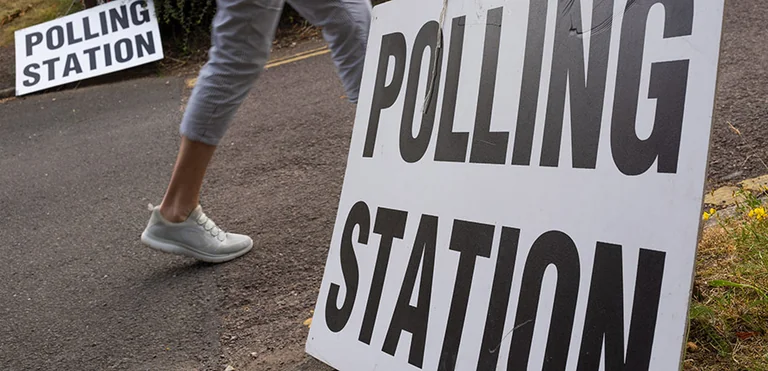
“It’s not corruption or conspiracy, it’s simply mathematics,” Klausen said. The finding does not declare every electoral system equally fair. It establishes a constraint against which different systems and reforms can be judged.
Britain sacrifices proportionality to preserve local winners
Under first past the post, the candidate with the most votes in each constituency wins. National vote totals do not directly determine how the Commons is divided, so a party with efficiently distributed support can secure many seats without approaching a majority of votes.
The Cambridge account describes the 2024 UK general election as the country’s least proportional. Labour won 411 seats from 33.7% of the vote, while Reform UK’s 14.3% produced five seats.
For much of the previous century, Britain functioned largely as a two-party system. As more parties attract substantial support, the gap between national vote share and representation can widen. Klausen said the mismatch could be larger at the next British election, although the theorem does not predict a particular result.
Denmark and Germany reveal different pressure points
Proportional systems face the same mathematical constraint, but they often sacrifice a different element. Many use additional “levelling” seats to bring each party’s representation closer to its national vote share after local contests have been decided.
| Electoral system example | Source-backed result or trade-off |
|---|---|
| United Kingdom, 2024 | Labour won 63% of seats with 33.7% of votes; Reform UK won five seats with 14.3% |
| Denmark, 2022 | Forty levelling seats were insufficient for exact proportionality; the Social Democrats received one extra seat |
| Germany, 2021 | Levelling adjustments helped expand the Bundestag from its 598-seat base to 736 members |
| New Zealand | Proportional representation was adopted in 1993, but parliament does not have a fixed size |
Denmark’s 2022 election prompted the research. For the first time in 75 years, votes and seats did not correspond as intended under its two-tier system. The left bloc won despite receiving fewer votes than the right bloc, with the single-seat discrepancy helping determine the outcome.
Germany previously protected local representation and proportionality by allowing the Bundestag to grow. Reforms adopted in 2023 capped that expansion but removed the absolute guarantee that every local constituency winner would enter parliament. Sweden uses a similar broad approach.
A proposed algorithm preserves totals but can displace winners
Klausen and Holdum also proposed “geographically ranked guaranteed proportionality”. Under this model, each party’s total number of seats would first be fixed by its national vote share. Its constituency performances would then be ranked from strongest to weakest, with seats allocated down that list until the quota was filled.
A party receiving 20% of votes would therefore receive 20% of seats. The cost is regionality: a candidate could win locally yet fail to enter parliament because stronger-performing candidates from the same party had already filled its national allocation.
The researchers argue that electoral systems can still approximate all three principles, even if none can guarantee them simultaneously under every possible result. Their paper, “Impossibility theorem for two-tier electoral systems”, was published in the 2026 volume of the Annals of Operations Research.
Source: University of Cambridge Research News
Context & actions About this article
Source check Source trail
The figures, examples and mathematical claims were checked against the University of Cambridge research report and its cited journal paper.
- Matched the 2024 UK vote and seat figures to those stated in the Cambridge report.
- Distinguished the theorem’s mathematical constraint from claims about corruption or invali...
- Retained the source’s Denmark and Bundestag examples without adding unsourced election sta...
- Confirmed the researchers’ names, paper title, journal and 2026 publication year from the...
- Source
- University of Cambridge Research News
- Scope
- United Kingdom and northern Europe
- Updated
- 2026-07-31 12:20
Source check
Report a trust issue
Send a clear signal to community moderation if the source, facts or context need review.




Comments