
French MedTech Startup Uses Music to Restore Mobility in Parkinson’s: what residents need to know

A Montpellier-based startup is transforming the way neurodegenerative diseases are managed by turning rhythmic music into a digital therapeutic tool. BeatHealth, a company born from 15 years of university research, has launched BeatMove, a specialized application designed to help Parkinson’s patients stabilize their gait and regain independence through the power of sound.
While Parkinson’s disease is most commonly associated with tremors in the public consciousness, mobility issues represent the most significant daily challenge for 85% to 90% of patients. In France alone, approximately 270,000 people live with the condition, with 27,000 new cases diagnosed annually. Guillaume Tallon, CEO of BeatHealth, notes that these motor impairments are the second leading cause of motor disability in the country, creating a “vicious cycle” where the fear of falling leads to inactivity, which in turn further degrades physical health.
The Science of Rhythmic Auditory Stimulation
The core of the BeatMove system is a principle known as Rhythmic Auditory Stimulation (RAS). In a healthy brain, the basal ganglia act as an internal metronome, regulating the rhythm of biological movements like walking. In patients with Parkinson’s, these structures function less effectively, leading to hesitant steps or “freezing” episodes.
BeatMove acts as an “external clock” for the brain, using music to compensate for this internal failure. However, the company stresses that simply listening to a playlist is insufficient. According to Tallon, using the wrong music can actually be detrimental; if a tempo is too fast, a walker may struggle to keep up, leading to breathlessness and a breakdown in movement quality. The innovation lies in an algorithm that personalizes the auditory experience in real-time, ensuring the music matches the user’s specific physical capabilities.

Real-Time Gait Analysis via Wearable Tech
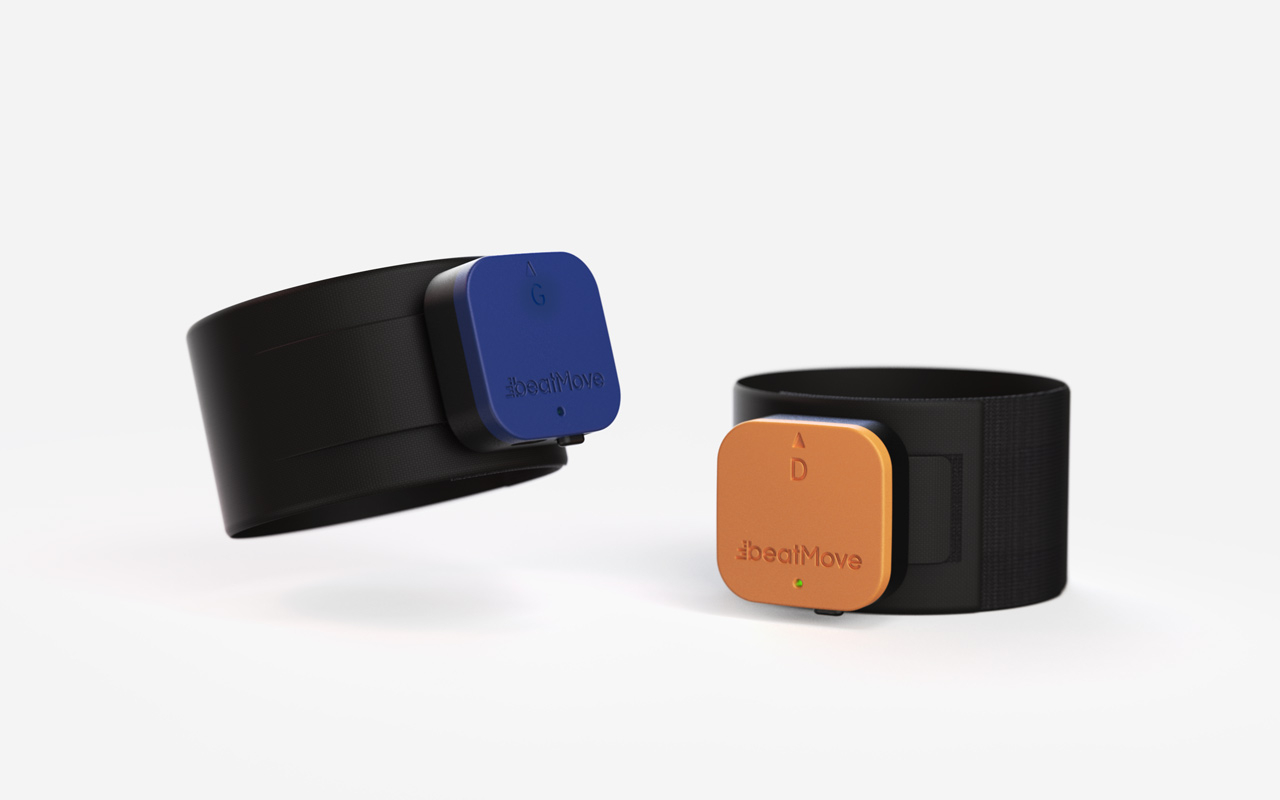
The system consists of a mobile application and two sensors worn around the ankles. These sensors analyze the user’s movement and cadence with high precision, sending data via Bluetooth to the smartphone. The patented audio-motor synchronization algorithm then selects tracks from a curated library—filtered for rhythmic regularity—and adjusts the tempo to match the patient’s current walking speed exactly.
Once the user’s gait has stabilized, the system acts as a “digital coach” or “walking DJ.” It subtly increases the tempo, encouraging the user to take longer, more confident steps and increase their overall walking speed within safe limits. This method was developed by a team of seven doctors specializing in neuroscience, movement science, and computer science at the University of Montpellier.
Clinical Outcomes and Quality of Life
Clinical studies conducted by the research team have shown significant benefits, including improved walking speed, increased step length, and a measurable reduction in the frequency of falls. Beyond the physical metrics, the psychological impact is profound. By reducing the risk of falling, the technology helps break the psychological barrier of fear that often keeps Parkinson’s patients sedentary.
“People who fall less have less fear of falling,” Tallon explains. “Because they have less fear, they move more, which significantly improves their overall quality of life.”
Future Expansion and Accessibility
Currently, BeatHealth offers the solution through a subscription model priced at €30 per month, which includes both the software and the necessary hardware. The startup is currently working with the French national health system to secure social security reimbursement, aiming to make the technology accessible to a wider demographic.
The application of this rhythmic technology is not limited to Parkinson’s. BeatHealth is already exploring developments for stroke rehabilitation, multiple sclerosis, and general fall prevention for the elderly. Even athletes and individuals looking to combat sedentary lifestyles may find the tool useful for optimizing their training rhythms through precise audio-motor synchronization.
Source: En Commun – Montpellier




Comments