
Lithuania’s €28m Power Grid Overhaul: Storm-Proofing the Forested East
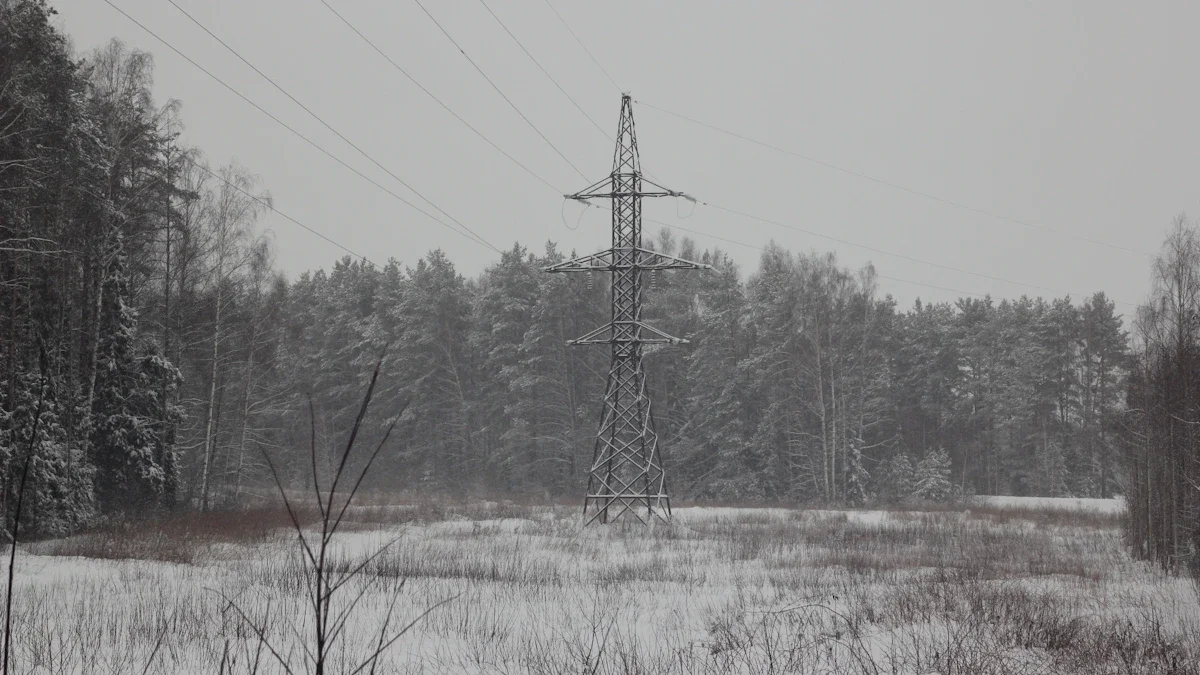
Lithuania’s national energy distribution operator, ESO, has announced a targeted €28 million investment into the Utena region, a move designed to drastically reduce power outages in one of the country’s most heavily forested and storm-vulnerable areas. This allocation represents a significant 10% of the company’s total planned investment across Lithuania for the year, signaling a strategic shift toward regional resilience.
The primary objective of the project is the transition from vulnerable overhead lines to underground cabling. In regions like Utena, where dense forests frequently lead to fallen trees during storms, traditional power lines are a liability. By moving the infrastructure underground, ESO aims to eliminate the most common cause of service interruptions.
The Scale of Modernisation
The investment is split between upgrading existing infrastructure and expanding the grid to meet the needs of a growing population. The following table breaks down the core components of the €28 million budget:
| Investment Category | Scope and Financial Allocation |
|---|---|
| Total Regional Investment | €28 Million |
| Modernisation & Reconstruction | €17.3 Million |
| New Customer Connections | €10.8 Million |
| Underground Cabling | 340 km total (225 km specifically in forests) |
| Transformer Infrastructure | 56 units (new or renovated) |
Renaldas Radvila, CEO of ESO, emphasizes that this is not merely a maintenance cycle but a qualitative leap. “In forested territories, the electricity network is most vulnerable to the elements. Cabling and automation here become a necessity rather than an optional solution,” Radvila noted. According to company data, the share of the underground cable network in Lithuania has already grown from 36% to 39% over the past year, a trend that is directly correlated with improved reliability metrics.
Measurable Gains in Reliability
For residents and business owners, the most critical metric is the duration of power cuts. The effectiveness of this cabling strategy is already visible in ESO’s national performance data. Over the last year, the average duration of power supply interruptions per customer (SAIDI) has plummeted from 399 minutes to just 75 minutes—a more than fourfold improvement in service stability.
In the Utena region, the focus is currently on the Zarasai and Molėtai districts. These areas have historically suffered from frequent outages due to their geography. In Zarasai alone, an €11 million project to move lines underground follows a five-year period where a single 10 kV line was disconnected 11 times due to falling trees. Similarly, in Molėtai, a major line from the Dubingiai substation recorded 20 outages over five years—averaging four per year—before the current reconstruction efforts began.
Supporting Regional Growth
Beyond fixing old problems, the €10.8 million allocated for expansion is facilitating a residential boom. The western part of Utena city, particularly near the main road to Kaunas, is seeing rapid development of individual housing. ESO predicts several hundred new consumers will join the grid in this zone shortly, alongside further residential growth in the Gaspariškės and Bokštas street territories.
Local leaders view this infrastructure as a lifeline for rural communities. Zarasai District Mayor Nijolė Guobienė highlighted that reliable electricity is a prerequisite for regional vitality. “Many of our people live in remote, forested areas. For elderly residents, families, and farmers, this investment provides a sense of security that is essential for keeping these regions attractive places to live,” she stated.
As climate patterns become increasingly unpredictable, the Utena project serves as a blueprint for how utility providers can proactively ‘harden’ regional grids against environmental risks while simultaneously supporting economic decentralisation.
Original reporting by: elta
Source: ELTA


Comments