
Vilnius District Construction Permits Double in Record-Breaking Surge

The Vilnius district has emerged as the fastest-growing municipality in Lithuania, with recent data revealing a staggering 125% increase in construction permits within a single year. This surge highlights a significant shift in residential preferences, as the capital’s outskirts now outpace the city center in new development activity.
According to the latest figures from the Construction Sector Development Agency (SSVA), the Vilnius District Municipality issued 182 construction permits in April 2026. This represents a more than twofold increase compared to the 81 permits issued in April 2025, and significantly higher than the 71 permits issued in April 2024. This growth rate is currently the highest among all Lithuanian municipalities.
Comparing Regional Development Activity
The scale of development in the Vilnius district is particularly striking when compared to Lithuania’s major urban centers. While the district recorded 182 permits, the capital city of Vilnius followed with 128, while other major regions such as Kaunas and Klaipėda lagged further behind.
| Region | Construction Permits (April 2026) |
|---|---|
| Vilnius District | 182 |
| Vilnius City | 128 |
| Kaunas District | 121 |
| Klaipėda District | 103 |
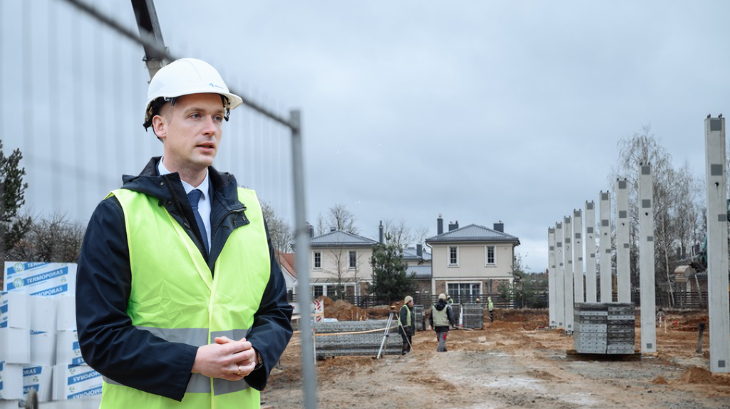
These figures do not merely represent individual buildings; a single permit can cover the construction or reconstruction of multiple structures. In the Vilnius district alone, the 182 permits issued in April 2026 accounted for 187 planned buildings. The vast majority of these projects are single-family dwellings, confirming a sustained demand for individual housing and the region’s growing appeal for families and new settlers.
Syncing Infrastructure with Rapid Growth
Vilnius District Mayor Robert Duchnevič emphasizes that these statistics reflect a broader transformation of the region. However, he notes that rapid expansion brings significant responsibility. The municipality’s vision is to create a “green and modern” district that does not just react to growth but plans for it proactively.

To prevent infrastructure from lagging behind residential development, the municipality is currently focusing on three key pillars:
* Educational Expansion: Expanding the network of educational institutions to accommodate the influx of young families.
* Social Services: Strengthening social support systems to match the growing population density.
* Modernization: Upgrading road networks and public infrastructure to handle increased traffic and utility demands.
Mayor Duchnevič acknowledged that while the administrative processes have been streamlined—with all April permits processed within statutory deadlines—there is still work to be done in refining local regulations to make the process even more transparent for both residents and businesses.

Demographic Shifts and Economic Implications
The district’s growth is fueled by a young demographic; approximately 37% of the population falls within the 18–44 age group. On average, the region gains about 2,000 new residents annually, representing a growth rate of 1.6% to 2%. As of early 2026, the declared population stood at approximately 120,800.
The most intense development is concentrated in the wards closest to the capital—Avižieniai, Riešė, Nemėžis, and Mickūnai. These areas have become the primary hubs for new residential quarters and individual housing projects.
While the data proves a booming interest in the “commuter belt” lifestyle, it also serves as a warning for urban planners. The challenge remains to ensure that the “green” aspect of the district’s vision is not lost to suburban sprawl. For investors and residents alike, the Vilnius district is currently the most active real estate frontier in Lithuania, but its long-term value will depend on how successfully the municipality can balance this record-breaking pace with sustainable living standards.
Source: Vilniaus rajono savivaldybė



Comments