
Glasgow Mural Trail expands with new St Enoch artwork on George Street
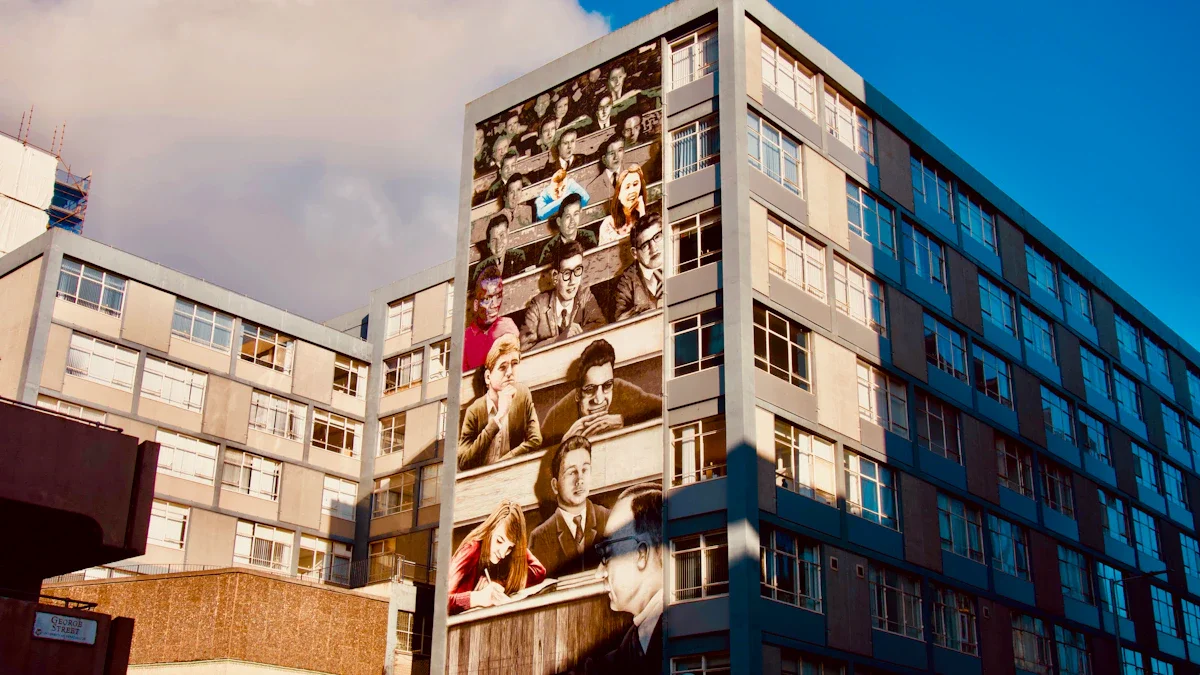
Passers-by on George Street have a new reason to look up this week as a fresh addition to the city’s visual landscape emerges. A new mural depicting St Enoch has been unveiled, marking the latest chapter in the expansion of the Glasgow Mural Trail. The artwork is positioned on the rear of a traditional tenement building on High Street, but its primary visibility is reserved for those walking along George Street, creating a striking focal point in one of the city centre’s busiest corridors.
A new landmark on the High Street skyline
The mural serves as a companion piece to the existing urban gallery that has transformed Glasgow’s gable ends over the last two decades. By utilizing the back of a High Street tenement, the project repurposes a previously plain architectural surface into a piece of public heritage. The location is strategic, sitting near the intersection of the city’s academic and civic hearts, just a short distance from Strathclyde University and the City Chambers.
This specific site was chosen to maximize the visual impact for commuters and tourists alike. As the Glasgow Mural Trail continues to grow, these installations are increasingly used to direct footfall toward the historic High Street area, which remains the oldest part of the city. The mural is not just a decorative addition; it functions as a gateway, drawing the eyes of those in the modern city centre back toward its medieval foundations.
Connecting Glasgow’s patron saints to the modern city
The subject of the mural, St Enoch, holds deep historical resonance for the local community. Known also as Princess Teneu, she was the mother of Kentigern, more commonly known as St Mungo, the patron saint of Glasgow. While St Mungo has been famously depicted in a massive mural on High Street—showing him in modern dress with a robin—this new depiction of St Enoch provides a necessary cultural counterpoint.
In local lore, St Enoch’s story is one of resilience. After being cast out from her family in the Lothians, she eventually found her way to Culross and then to the site that would become Glasgow. Her presence in the city’s iconography is often overshadowed by her son, yet her name remains a constant in the city’s geography, most notably through St Enoch Square and the nearby shopping centre. This mural brings her story out of the history books and onto the streets, humanizing the figure behind the place name.

Navigating the evolving city centre art walk
The Glasgow Mural Trail began in 2008 as a way to rejuvenate vacant sites and reduce illegal tagging by providing high-quality street art. Since then, it has become a major driver of domestic tourism. The addition of the St Enoch piece on George Street adds a new waypoint for those following the trail, which now includes over 30 major works scattered across the city centre.
For those planning to visit the new installation, the best vantage point is from the eastern end of George Street, looking toward the High Street tenements. The artwork is designed to be viewed from a distance, allowing the scale of the figure to interact with the surrounding urban environment. As the city moves toward further pedestrianization in the coming years, these visual landmarks are expected to play a larger role in how residents navigate and experience the pedestrian-friendly zones of the future.
The project remains managed by Glasgow City Council, with the goal of maintaining the trail as a living gallery that reflects the city’s past while looking toward its future. This new mural ensures that the story of Glasgow’s origins remains visible to the thousands of people who pass through its centre every day.
Source: Glasgow City Council


Comments