
Lithuania Hits Solar Record as Local Power Covers 85% of Demand

Lithuania has reached a significant milestone in its journey toward energy independence, with local electricity generation covering 85% of the country’s total demand during the second week of May. This surge in domestic production was underpinned by a record-breaking performance from the nation’s solar sector, which reached a new peak output, contributing to a 4% decrease in wholesale electricity prices.
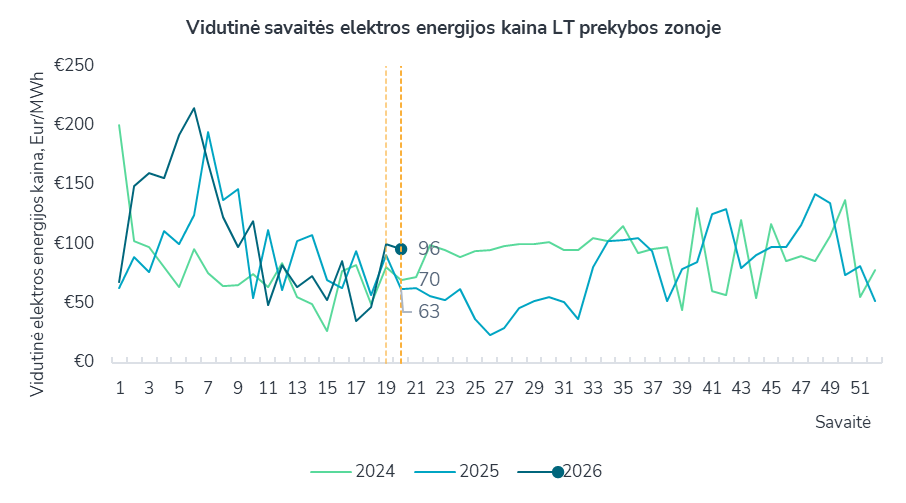
Between May 11 and May 17, the average wholesale electricity price in the Lithuanian bidding area of the Nord Pool exchange dropped to €96 per megawatt-hour (MWh), down from €100 the previous week. While this price was mirrored in Latvia, neighboring Estonia enjoyed significantly lower rates at €76/MWh, highlighting the ongoing price volatility and regional disparities within the Baltic energy market.
A New Milestone for Baltic Solar Energy
The most striking data point from the week was the performance of Lithuania’s solar infrastructure. On Friday, May 17, between 12:30 and 12:45 PM, solar power plants generated a record 1,547 MW. This represents a substantial 112 MW increase over the previous record. This growth is not an isolated event but the direct result of an aggressive expansion in installed solar capacity across the country, as both commercial solar farms and prosumer installations continue to come online.
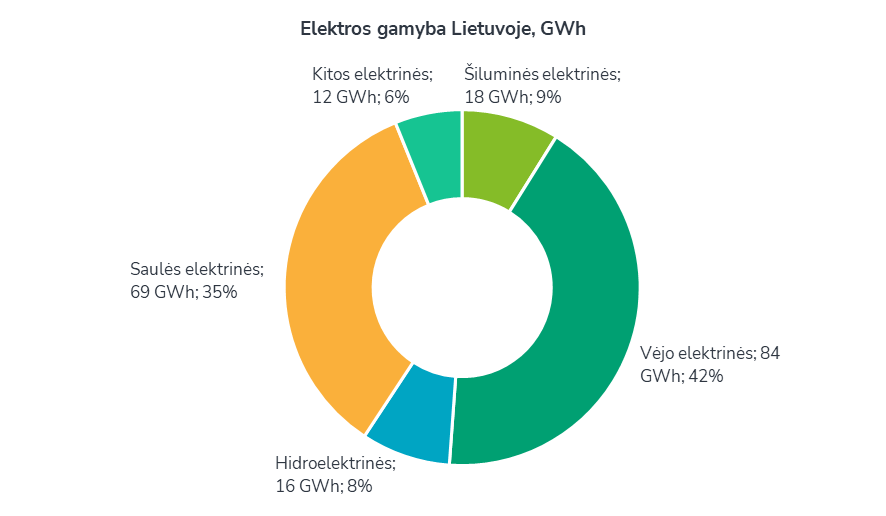
Despite the solar record, wind energy remained the primary driver of Lithuania’s green energy mix. Although wind generation actually decreased by 23% compared to the previous week, it still accounted for the largest share of domestic production. The breakdown of the energy sources that powered the country last week illustrates a diverse, albeit weather-dependent, portfolio:
| Energy Source | Share of Local Generation |
|---|---|
| Wind Power | 42% |
| Solar Power | 35% |
| Thermal (Gas/Biomass) | 9% |
| Hydroelectric | 8% |
| Other (including Waste-to-Energy) | 6% |
It is important to note that while these numbers prove the potential for high self-sufficiency, they do not yet guarantee permanent energy independence. The 85% coverage figure is a weekly average influenced by lower overall demand—which fell by 4% to 234 GWh—and favorable weather conditions for renewables. On a total production basis, Lithuania generated 200 GWh during the week, an 8% decrease from the previous week’s 216 GWh.
Regional Integration and the Import-Export Balance
Lithuania’s energy security remains deeply integrated with its neighbors. To bridge the 15% gap between local generation and total demand, the country increased its imports by 21%, totaling 88 GWh. The majority of this electricity (52%) flowed from Latvia, while 42% was sourced from Sweden via the NordBalt undersea cable, and the remaining 6% came from Poland.
Conversely, Lithuania also acted as a transit hub and exporter, with export flows increasing by 10% to 65 GWh. The distribution of these exports was split between Sweden (44%), Poland (33%), and Latvia (23%). The utilization of international interconnectors remains a critical factor in price stabilization; for instance, the LitPol Link operated at 74% capacity toward Poland, facilitating regional trade that helps balance the grid when local renewable output fluctuates.
As Lithuania continues to increase its installed renewable capacity, the challenge shifts from generation to grid management. The current data suggests that while the infrastructure is capable of meeting the vast majority of national needs during peak conditions, the reliance on imports during low-wind or low-sun periods persists. For the UK and other European observers, Lithuania’s rapid scaling of solar—now rivaling wind in its weekly contribution—serves as a case study in how quickly a small market can pivot its energy profile through targeted investment in renewable infrastructure.
Source: ELTA




Comments