
Lithuania Positions Defense Industry as Frontline Extension

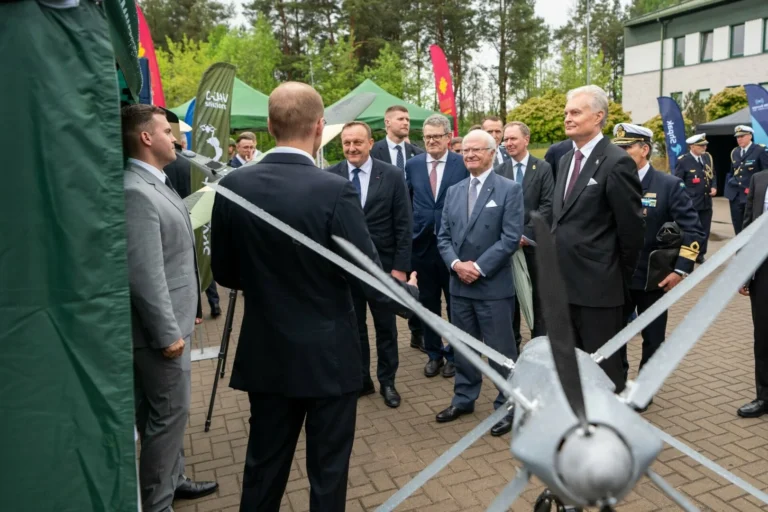
Lithuanian President Gitanas Nausėda has formally positioned the country’s defense industry as a direct extension of battlefield capability, marking a strategic shift in how NATO’s eastern flank states approach military procurement and industrial growth. Opening the inaugural DAIMEX Baltic event in Vilnius, the President framed industrial readiness not merely as a commercial sector, but as a core component of modern warfare.
The launch of DAIMEX Baltic—the first international defense and security industry event of its kind in the Baltic region—comes as Lithuania and its neighbors accelerate efforts to fortify the border with Russia and Belarus. President Nausėda noted that the war in Ukraine has provided the most significant defense lesson since the Cold War: that a nation’s ability to sustain a conflict is inextricably linked to its factory output.
The Battlefield Equation and Regional Security
For Lithuania, which shares a border with the Russian exclave of Kaliningrad and the Kremlin-aligned Belarus, the expansion of the defense industry is viewed as a matter of national survival. The President emphasized that for frontline states—including Latvia, Estonia, Poland, and Finland—defense spending is the “price of sovereignty” and a primary driver of economic growth.
This strategic alignment is manifesting in massive infrastructure projects designed to deter aggression. The “Baltic Defense Line” and the “Eastern Shield” initiatives represent a shift from mobile defense toward more permanent, fortified positions. These projects involve multi-billion euro investments in physical fortifications, logistics hubs, air defense systems, and underground infrastructure.
| Project / Initiative | Strategic Focus | Estimated Scale |
|---|---|---|
| Baltic Defense Line | Regional fortifications and physical barriers | Multi-billion Euro procurement |
| Eastern Shield | Integrated border security and logistics | Multi-year regional investment |
| Rheinmetall Partnership | Local ammunition production | Regional manufacturing hub |
| KNDS France/Germany | Heavy equipment maintenance and assembly | Regional technical support |
| Lockheed Martin | Regional coordination | Strategic office expansion |
The Fast-Acting State Model
To attract global defense giants, Lithuania is moving beyond traditional financial incentives. President Nausėda pitched the concept of a “fast-acting state,” promising to remove bureaucratic hurdles that typically slow the transition from a design concept to an active production line. This approach is intended to provide the speed and agility that modern defense contractors require in a rapidly changing security environment.

Several major international players have already responded to this initiative. German defense giant Rheinmetall has selected Lithuania for a regional ammunition manufacturing facility, while KNDS (a joint venture between French Nexter and German Krauss-Maffei Wegmann) is establishing technical maintenance and assembly operations for military vehicles. Additionally, U.S.-based Lockheed Martin has established a regional office to coordinate its activities in the Baltics.
Strengthening the NATO Flank
The DAIMEX Baltic conference, which brought together policy makers, military leadership, and industry partners from across NATO, serves as a new platform for regional cooperation. By consolidating the defense needs of the Baltic states, the organizers aim to create a more attractive market for international investors while ensuring that the equipment produced meets the specific requirements of the eastern flank’s geography.
The event was organized through a collaboration between the defense industry associations of Lithuania, Latvia, and Estonia, alongside the Lithuanian Riflemen’s Union. As the patron of the event, President Nausėda urged business leaders to view Lithuania as a location for long-term value creation, asserting that a robust regional defense system benefits the entire Alliance by strengthening its collective deterrence posture.
Original reporting by: bns
Source: BNS



Comments