
Northern Lights UK Forecast: Best Times and Places for Monday Night
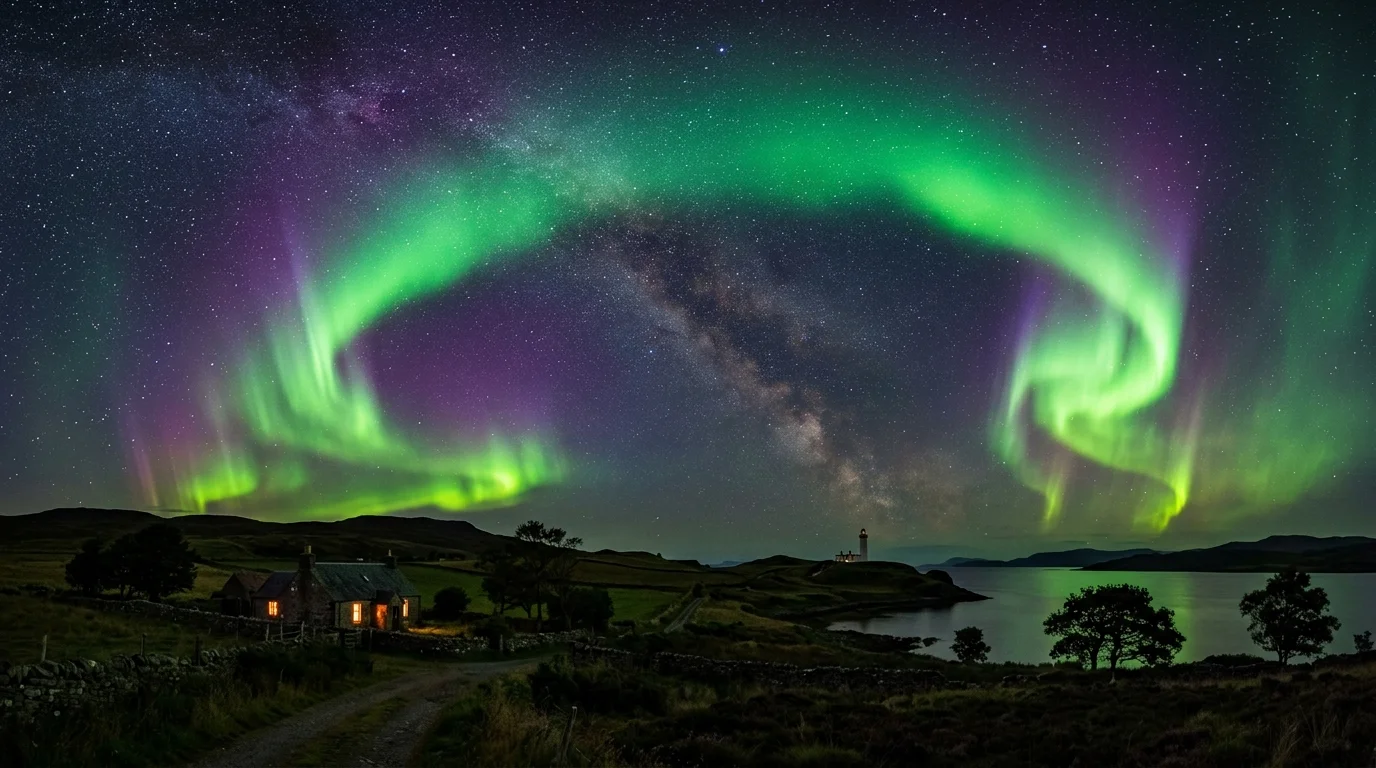
Following a weekend of historic solar activity, the Met Office indicates that the Aurora Borealis remains potentially visible across parts of the United Kingdom on Monday night, May 11, 2026. While the peak of the solar storm has passed, significant ‘sub-storms’ are still expected, offering skywatchers another opportunity to witness the phenomenon, particularly in northern regions.
Best Viewing Times and Atmospheric Conditions
The primary window for viewing the Northern Lights tonight is between 10:00 PM and 2:00 AM. During this period, the sky is at its darkest, and geomagnetic activity often reaches its nightly peak. For the best experience, you should seek out locations away from city lights with an unobstructed view of the northern horizon.
Geomagnetic activity is measured by the K-index. Tonight, forecasters expect Kp levels to fluctuate between 5 and 7. A Kp-index of 5 (G1 storm) typically makes the aurora visible in Scotland and Northern Ireland, while a Kp-index of 7 (G3 storm) can push the ‘auroral oval’ far enough south to be seen in Northern England and the Midlands.
Read also: The UK tools built to spot solar storm disruption sooner
Regional Visibility Forecast
Cloud cover is the most significant barrier to viewing tonight. According to the latest Met Office data, the following regions have the best chance of clear skies:
| Region | Visibility Potential | Expected Cloud Cover |
|---|---|---|
| Scotland | High | Clear intervals in the East |
| Northern England | Moderate | Patchy cloud, better in the Pennines |
| Midlands & Wales | Low to Moderate | Increasing cloud from the West |
| Southern England | Low | Mostly overcast |
Practical Advice for Skywatchers
If you are heading out tonight, follow these steps to maximize your chances of a sighting:
- Avoid Light Pollution: Travel to a ‘Dark Sky’ site or a rural area. Even modest street lighting can wash out the subtle greens and reds of the aurora.
- Allow Your Eyes to Adjust: It takes about 20 minutes for human eyes to fully adapt to the dark. Avoid looking at your phone screen during this time.
- Use Long Exposure: The aurora often appears as a faint grey mist to the naked eye but shows vibrant colors on camera. Use a tripod and set your smartphone or DSLR to a long exposure (10–20 seconds) with a high ISO.
Monitoring Live Updates
Solar weather is notoriously difficult to predict with minute-by-minute accuracy. For real-time data, skywatchers should monitor the NOAA 30-minute aurora forecast and local magnetometers. If the K-index spikes suddenly, it indicates a sub-storm is underway, which is the best time to look up.
Frequently Asked Questions
Why can we still see the Northern Lights in the UK tonight if the main solar storm has already peaked?
While the record-breaking solar peak has passed, the Earth remains within a stream of high-speed solar wind. This causes ‘sub-storms’, which are secondary bursts of geomagnetic activity. Tonight’s forecast of a Kp-index between 5 and 7 indicates that the ‘auroral oval’ is still stretched far enough south to reach the UK, even if the initial massive solar flare has subsided.
How do I use my smartphone to confirm an aurora sighting if it looks like faint gray clouds?
Human eyes often struggle to see color in low light, making the aurora look like misty streaks. To confirm a sighting, use your phone’s Night Mode or a manual long-exposure setting (3–5 seconds). If the screen shows vibrant greens or pinks, you are looking at the aurora. For the best result, use a tripod or lean your phone against a steady surface to prevent blur during the exposure.
Which specific UK regions face the biggest risk of missing out due to weather tonight?
Unfortunately, residents in Southern England and the Midlands face a high risk of disappointment due to an incoming weather front bringing thick overcast skies. The best ‘impact’ zones for clear viewing are Eastern Scotland and the Pennines in Northern England, where the rain shadow effect is likely to create the breaks in cloud cover necessary for a successful sighting.
What is the best way to track real-time aurora updates if the Kp-index changes suddenly?
Geomagnetic conditions can shift in minutes. To stay updated, monitor the AuroraWatch UK alerts provided by Lancaster University or use the Space Weather Prediction Center (SWPC) 30-minute forecast. If the Kp-index hits 7 (G3 level), residents as far south as the Midlands should immediately head to a dark-sky location with a clear view of the northern horizon.
Source: metoffice.gov.uk



Comments