
Latvia’s Choral Tradition Returns to the Medieval Walls of Cēsis

The Cēsis Castle Park open-air stage, framed by the lush greenery of a Latvian June, is preparing to host a significant cultural milestone. For the first time in a decade, the Latvian Women’s and Men’s Choir Festival returns to this historic town, bringing together hundreds of voices to perform a programme that bridges the gap between ancient folk tradition and contemporary composition.
Under the theme “The Legend of Meeting,” the festival is designed as a celebration of human connection—a rarity in the modern digital age. Director Anna Klišāne describes the event as a moment where the “human voice meets nature’s own score,” utilizing the unique acoustics of the Cēsis parkland to create an immersive auditory experience for both participants and the audience.
A Masterclass in Vocal Harmony and Modern Echoes
The repertoire for this year’s festival is a carefully balanced mix of choral classics and brand-new commissions. While the programme honours the extensive legacy of Maestro Raimonds Pauls—Latvia’s most celebrated living composer—it also looks firmly toward the future.
Audience members will witness the world premiere of a new cycle by Jēkabs Jančevskis, composed specifically for this event and featuring lyrics drawn from traditional Latvian folk songs. The artistic core of the festival is led by artistic director Jurģis Cābulis and musical director Jančevskis, supported by a script from Linda Rudene.
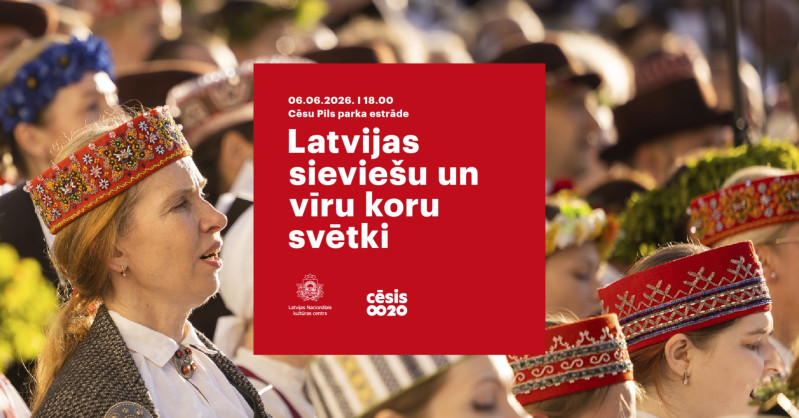
Standing at the conductor’s podium will be a prestigious lineup of seventeen conductors, including Aira Birziņa, Uldis Kokars, and Romāns Vanags, representing the elite of the Baltic choral world. The choirs will be joined by soloists Ieva Sutugova, Jolanta Strikaite, and Atis Zviedris, accompanied by the Vidzeme Chamber Orchestra and a rhythmic group under Jančevskis’ direction.
The Road to the 2028 National Celebration
For those unfamiliar with the scale of Baltic choral culture, this gathering is far more than a local concert. It serves as a vital developmental step toward the XXVIII General Latvian Song and Dance Festival scheduled for 2028. The tradition of separate women’s and men’s choir rallies dates back to the mid-20th century, established to strengthen these specific vocal disciplines within the national movement.
These gatherings take place every five years, rotating through various Latvian cultural hubs such as Liepāja, Jelgava, and Tukums. The return to Cēsis marks a homecoming to one of the most atmospheric venues in the country, where the medieval castle ruins provide a stark, beautiful contrast to the vibrant summer festival atmosphere.

Evening Festivities and Practical Details
The cultural experience does not end with the final choral note. At 21:00, the celebration will migrate from the park to Rose Square (Rožu laukums) for a traditional “zaļumballe”—a classic Latvian open-air ball. Music for the dance will be provided by the “Cēsis” brass band, offering visitors a chance to participate in a social tradition that has remained largely unchanged for decades.
Tickets for the main concert are currently available through the “Biļešu paradīze” network. The event is organized by the Latvian National Centre for Culture in cooperation with the Cēsis Municipality, ensuring that the town’s infrastructure is prepared for the influx of singers and spectators from across the country.
Source: Cēsu novada pašvaldība


Comments