
Lithuania Honors 24 Body Donors in Historic Burial Ceremony
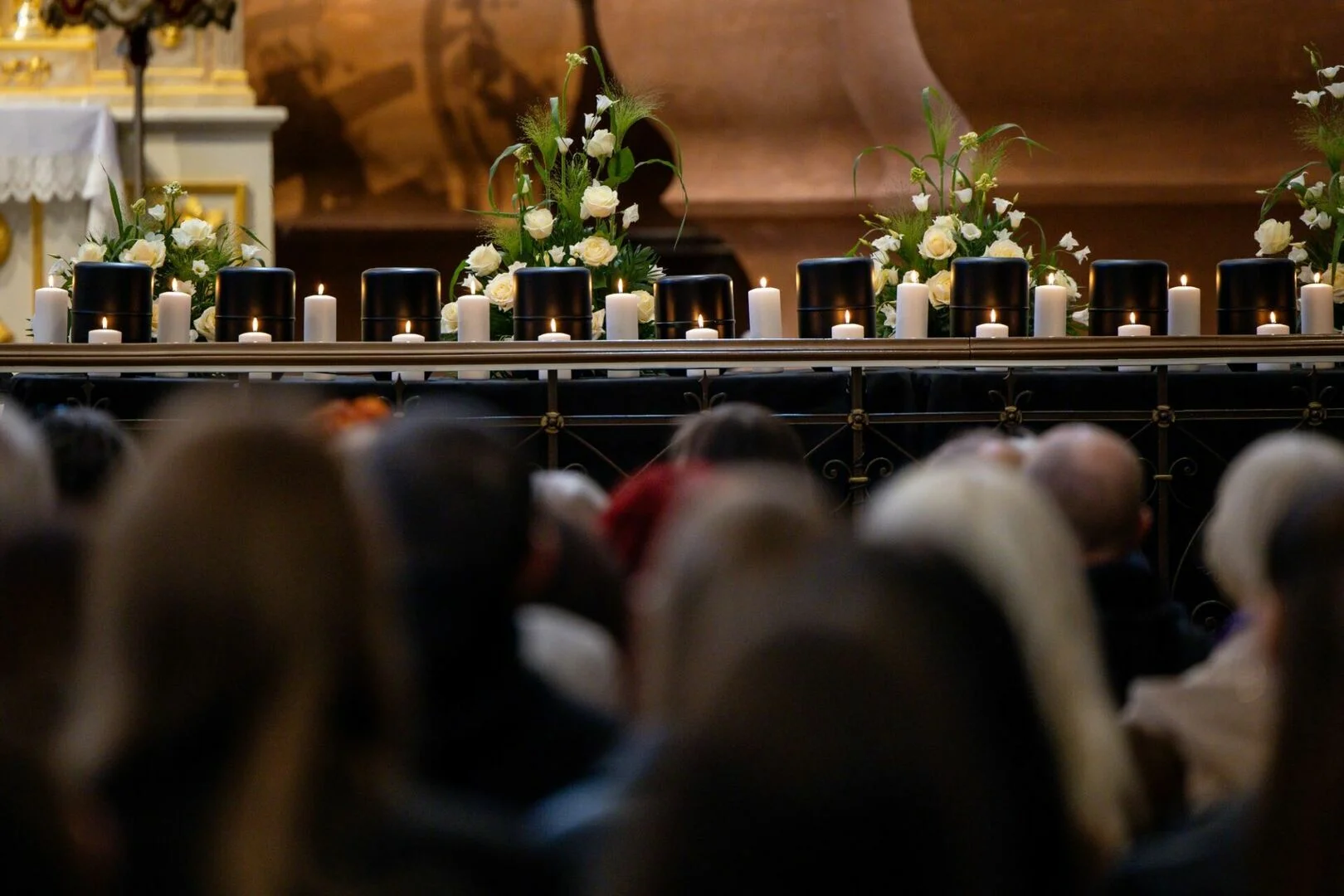
The bells of the Kaunas Cathedral Basilica rang out this week for a group of individuals whose final contribution to society was made in the quiet of a medical laboratory. In a solemn procession that moved from the heart of the city to the Petrašiūnai Cemetery, the Lithuanian University of Health Sciences (LSMU) held a historic ceremony to inter the remains of 24 people who bequeathed their bodies to medical science.
This event marked a significant milestone for the university and the city of Kaunas. While the Human Remains Use Program for Studies and Science was established in 2008, this is the first time a dedicated burial site has been inaugurated to provide a final resting place for those who chose to become the “first teachers” of the next generation of doctors. For over a decade, the urns containing the ashes of these donors had been carefully preserved at the university’s Institute of Anatomy, awaiting this moment of public recognition and communal gratitude.
A Debt of Gratitude to Medical Pioneers
The ceremony was attended by grieving families, medical students, university faculty, and high-ranking clergy, including Archbishop Metropolitan Kęstutis Kėvalas. For the families, the day represented the closure of a long journey. Many had waited years for a formal site where they could pay their respects, understanding that their loved ones’ bodies were serving a vital educational purpose in the interim.

LSMU Rector Professor Rimantas Benetis and Associate Professor Darius Batulevičius, head of the Institute of Anatomy, emphasized that the ceremony was more than a formal obligation. It was a public acknowledgment of a selfless gift that has directly shaped the skills of a new generation of surgeons, nurses, and specialists. Since the program’s inception in 2008, hundreds of medical professionals have honed their craft through the study of these donors, a process that university officials describe as an irreplaceable component of medical ethics and technical proficiency.
The Irreplaceable Value of the Human Form
In an era of high-tech medical simulations and 3D digital atlases, the university maintains that the human body remains the ultimate textbook. Dr. Batulevičius noted that while digital tools are helpful, they cannot replicate the complexity and uniqueness of real human tissue. Every person’s internal anatomy—the path of a nerve, the branching of an artery, the texture of a muscle—is unique.

For aspiring surgeons, the opportunity to work with real remains is a critical lesson in anatomical variation. In the operating theater, failing to account for a blood vessel located in an unusual position can be a fatal mistake. By studying these donors, students learn the “feel” of human tissue and the subtle differences that exist between individuals—nuances that plastic models and computer screens simply cannot convey.
Ethics and the Philosophy of ‘Mortui Vivos Docent’
The university operates under the strict Latin principle Mortui vivos docent—the dead teach the living. This philosophy extends beyond biological study; it serves as a foundational lesson in professional empathy. At LSMU, work with human remains is governed by rigorous ethical standards. Students are taught from day one that the remains are not objects, but former patients who deserve the highest level of dignity.

Strict confidentiality is maintained throughout the process, and students are forbidden from taking photographs or engaging in any behavior that would compromise the anonymity of the donor. This historic burial in Petrašiūnai Cemetery ensures that the final chapter for these donors is one of honor, providing a permanent monument to the quiet heroism of those who gave their bodies so that others might live.
Source: BNS

Comments