
Nottingham reaches 1,000 cave milestone in hidden underground world

Deep beneath the modern pavements of the Lace Market and the busy traffic of Mansfield Road, a hidden map of Nottingham is finally coming into full view. For over 15 years, City Archaeologist Scott Lomax has been piecing together a subterranean puzzle that predates the city’s modern skyline by centuries. This week, that puzzle reached a historic milestone: the official count of man-made caves beneath Nottingham has reached 1,000.
This vast network, carved directly into the soft sandstone on which the city sits, establishes Nottingham as a unique heritage site on a continental scale. While other historic English cities like York or Chester are defined by their standing timber-framed buildings and Roman walls, Nottingham’s history is defined by what lies beneath. No other city in Europe is currently known to possess such an extensive and well-preserved network of man-made caverns.
Subterranean network surpasses historic European rivals
The confirmation of the 1,000th cave is the result of exhaustive research combining ancient maps, Victorian-era property records, and modern archaeological surveys. Scott Lomax’s work has frequently proved that caves previously thought to have been destroyed by modern foundations actually survive intact, hidden behind later brickwork or sealed under tonnes of rubble.
“Reaching 1,000 confirmed caves is a huge milestone for Nottingham and for understanding the city’s heritage,” says Lomax. He notes that while the city may not have the same volume of visible historic buildings as some of its neighbours, it possesses something no other European city can rival. These spaces reveal the intimate details of how ordinary people lived and worked over the last millennium, offering a preserved snapshot of the city’s industrial and domestic evolution.
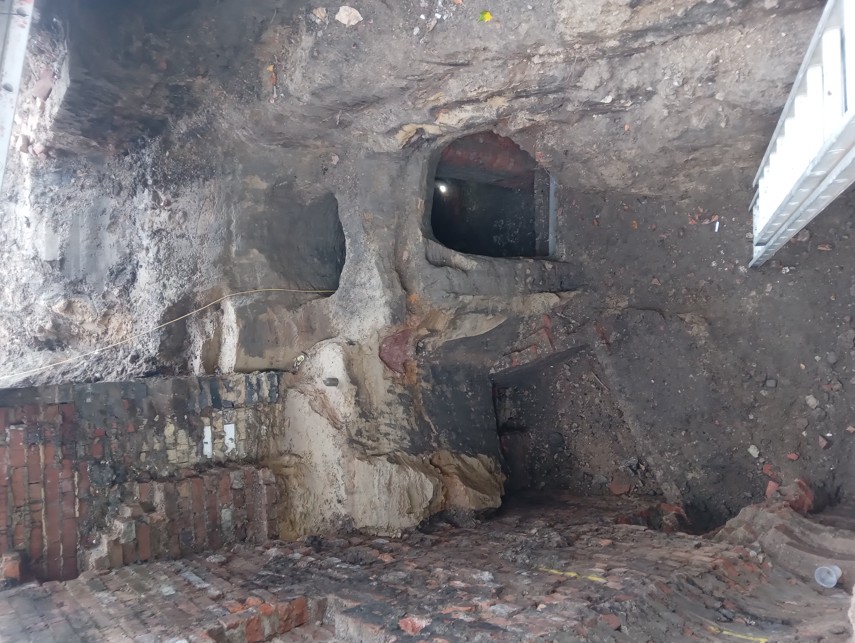
From medieval maltings to wartime air raid shelters
These 1,000 recorded sites were never just holes in the ground; they were functional extensions of the city above. Over the centuries, the caves served as homes for the poor, sophisticated workshops for tanners, and specialized maltings for the brewing industry. The consistent temperature of the sandstone made them ideal for beer cellars—a use that persisted well into the 19th and 20th centuries.
During the World Wars, the purpose of the underground world shifted toward survival. Many of the larger caverns were repurposed as air raid shelters, providing deep-earth protection for thousands of residents during the Blitz. The research conducted by the heritage team helps track these shifts in usage, showing how Nottingham adapted its unique geology to meet the needs of each era.
Key points of the underground milestone
- Official Count: 1,000 man-made caves now documented within the city limits.
- Historical Range: Sites date back over 1,000 years, covering industry, commerce, and housing.
- Protection Status: Nottingham City Council maintains a dedicated caves policy to protect sites during redevelopment.
- Public Involvement: Residents with historic photos or knowledge of caves under their property are encouraged to contact the heritage team.
Recent discoveries beneath Brook Street and the Lace Market
Recent urban redevelopment projects have been instrumental in pushing the count to the 1,000-mark. In the Lace Market, investigations on Stoney Street recently uncovered a cave that historical records suggested had been destroyed. Instead, archaeologists found the structure survived and have now ensured its preservation within the new building design.

Further discoveries include a beer cellar on Brook Street, dating to approximately 1830, which served the Flying Horse beer house. On Goose Gate, a shaft and blocked entrance were uncovered during site investigations, revealing another early 19th-century cellar. Even more recently, an 18th-century sand mine was identified on Mansfield Road, highlighting the industrial scale of Nottingham’s historic excavation.
Public records and the search for Nottingham’s lost caverns
Despite reaching this numerical milestone, the city’s archaeological team believes the 1,000th cave is far from the final discovery. Many more caverns are thought to exist, hidden behind modern basement walls or beneath private residences. The City Council’s heritage team is now calling on the public to help expand the map.
Residents who have evidence of caves beneath their homes, or who possess old family photographs and maps showing underground entrances, are being asked to share their findings. This community-led data collection is vital for building a complete picture of the city’s hidden landscape and ensuring that these fragile historical assets are not lost to future construction. The ongoing research will focus on determining the exact age of these newly found sites and exploring how they can be preserved as the city continues to grow.
Source: Nottingham City Council



Comments